
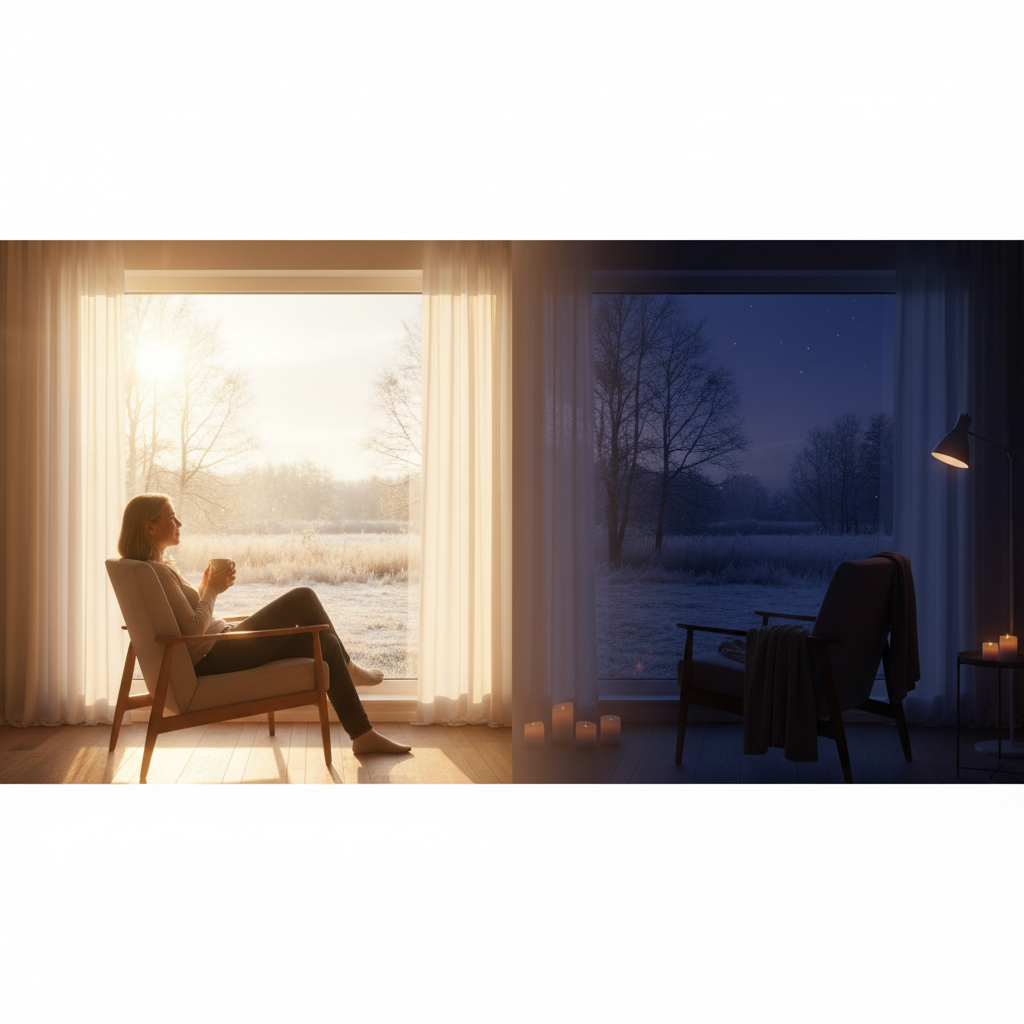
How the 40-20-40 Natural Circadian Reset Method Uses Morning Light and Evening Darkness to Combat Winter Seasonal Depression
Winter's shortened days disrupt your body's internal clock, leaving you feeling sluggish, unmotivated, and caught in a cycle of poor sleep and low energy. The 40-20-40 Natural Circadian Reset Method offers a structured approach to recalibrate your biological rhythms using precisely timed light exposure and darkness periods.
This system divides your waking hours into three distinct phases: 40% dedicated to bright light exposure, 20% for transitional activities, and 40% for gradual darkness preparation. The method works by leveraging your body's natural response to environmental light cues, helping reset the circadian clock that governs everything from hormone production to body temperature regulation.
Start Your Day With 40 Minutes of Bright Light Exposure
The first phase requires exposing yourself to bright light within 30 minutes of waking. Position yourself near a south-facing window or invest in a light therapy box producing at least 10,000 lux. Products like the Verilux HappyLight or Philips SmartSleep devices provide the intensity needed to trigger your circadian reset. During this period, avoid sunglasses and engage in routine activities like reading, eating breakfast, or checking emails. The key is consistent daily exposure at roughly the same time, signaling to your brain that the active day has begun.
Create a 20-Minute Transition Window at Midday
The middle phase focuses on maintaining light exposure during peak daylight hours, even on cloudy days. Step outside for a brief walk, eat lunch near a window, or work in the brightest available space. This 20-minute window serves as a circadian anchor point, reinforcing your body's understanding of the natural day-night cycle. Many people find success scheduling this transition between 11 AM and 1 PM, when natural light reaches its strongest intensity. The goal isn't intense light therapy but rather consistent environmental cues that support your internal clock's stability.
Implement 40 Minutes of Gradual Evening Darkness
The final phase begins approximately three hours before your intended bedtime. Start dimming lights throughout your living space, switching to warm-toned bulbs or lamps. Apps like f.lux or built-in features on Apple devices automatically adjust screen color temperature as evening approaches. During this 40-minute period, avoid bright overhead lighting and blue-light-emitting screens. Instead, engage in calming activities like reading physical books, gentle stretching, or preparing items for the next day. This gradual transition helps trigger natural melatonin production.
Time Your Light Exposure to Your Natural Chronotype
Not everyone's circadian rhythm operates on the same schedule. Night owls may need to start their 40-20-40 cycle later in the morning, while early birds can begin immediately upon waking. Pay attention to when you naturally feel most alert and tired, then adjust the timing accordingly. The Centers for Disease Control and Prevention recognizes that individual chronotypes vary significantly, so customize your light exposure windows to match your personal energy patterns rather than forcing an artificial schedule.
Use Technology to Track Your Progress
Smart devices can help monitor the effectiveness of your circadian reset efforts. Fitness trackers like Fitbit or Apple Watch provide sleep quality data, showing improvements in deep sleep phases and wake times. Apps such as Sleep Cycle or Oura Ring analyze your rest patterns, helping you fine-tune your light exposure timing. Many users notice improvements in sleep quality within the first week, with mood and energy levels following shortly after. Document your daily light exposure times and corresponding energy levels to identify the most effective schedule for your lifestyle.
Combine Light Therapy With Strategic Indoor Positioning
Maximize natural light benefits by repositioning your work and relaxation spaces near windows during winter months. Move your desk, reading chair, or dining table closer to light sources throughout the day. If natural light is limited, consider installing full-spectrum LED bulbs in frequently used areas. Companies like GE and Cree manufacture bulbs that mimic natural sunlight wavelengths, providing circadian support even in windowless spaces. The strategic placement of reflective surfaces like mirrors can also amplify available light throughout your environment.
Address Evening Light Pollution in Your Sleep Environment
The evening darkness phase requires eliminating hidden light sources that can disrupt your circadian reset progress. Cover LED displays on electronics, install blackout curtains, and consider an eye mask for complete darkness. Street lights, neighbor's security lighting, and even small device indicators can interfere with natural melatonin production. Create a sanctuary of darkness in your bedroom while maintaining safety with motion-activated, dim red lights for nighttime navigation. This attention to environmental darkness amplifies the benefits of your morning light exposure efforts.
Build Consistency Through Weekend Maintenance
Weekends often derail circadian reset progress through late-night activities and sleeping in. Maintain your 40-20-40 schedule even on non-work days, adjusting social activities to support your light exposure timing rather than abandoning the routine entirely. If late nights are unavoidable, still wake within an hour of your regular time and complete your morning light exposure phase. This consistency prevents the "social jet lag" that can undo weekday progress and maintains the momentum needed for long-term circadian health improvements.
The 40-20-40 method represents a shift toward working with your body's natural rhythms rather than against them. As understanding of circadian science continues to evolve, expect to see more personalized approaches that account for individual genetic variations and lifestyle factors, making seasonal depression management increasingly precise and effective.