
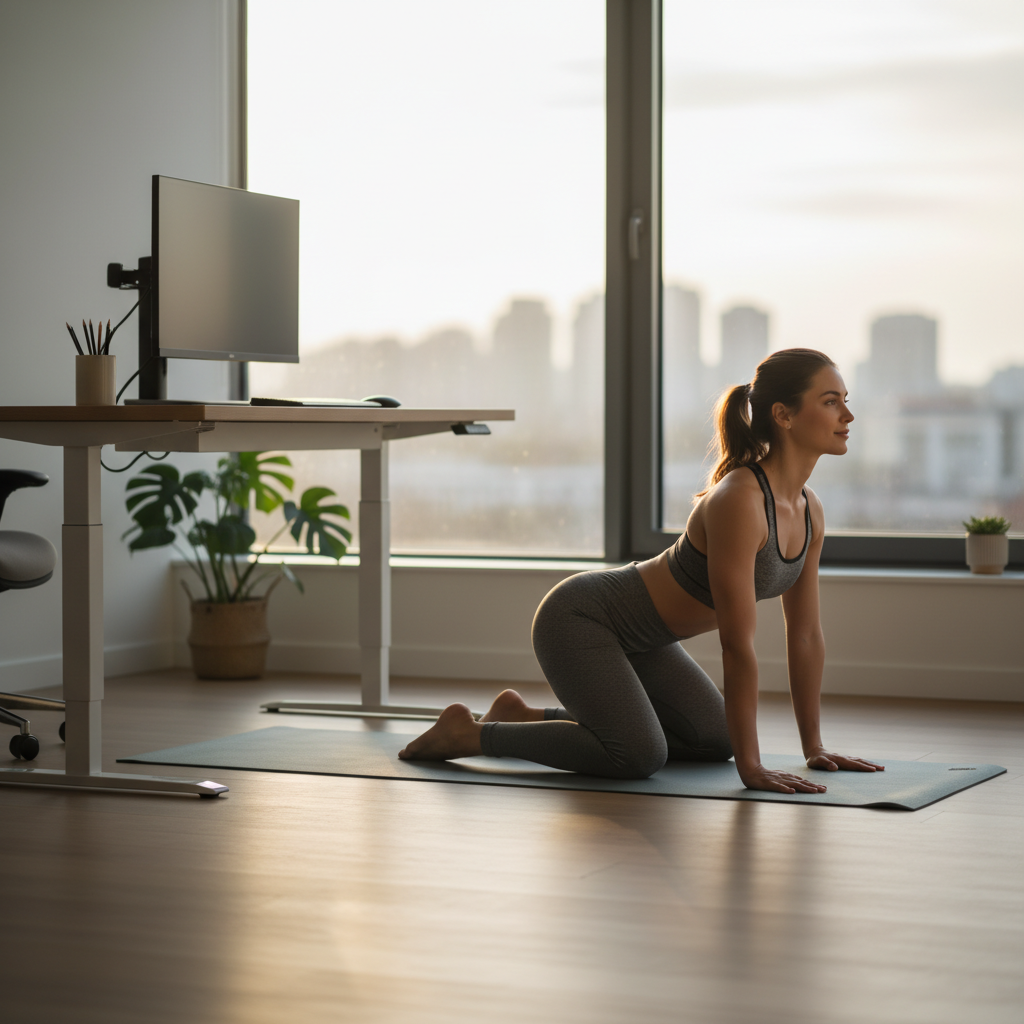
How the 5-1-5 Morning Stretching Method Prevents Chronic Back Pain and Improves Posture for Desk Workers
Your lower back aches before you've even finished your morning coffee, and by noon, your shoulders feel like they're carrying invisible weights. The eight-hour desk shift hasn't even reached its halfway point, but your body already feels compressed into the same hunched position that will plague you until evening.
The 5-1-5 morning stretching method offers a targeted solution specifically designed for desk workers who spend their days in static positions. This approach dedicates just eleven minutes each morning to strategic movements that counteract the physical stress of prolonged sitting. The method works by activating dormant muscle groups, lengthening tight hip flexors, and strengthening the posterior chain that supports proper posture throughout your workday.
Start With Five Minutes of Dynamic Hip Flexor Stretches
Your hip flexors tighten significantly during sleep and remain contracted throughout most seated work periods. Begin each morning with dynamic leg swings, walking lunges, and standing hip flexor stretches that specifically target the psoas and iliacus muscles. These movements reverse the shortening effect of prolonged sitting while activating your core stabilizers. Focus on controlled movements rather than aggressive stretching, allowing your body temperature to gradually increase. The Theraband resistance bands work particularly well for adding gentle resistance during hip flexor stretches, creating more effective muscle activation without overstretching cold tissues.
Follow With One Minute of Spinal Decompression Hanging
Spinal compression accumulates throughout the night and intensifies during seated work periods, creating disc pressure that contributes to chronic back pain. Install a pull-up bar in a doorway using brands like Iron Gym or Perfect Pushup, which require no permanent hardware installation. Hang with your full body weight for intervals of 15-20 seconds, allowing gravity to gently decompress your spine and create space between vertebrae. This single minute of hanging provides measurable relief from compressed discs while strengthening your grip and shoulder stabilizers. Even partial hanging where your toes lightly touch the ground provides significant decompression benefits for those building up their grip strength.
Complete With Five Minutes of Posterior Chain Activation
Most desk workers develop weak glutes, inactive rhomboids, and lengthened posterior muscles that fail to support proper posture during long work sessions. Dedicate your final five minutes to exercises that specifically activate these underused muscle groups through movements like glute bridges, bird dogs, and wall slides. The key lies in focusing on muscle activation rather than intense strengthening, creating neural pathways that will fire more readily throughout your workday. Resistance bands from companies like Bodylastics add gentle resistance that enhances activation without causing morning fatigue that could impact your energy levels.
Time Your Routine Between Waking and Coffee
Your body temperature and hormone levels create an optimal window for stretching approximately 15-30 minutes after waking, before caffeine intake affects your nervous system. This timing allows your core temperature to naturally rise while maintaining the muscle relaxation that occurs during sleep recovery periods. Performing the 5-1-5 method during this window maximizes flexibility gains while establishing a consistent routine that doesn't conflict with morning coffee rituals or work schedules. The routine becomes more sustainable when positioned as a bridge between sleep and your caffeinated start to the workday, rather than competing with established morning habits.
Focus on Breath Work During Each Movement Phase
Controlled breathing during morning stretches activates your parasympathetic nervous system, reducing cortisol levels that contribute to muscle tension throughout the day. Coordinate your breath with each movement, using exhales to deepen stretches and inhales to reset positioning between repetitions. This breathing pattern enhances the stress-reduction benefits of physical movement while improving oxygen delivery to muscles that will support you during long work periods. Apps like Headspace or Calm offer guided breathing exercises that complement physical stretching routines, though simple four-count inhales and six-count exhales work effectively without additional tools.
Track Your Progress With Simple Daily Measurements
Document simple metrics like morning stiffness levels, afternoon back pain intensity, and end-of-workday posture awareness using a basic 1-10 scale in your phone's notes app. This tracking reveals patterns between consistent morning stretching and reduced workplace discomfort, providing motivation to maintain the routine during busy periods. Most desk workers notice measurable improvements in afternoon energy levels and reduced evening back pain within two weeks of consistent practice. The MyFitnessPal app includes basic wellness tracking features that work well for monitoring these daily comfort metrics alongside other health goals.
Modify Movements Based on Your Work Setup
Standing desk users need different morning preparation than traditional seated workers, requiring more ankle mobility and calf stretching to prevent lower leg fatigue during extended standing periods. Those using stability balls as desk chairs benefit from additional core activation exercises that prepare stabilizing muscles for prolonged balance challenges. Home office workers often need extra neck and shoulder mobility work to counteract less ergonomic furniture setups compared to corporate office environments. Adjust your 5-1-5 routine by replacing one hip flexor stretch with movements that specifically address your particular work setup challenges while maintaining the overall timing structure.
Prepare Your Body for Evening Recovery
Morning stretching creates a foundation that makes evening recovery more effective, allowing your body to process daily physical stress more efficiently. When you activate proper movement patterns in the morning, your muscles maintain better positioning throughout the workday, reducing the accumulation of tension that typically builds during prolonged sitting. This preparation means your evening wind-down routine can focus on relaxation rather than correcting eight hours of poor positioning. The compound effect becomes particularly noticeable after several weeks of consistent practice, when morning preparation and evening recovery work together to break cycles of chronic workplace discomfort.
Desk workers who consistently practice targeted morning stretching often discover that preventing workplace discomfort feels more sustainable than constantly treating it. The 5-1-5 method creates a manageable routine that addresses the root causes of desk-related back pain while building habits that support long-term postural health throughout your career.