
How the 90-Second Breathing Reset Interrupts Stress Spirals Before They Take Over Your Day
Stress has a way of building momentum, starting with one frustrating moment and cascading into a full-blown mental spiral that derails your entire day. The moment you receive an overwhelming email, encounter unexpected traffic, or face a demanding deadline, your nervous system kicks into high alert. Without intervention, that initial stress response compounds, making each subsequent challenge feel impossibly difficult to handle.
The 90-second breathing reset offers a scientifically-backed interruption to this cycle. This technique works because it directly engages your parasympathetic nervous system, the body's natural calming mechanism. Unlike meditation apps that require extended sessions or complex mindfulness practices, this method takes just 90 seconds and can be done anywhere, from your office chair to a busy subway platform.
Begin With the 4-7-8 Foundation Pattern
The most effective 90-second reset starts with the 4-7-8 breathing pattern developed by Dr. Andrew Weil. You'll inhale through your nose for 4 counts, hold your breath for 7 counts, then exhale completely through your mouth for 8 counts. This pattern naturally slows your heart rate and activates your body's relaxation response. Repeat this cycle three to four times within your 90-second window. The extended exhale is particularly powerful because it signals safety to your nervous system, effectively breaking the stress spiral before it gains momentum.
Use Your Environment as a Grounding Anchor
While focusing on your breath, simultaneously engage your senses to anchor yourself in the present moment. Notice three things you can see, two sounds you can hear, and one physical sensation like your feet on the ground or your back against a chair. This sensory awareness prevents your mind from spiraling into future worries or past frustrations. Companies like Google and Salesforce have integrated similar grounding techniques into their workplace wellness programs because they're so effective at restoring mental clarity. The combination of controlled breathing and sensory grounding creates a powerful reset that works faster than breathing alone.
Position Your Body for Optimal Breathing
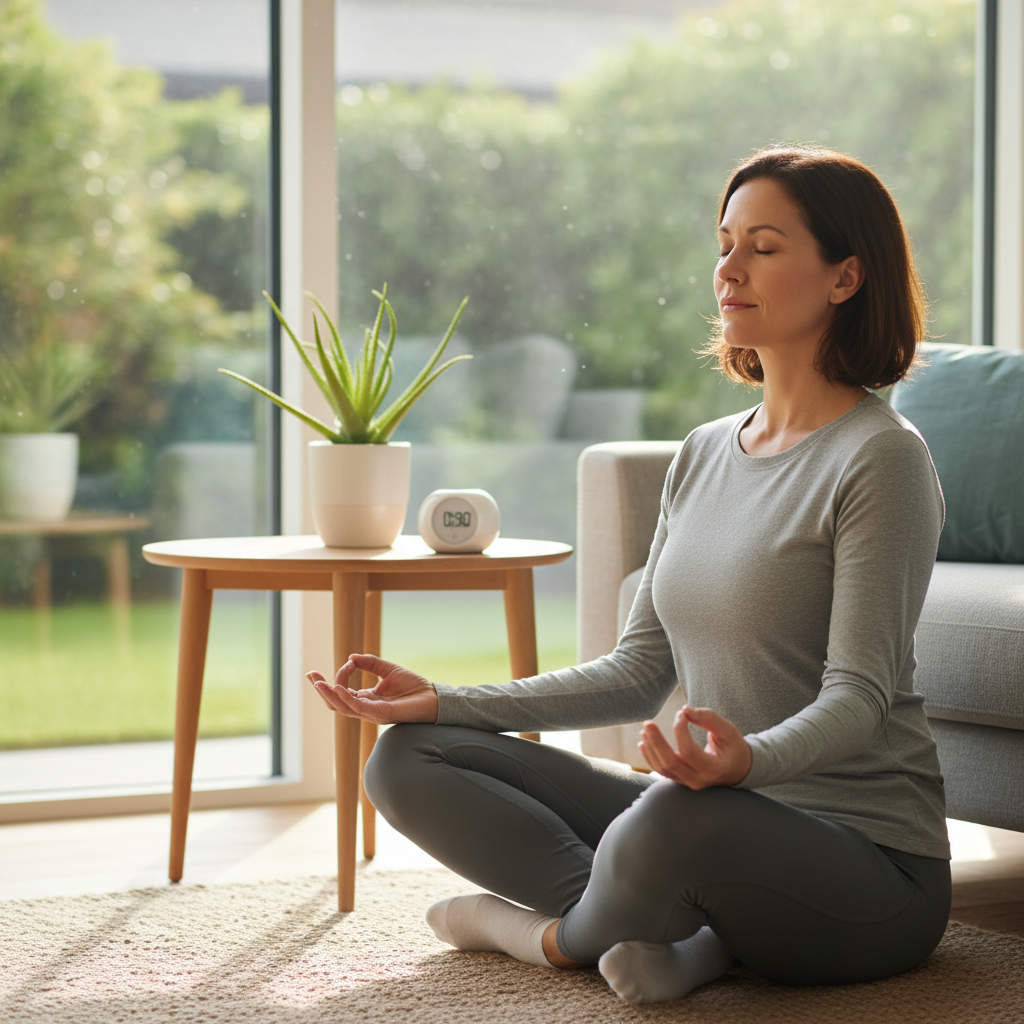
Your posture directly impacts the effectiveness of your breathing reset. Sit or stand with your spine straight, shoulders relaxed, and chest open to allow full lung expansion. If you're in a stressful meeting or public space, you can still benefit by subtly adjusting your posture and breathing more deliberately. Place one hand on your chest and one on your belly to ensure you're breathing deeply into your diaphragm rather than taking shallow chest breaths. This physical positioning sends additional calming signals to your brain and maximizes the physiological benefits of your 90-second practice.
Time Your Reset to Your Personal Stress Signals
Effective stress interruption requires recognizing your personal early warning signs before they escalate. Common signals include tension in your jaw or shoulders, racing thoughts, increased heart rate, or the urge to multitask frantically. The moment you notice these signs, immediately begin your 90-second reset rather than pushing through the stress. Apps like Headspace and Calm offer reminder features, but many people find success by setting phone alerts at typical stress points like mid-morning or post-lunch energy dips. The key is intervention during the early stages of stress rather than waiting until you feel completely overwhelmed.
Adapt the Technique for High-Stakes Situations
Some situations require a more discreet approach to your breathing reset. During important presentations or difficult conversations, you can practice modified breathing by simply extending your exhales without changing your inhale pattern. This subtle shift still activates your parasympathetic nervous system without drawing attention. Another adaptation involves taking three deep breaths while pretending to check your phone or review notes. The goal remains the same: interrupt the stress response before it hijacks your decision-making abilities and emotional regulation.
Create Consistent Reset Triggers Throughout Your Day
Building the 90-second reset into existing routines increases your likelihood of using it when stress hits. Link your breathing practice to specific daily activities like before checking emails, after ending phone calls, or while waiting for elevators. Many people find success pairing their reset with transitional moments like entering their car or office building. This habit stacking approach, popularized by productivity experts like James Clear, ensures your stress interruption tool becomes automatic rather than something you remember only during crisis moments.
Track Your Progress Without Perfectionist Pressure
Noticing improvements in your stress response takes time and consistent practice. Pay attention to how quickly you can shift from stress to calm, how long the benefits last, and whether you're catching stress spirals earlier. Some people notice changes within days, while others need several weeks of regular practice. The important thing is consistency rather than perfection. Even using the technique twice a week provides benefits, and missing days doesn't negate your progress. Focus on building the habit gradually rather than expecting immediate transformation.
Mastering the 90-second breathing reset transforms your relationship with daily stress by giving you a reliable tool for emotional regulation. This simple practice interrupts the physiological cascade of stress hormones and creates space for clearer thinking and better decision-making. Start with just one intentional 90-second reset today, and notice how this brief pause can shift your entire experience of challenging moments.