Why Centering a Late-Autumn Adriatic Trip Around Albania's Riviera Instead of Montenegro Delivers Comparable Coastline at a Fraction of the Accommodation and Dining Costs
The Adriatic and Ionian coastlines share one of the Mediterranean's most quietly spectacular stretches of landscape — and for travelers willing to look past the region's better-known anchors, the rewards are considerable. Late autumn strips away the summer crowds from both Montenegro and Albania, but it strips away something else in Albania that Montenegro holds tightly onto: elevated pricing. Travelers who center their late-season Adriatic itinerary around Albania's Riviera rather than Montenegro's Bay of Kotor are discovering that comparable beauty, warm hospitality, and dramatic scenery don't require the price premium that Montenegro has steadily accumulated over the past decade.
Understand the Pricing Gap Before You Book
Montenegro's coastal towns — Budva, Kotor, Herceg Novi — have become firmly positioned as premium Adriatic destinations. Hotel rates, even in late autumn's shoulder season, reflect that positioning. Albania's Riviera, running from Vlorë southward through Dhërmi, Himara, and Sarandë, draws a different pricing architecture entirely. Accommodation in comparably scenic settings often costs a fraction of what a mid-range Montenegrin property commands for the same dates. Understanding this gap before booking prevents the common mistake of defaulting to Montenegro simply because it's more prominent in English-language travel media.
Use Google Hotels to Compare Side by Side
Running a parallel search on Google Hotels for the same late-October or early-November window, comparing Budva against Himara or Sarandë, makes the pricing differential immediately visible. You'll typically find Albanian guesthouses and boutique hotels — many family-run, most with sea views — available at rates that leave meaningful budget for activities, dining, and spontaneous day trips. The comparison tool also surfaces cancellation policies, which matter in shoulder season when itineraries occasionally shift due to weather.
Choose the Right Albanian Riviera Towns
The Albanian Riviera isn't a single destination but a string of distinct coastal settlements, each with its own character. Sarandë, positioned near the Greek border and directly opposite Corfu, functions as the region's most connected hub — it has ferry links, a wider range of accommodation, and enough café infrastructure to support a comfortable multi-day base. Himara, further north, sits between mountains and sea with a quieter, more residential feel. Dhërmi occupies a dramatic cliff-backed cove and draws visitors seeking almost complete stillness in late autumn, when its summer beach bars have closed and the landscape reverts to something wilder and more honest.
Timing Your Arrival for Late October Through November
The optimal window for Albania's Riviera falls between late October and mid-November. Temperatures along the southern Albanian coast remain mild enough for comfortable walking and dining outdoors — think light-jacket evenings rather than heavy-coat days. The Ionian Sea retains residual summer warmth through October, making coastal walks and quiet harbors genuinely pleasant rather than merely tolerable. Arriving after the first week of November risks encountering intermittent rainfall and reduced restaurant hours, so the sweet spot is firmly the back half of October into the first few weeks of November.
Eating Well Without the Montenegrin Restaurant Markup
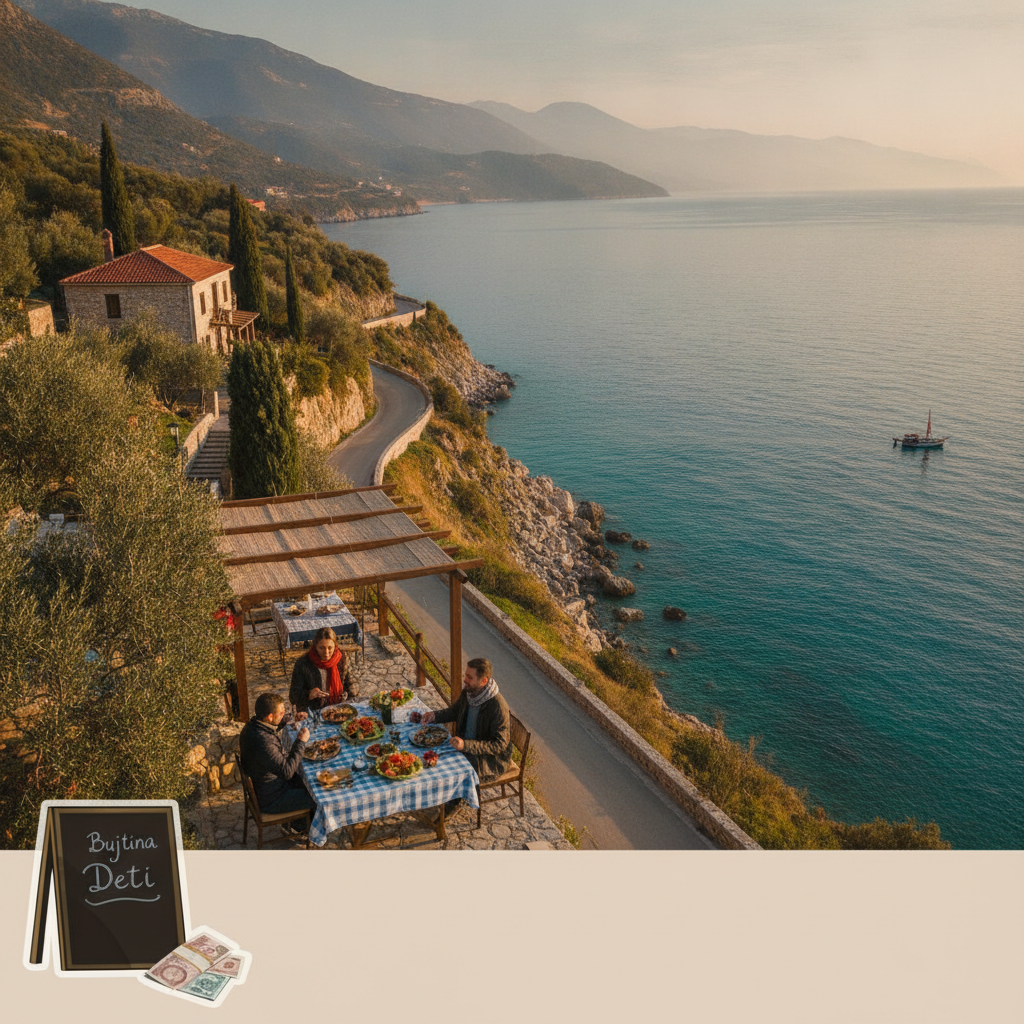
Dining in Montenegro's popular coastal towns carries a visible tourist premium, particularly in Kotor's old town and Budva's harbor-front restaurants. Albania's approach to coastal dining is structurally different. Family-run establishments — called restorantet locally — serve fresh-caught fish, grilled meats, and byrek pastries at prices that feel almost anachronistically affordable compared to the broader Adriatic region. Portions are generous, wine lists lean toward regional Albanian varieties like Sheshi i Zi, and the expectation of a dramatic markup for ambiance simply doesn't exist in most Riviera towns. Travelers who use Tripadvisor to identify locally reviewed restaurants rather than tourist-facing venues consistently find the quality-to-cost ratio exceptional.
Factor in the Grocery and Market Advantage
For travelers staying in self-catering apartments booked through Airbnb — which carries a solid inventory of Riviera properties in towns like Sarandë and Himara — local markets offer extraordinary value. Morning markets in these towns stock seasonal produce, local cheeses, olives, and fresh bread at prices that make self-prepared breakfasts and lunches genuinely pleasant rather than a cost-cutting compromise. This matters especially for multi-night stays where daily dining expenses compound quickly.
What Montenegro Still Does Better
Fairness requires acknowledging where Montenegro maintains a genuine advantage. Kotor's UNESCO-listed old town, the Bay of Kotor's fjord-like drama, and Montenegro's more developed tourism infrastructure — better-marked hiking trails, more consistent English-language signage, broader car rental availability — represent real benefits. Travelers who prioritize a completely frictionless experience may find Montenegro's investment in tourist logistics worth the premium. Albania's Riviera rewards a slightly more independent traveler: someone comfortable with occasional language barriers, variable road conditions on coastal mountain routes, and guesthouses where check-in sometimes involves a phone call rather than an app.
Use Maps.me for Offline Navigation
Driving Albania's SH8 coastal road — which connects Vlorë to Sarandë through some of the region's most dramatic mountain-meets-sea scenery — is one of the late-autumn trip's highlights. Cell coverage drops intermittently through the mountain passes, making Maps.me, which stores offline maps, a practical necessity rather than an optional backup. Download the Albania regional map before departing and save waypoints for your accommodation stops, petrol stations, and key viewpoints along the route.
Building a Practical Late-Autumn Itinerary
A well-paced Riviera itinerary for late autumn works comfortably across seven to ten days. Arriving into Tirana by air — several European carriers service Tirana International Airport Nënë Tereza with competitive late-season fares — allows a single night in the capital before heading south. The drive to Sarandë via the SH4 and then the coastal SH8 takes the better part of a day with stops, and the route itself constitutes a significant part of the experience. Base yourself in Sarandë for three or four nights to explore the nearby ruins of Butrint, a UNESCO World Heritage Site that receives almost no visitors in late autumn, before moving north to Himara or Dhërmi for quieter final days.
As Albania's tourism infrastructure continues its steady, deliberate development — new guesthouses opening seasonally, road improvements on key coastal segments, expanded ferry connections from Sarandë to Corfu — the pricing gap with Montenegro will likely narrow over the coming years. Travelers who visit now encounter a destination that hasn't yet calibrated its costs to its scenery's actual appeal. The late-autumn window, in particular, offers the rare combination of genuine solitude, mild weather, and accommodation rates that leave real budget for spontaneity — whether that means an extra night with a sea view or a long lunch that extends into the late-afternoon golden light without watching the bill climb.