
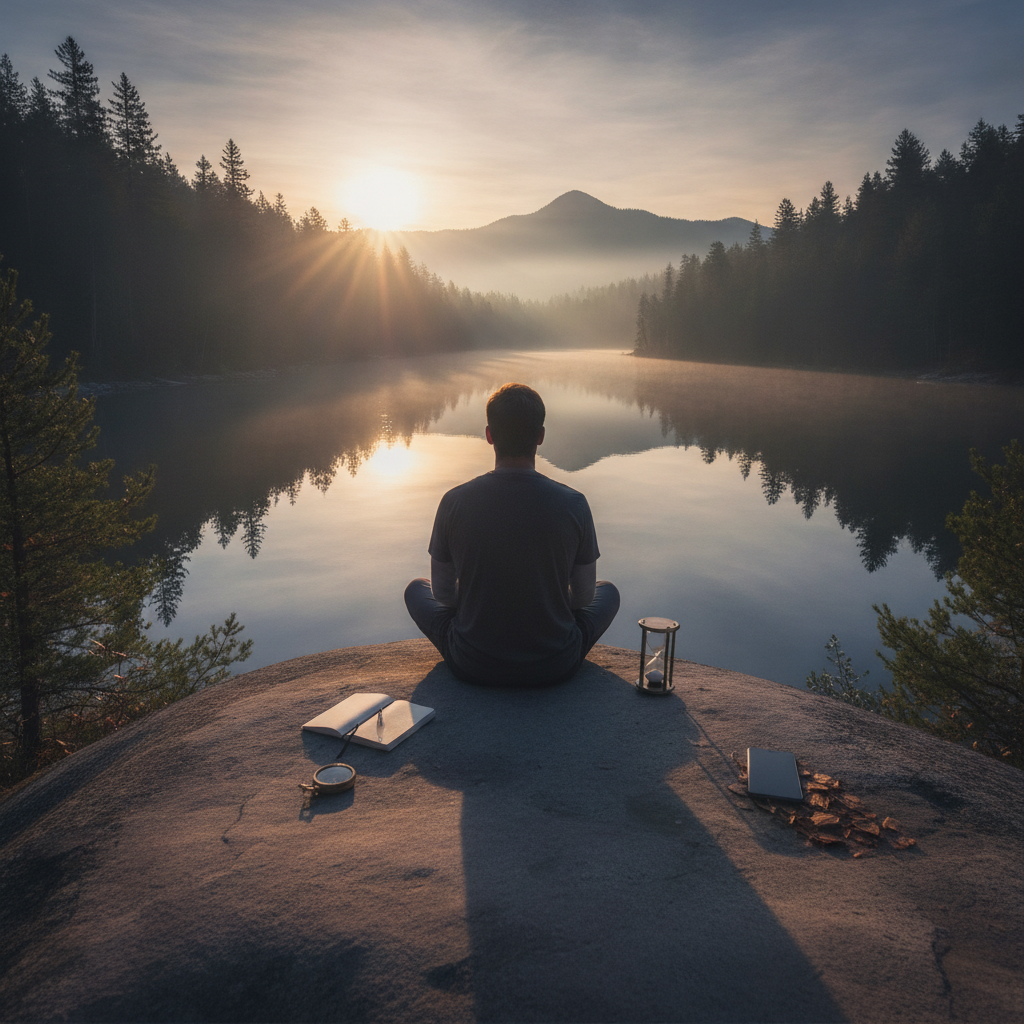
How Designing a Deliberate Monthly Solitude Practice Restores the Self-Awareness That Constant Connectivity Quietly Erodes
Somewhere between the morning Slack notifications and the late-night Instagram scroll, most people lose track of what they actually think. Not what their feed thinks, not what their group chat recommends — what they genuinely feel, want, and need. Constant connectivity doesn't announce the damage it does. It just slowly fills every quiet moment with noise until silence starts to feel uncomfortable rather than restorative. Designing a deliberate monthly solitude practice is one of the most underused tools for reclaiming the self-awareness that digital life quietly chips away.
Schedule Your Solitude Like a Non-Negotiable Appointment
The biggest reason monthly solitude never happens isn't laziness — it's that unscheduled intentions disappear under the weight of everything else. Put it in your calendar the same way you'd book a dentist appointment or a quarterly review at work. Pick a specific date at the start of each month, decide how long it will last (even three hours counts), and treat cancellation as a last resort. When solitude has a fixed time slot, the mental resistance to prioritizing it drops significantly.
Choose a Location That Interrupts Your Default Environment
Familiarity breeds distraction. Practicing solitude in your apartment, where your laptop, laundry, and fridge are all competing for attention, rarely works well. A local nature preserve, a quiet corner of a botanical garden like those found in places like Portland's Crystal Springs or Chicago's Garfield Park Conservatory, or even a library reading room can create enough environmental contrast to shift your mental state. The goal is a setting that signals to your nervous system that this time operates by different rules.
Set a Simple Intention Before You Begin
Solitude without direction can drift into rumination, which is the opposite of what you're after. Before you leave the house, write one or two sentences about what you hope to understand or reconnect with during your time alone. It doesn't need to be profound — something as simple as "I want to figure out why I've been feeling low energy all month" or "I want to check in on whether my current schedule still feels right" is enough. That single intention acts as a gentle anchor rather than a rigid agenda.
Leave the Headphones and Podcasts Behind
Audio content, even thoughtful podcasts like those from Headspace or Calm's long-form episodes, fills the mental space that solitude is designed to open. The discomfort of genuine silence is actually part of the process. When you sit with quiet long enough, your mind starts surfacing things that ambient noise had been suppressing — unresolved frustrations, forgotten priorities, creative ideas that couldn't compete with the constant input stream. That surfacing is the practice working. Resist the urge to fill the silence before it has a chance to speak.
Bring a Journal, Not a Phone
A physical notebook transforms passive stillness into active self-reflection. You don't need structured prompts to make this useful, though some people find it helpful to start with questions like "What have I been avoiding thinking about?" or "What does my body feel like right now compared to a month ago?" Writing by hand slows your thinking down in a productive way, making it easier to notice patterns you'd otherwise skip past. A simple Leuchtturm1917 or even a basic composition notebook works fine — the tool matters far less than the consistency of using one.
Resist the Urge to Evaluate the Session While It's Happening
Many people spend their solitude silently grading it — "Is this working? Am I doing this right? This feels pointless." That internal commentary is just another form of noise. Self-awareness doesn't announce itself with a dramatic revelation. It tends to arrive quietly, sometimes hours after you've returned home, as a subtle shift in how clearly you can name what you're feeling or what you actually want. Trust that something useful is happening even when it doesn't feel productive, especially in the first few sessions when your mind is still learning to slow down.
Build in a Short Debrief When You Return
Within an hour of finishing your solitude session, spend five minutes writing down whatever surfaced — even fragments, even things that seem unrelated or obvious. Over months, these brief notes become a personal data set about your emotional patterns, recurring concerns, and the themes that keep reappearing beneath everyday life. Apps like Day One are useful for tagging and searching these entries over time, making it easier to spot when the same issue resurfaces month after month and deserves more direct attention.
Adjust the Format Seasonally Rather Than Forcing One Structure
A solitude practice that works in June — a long solo walk along the waterfront, an afternoon sitting in a park — may feel completely wrong in January. That's not failure; it's context. Seasonal adjustment keeps the practice sustainable rather than something you dread. In colder months, a slow morning in a café with your notebook and no phone may serve the same function as a summer afternoon hike. What matters is the intentional disconnection and the internal attention, not the specific form it takes.
Start Smaller Than You Think You Need To
Three hours of monthly solitude feels manageable. A full day feels aspirational but overwhelming for most people who haven't built the tolerance yet. Starting with a shorter block — even ninety minutes — and doing it consistently is more valuable than planning an elaborate retreat you keep postponing. Once you've done it two or three months in a row, you'll naturally understand what duration actually restores you, and you can adjust from there based on real experience rather than theory.
Regular solitude isn't a luxury or an indulgence — it's maintenance for the part of you that makes decisions, sets boundaries, and knows what actually matters. The self-awareness it restores tends to make everything else in life feel more intentional: your relationships, your work, your spending, your health. Starting this month, even with a single quiet afternoon and a notebook, is enough. Give yourself the space to hear yourself think, and you may be surprised how much you've been missing.