
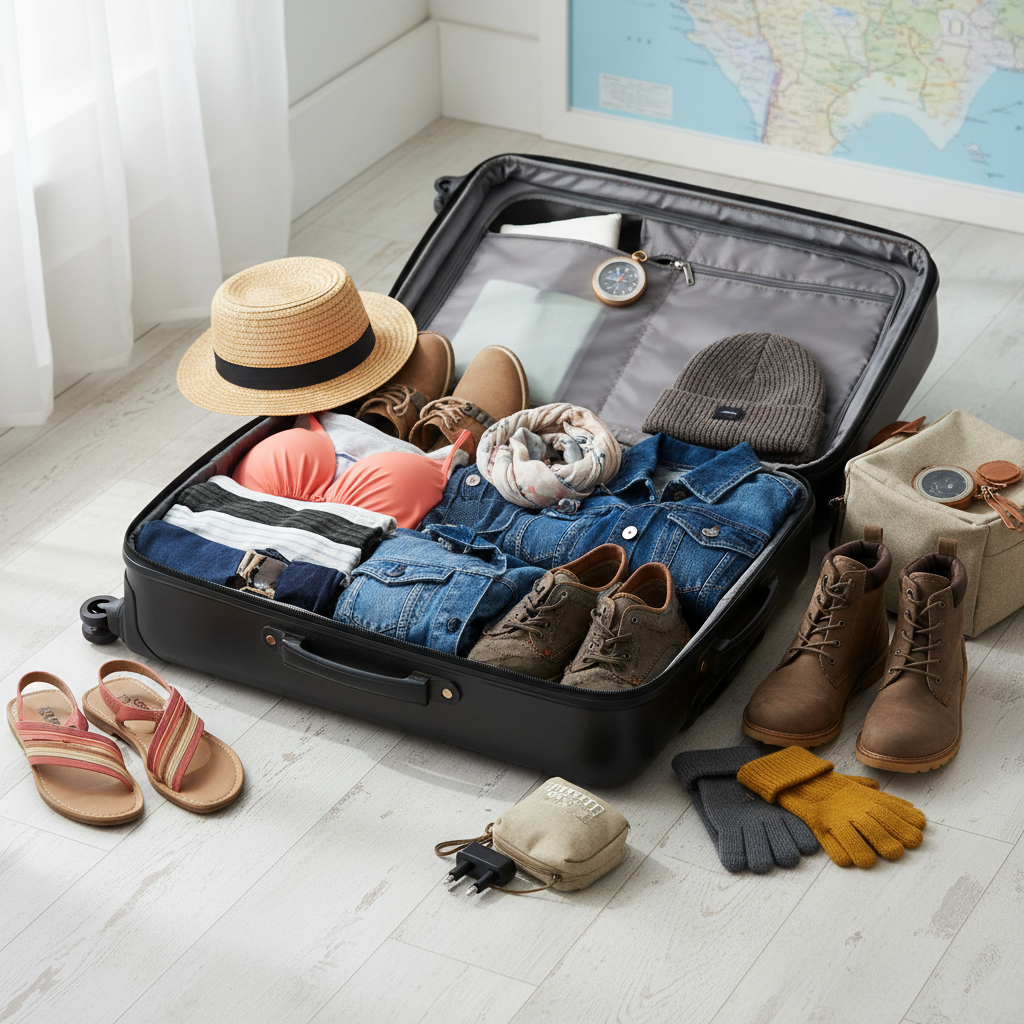
How to Pack a Carry-On Suitcase for Three Different Climates in One Trip
Multi-climate trips challenge even experienced travelers with an impossible puzzle: fitting summer beach clothes, winter mountain gear, and mild transitional weather outfits into a single carry-on bag. Business travelers heading from cold Chicago to warm Austin and then moderate Seattle face this exact dilemma, along with countless others planning ambitious itineraries that cross climate zones.
Start With Your Heaviest Climate Items as Your Travel Outfit
Wear your heaviest and bulkiest clothing items during travel to maximize carry-on space. This means donning your winter coat, boots, and thickest sweater when departing from or heading to your coldest destination. Your feet might get warm during the flight, but removing shoes is simple enough. Pack lightweight slip-on shoes in your bag for warmer destinations. This strategy alone can save 30-40% of your packing space while ensuring you're appropriately dressed for at least one climate immediately upon arrival.
Choose Base Layers That Work Across Temperature Ranges
Invest in merino wool or synthetic blend base layers that regulate temperature in both warm and cool conditions. These materials wick moisture when it's hot and provide insulation when temperatures drop. Pack 2-3 long-sleeve base layer shirts and one pair of lightweight thermal leggings that work under shorts, pants, or dresses. Uniqlo's Heattech line and Smartwool products offer excellent versatility. You'll wear these pieces in every climate, just styled differently with outer layers or on their own.
Master the Art of Strategic Layering Combinations
Plan outfits around pieces that layer together in multiple combinations rather than packing separate outfits for each climate. A lightweight cardigan works over a sundress for cool evenings and under a rain jacket for cold weather. Pack one versatile blazer that dresses up casual pieces and provides warmth. Choose pants that work with both sandals and boots. This approach turns 6-8 individual pieces into 15+ different outfit combinations. Write down your planned combinations before packing to ensure everything serves multiple purposes.
Pack Weather-Adaptive Footwear Using the Two-Plus-One Method
Limit yourself to two pairs of shoes in your bag plus the heavy pair you're wearing. Choose shoes that transition between climates: waterproof walking shoes work for rainy Seattle and hiking in Colorado. White sneakers pair with summer dresses and casual winter outfits. Pack thin, packable flats that stuff into small spaces for dressier occasions. Skip single-purpose items like flip-flops unless you're spending significant time at beaches. Quality walking shoes with good support serve you better across varied climates and activities than multiple specialized pairs.
Utilize Compression Packing Cubes for Maximum Space Efficiency
Compression packing cubes reduce clothing volume by up to 50% while keeping different climate gear organized. Use separate cubes for warm weather, cold weather, and transitional pieces. Eagle Creek and Peak Design make reliable compression cubes that withstand frequent use. Roll clothes tightly before placing them in cubes, then compress fully. This system lets you quickly access appropriate clothing without unpacking everything. The organized approach becomes crucial when moving between destinations quickly and living out of your carry-on for extended periods.
Focus on Quick-Dry Fabrics and Minimal Underwear
Pack underwear and socks for half your trip length, choosing quick-dry synthetic materials or merino wool blends. These fabrics wash easily in hotel sinks and dry overnight, reducing the total number of pieces needed. ExOfficio and Smartwool offer excellent travel-specific undergarments. Pack one extra pair beyond your half-trip calculation for emergencies. This strategy applies to workout clothes too – one set of quick-dry athletic wear serves multiple purposes and climates. You'll do laundry anyway on longer trips, so embrace this practical approach rather than overpacking basics.
Pack One Statement Jacket That Handles Multiple Weather Conditions
Choose one high-quality jacket that performs across your climate range rather than packing multiple lighter jackets. A packable down jacket with a water-resistant shell works in cold, windy, and light rain conditions. Patagonia's Nano Puff and Arc'teryx Atom LT offer excellent versatility in compact packages. This jacket should pack down small enough to stuff in a day bag while providing real warmth and weather protection. Skip cotton hoodies and bulky fleeces that don't pack well and only work in limited conditions.
Use Your Personal Item Bag for Climate-Specific Accessories
Maximize your airline's personal item allowance by packing climate-specific accessories in a backpack or large purse. Include items like warm hats, lightweight scarves, sunglasses, and gloves that take minimal space but make significant comfort differences. A packable rain jacket, umbrella, or sun hat might tip the scales for comfort in specific climates. These accessories often make or break your comfort level in challenging weather, but they compress easily into corners of personal bags. Keep the most essential items accessible in exterior pockets for quick climate adjustments.
Packing for multiple climates requires strategic thinking rather than simply stuffing everything you might need into a bag. Start planning your combinations now, and you'll discover that thoughtful packing actually enhances your travel experience by keeping you comfortable and prepared for any weather.