How Comparing Noise-Cancelling Headphone Attenuation Decibel Ratings Against Your Actual Use Environments Prevents Overpaying for Office-Tuned Performance in Commuter Conditions
Noise-cancelling headphones have become one of the most aggressively marketed consumer electronics categories on the market, and the specs sheet is where a lot of shoppers get quietly misled. Brands like Sony, Bose, and Jabra publish impressive attenuation numbers — sometimes claiming up to 40 decibels of reduction — but those figures are typically measured in controlled lab conditions that look nothing like a subway platform or a bus depot. If your commute involves wind noise, variable low-frequency rumble, and unpredictable crowd sounds, that office-optimized headphone may leave you disappointed and out of real money.
What Do Attenuation Decibel Ratings Actually Measure?
Attenuation ratings tell you how many decibels of ambient sound a headphone reduces across a measured frequency range, but the critical word is which frequencies. Most flagship office headphones are tuned to cancel steady, mid-frequency sounds — think HVAC hum, keyboard clatter, or the consistent drone of a conference room. Commuter environments throw low-frequency chaos at you: diesel engine rumble, rail screeches, and the erratic bass frequencies of a crowded train car. A headphone rated for strong office attenuation may actually underperform against those lower-frequency commuter sounds, even if the spec number looks impressive.
How Does Your Actual Commute Environment Differ From an Office?
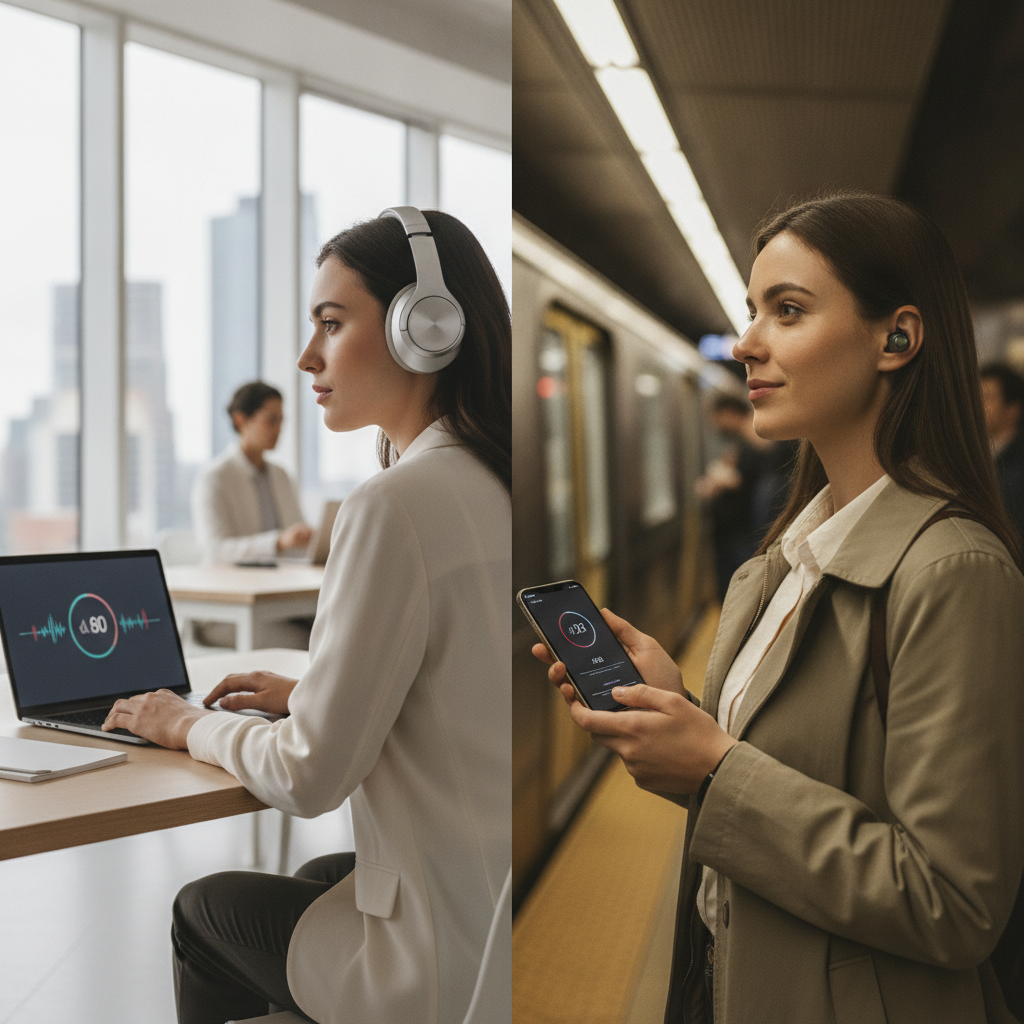
An open-plan office typically sits between 60 and 70 decibels, with mostly predictable, mid-range frequency noise. A subway car at peak hour can spike above 90 decibels, with a chaotic frequency mix that includes deep mechanical rumble and sudden sharp sounds that no ANC system handles perfectly. Bus commutes add wind buffeting — a notorious weakness for many noise-cancelling systems — while walking commutes mix variable outdoor noise with wind noise that most office-optimized headphones were never designed to address. Knowing your actual sound environment before you shop is the single most useful step you can take.
Why Do Brands Publish Office-Optimized Performance Numbers?
Office environments are easier to engineer for and easier to demonstrate convincingly in a quiet showroom. When Sony or Bose sets up a demo at a retail location, they're playing a steady ambient track that showcases their headphone's strengths. That's not deceptive exactly — it's just favorable framing. The problem is that commuters often walk away from a Best Buy demo convinced a headphone will replicate that experience on a crosstown train. Premium models in the $300–$400 range are increasingly marketed around office productivity features like call clarity and meeting integration, which adds cost that commuters simply don't need.
How Can You Match Frequency Performance to Your Route?
Free decibel meter apps like NIOSH SLM or Decibel X let you measure your actual commute noise levels in real time. Spend one week logging the loudest stretches of your daily route — the specific subway stop where the train brakes hardest, or the bus bay at your terminal. Once you have a rough frequency profile, look for headphone reviews that specifically benchmark low-frequency attenuation rather than just overall ANC rating. RTings.com publishes frequency-specific isolation charts that break down exactly where a headphone's noise reduction falls off, which is far more useful than a single marketing-department number.
What Specs Should Commuters Actually Prioritize?
For transit commuters, passive isolation matters as much as active noise cancellation. A well-sealed over-ear design with dense ear cushions creates a physical sound barrier before the ANC circuit even activates, which improves performance against erratic low-frequency noise that ANC algorithms struggle to process fast enough. Battery life per charge also matters more for commuters than for office workers who sit near charging ports all day. Sweat and moisture resistance is worth checking if your commute involves walking between stops. These specs rarely appear in headline marketing, but they consistently separate a commuter-appropriate headphone from an office-first design wearing a commuter costume.
How Do Mid-Range Models Compare Against Flagship Pricing for Commutes?
The honest answer is that mid-range headphones in the $150–$220 range, like the Anker Soundcore Q45 or certain Jabra Evolve configurations, often deliver attenuation performance that commuters genuinely cannot distinguish from flagship models in real-world transit conditions. That gap narrows dramatically once you're fighting subway noise rather than sitting in a quiet open-plan office. The extra cost in premium tiers frequently buys features oriented toward office productivity — advanced multipoint connectivity, meeting platform integration, call microphone quality — that are genuinely wasted on a commuter who just wants to hear their podcast clearly between stops.
When Does a Premium Model Actually Justify the Cost for Commuters?
If your commute combines multiple environments — walking, train, and a quiet office where you also use the headphones for calls — then a flagship model starts making more practical sense because it covers a wider use range. Sony's WH-1000XM series, for example, includes adaptive ANC modes that adjust to environment in real time, which helps when you move between a noisy transit platform and a quiet workspace. But if your headphones stay on your ears purely during transit and never see the inside of a meeting room, that adaptive office-tuning feature is essentially paid overhead delivering zero benefit for your actual lifestyle.
How Should You Actually Test Before Buying?
If you can, take advantage of retail return windows to test headphones on your real commute rather than relying on in-store demos. Most major retailers and direct-brand sites offer 30-day return periods, and using that window as a real-world trial against your specific route is the smartest move available. Wear them on your loudest stretch of commute, not just around your living room. If a store demo is your only option before purchase, find the loudest area of the store, turn off your phone's music, and assess how much ambient retail noise the headphones actually suppress — it's an imperfect proxy but more honest than a curated demo track.
Matching a headphone's real-world attenuation performance to your specific commute conditions is one of those buying decisions that pays off quietly but consistently. You skip the premium office features you'll never use, land on a specification set that actually fits your route, and keep real money in your pocket without sacrificing a single decibel of the performance that actually matters to you. Take five minutes this week to log the noise level on your loudest commute stretch — that single small step will make your next headphone purchase dramatically smarter.