
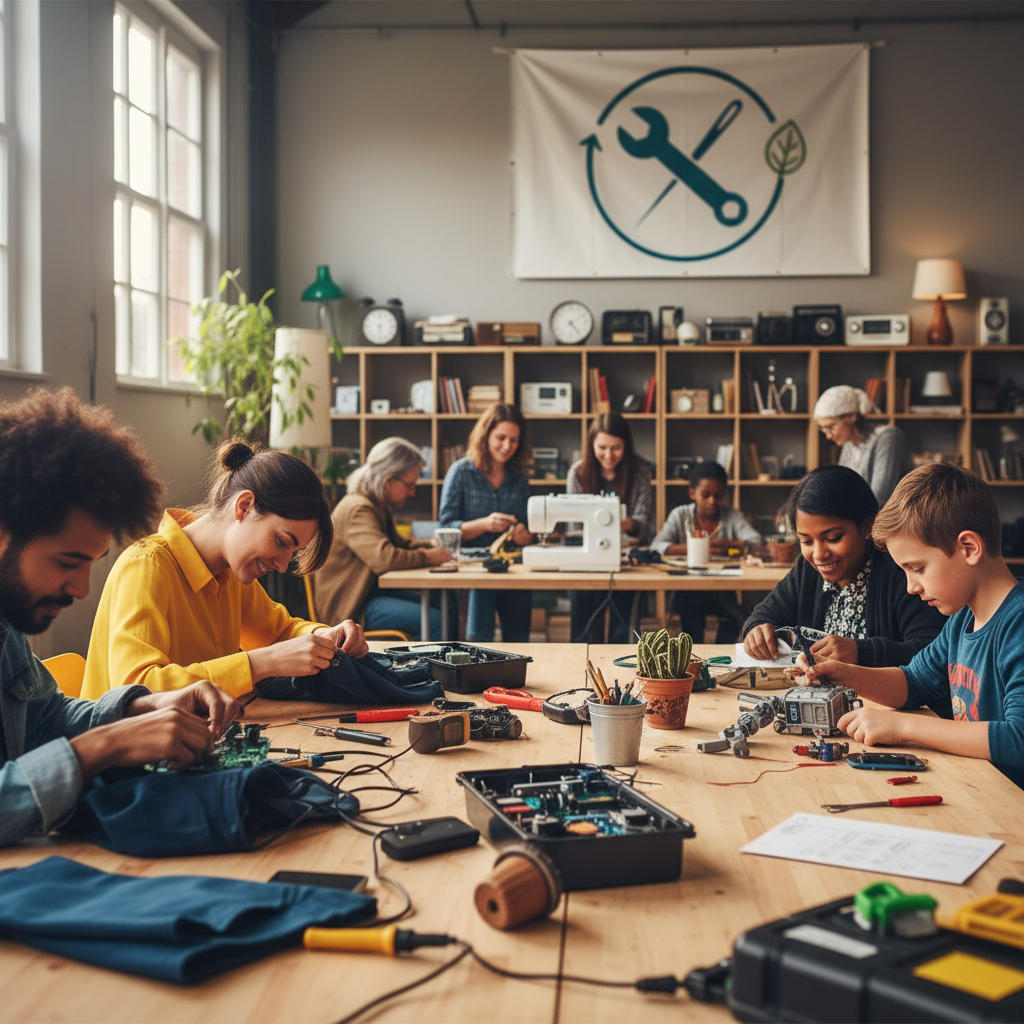
How Repair Cafes Are Revolutionizing What It Means to Own Something
Across neighborhoods from Amsterdam to Austin, volunteers armed with soldering irons and sewing kits are quietly dismantling decades of throwaway culture. Repair cafes, community spaces where broken items find new life through collective knowledge and free labor, represent more than a trendy sustainability movement. They signal a fundamental shift in how consumers relate to their possessions, challenging the assumption that replacement beats repair in both convenience and cost.
The concept originated in the Netherlands through the work of journalist Martine Postma, who opened the first official repair cafe in Amsterdam in 2009. What began as a single community experiment has evolved into a global network of over 2,500 locations spanning six continents. These gatherings typically unfold in community centers, libraries, and church basements, where skilled volunteers help visitors diagnose everything from malfunctioning coffee makers to torn jackets. The atmosphere resembles a cross between a technical workshop and social club, with participants sharing tools, troubleshooting strategies, and stories about their cherished but damaged belongings.
The Economics of Extension Over Replacement
The financial appeal of repair cafes extends beyond the obvious benefit of free labor. Regular participants often describe developing a more nuanced understanding of product quality and longevity, learning to recognize which items justify higher upfront costs through superior repairability. This shift in purchasing priorities reflects what economists call "total cost of ownership" thinking, where consumers calculate long-term value rather than focusing solely on initial price points. Many repair cafe veterans report making fewer but more deliberate purchases, gravitating toward brands like Patagonia and Fairphone that explicitly design for durability and user maintenance.
The social dynamics within these spaces also influence spending habits in unexpected ways. Participants frequently discover that items they considered obsolete simply needed minor adjustments or component replacements costing pennies rather than dollars. These revelations often translate into reduced impulse buying and increased skepticism toward marketing messages promoting constant upgrades. The hands-on experience of dismantling and reassembling products demystifies technology and manufacturing, making consumers less susceptible to planned obsolescence strategies.
Cultural Shifts Beyond Individual Savings
Repair cafes embody the Scandinavian concept of "lagom," meaning just the right amount or balance, applied to material consumption. This philosophy emphasizes sufficiency over excess, encouraging individuals to find satisfaction in maintaining and optimizing existing possessions rather than constantly acquiring new ones. The movement also reflects growing awareness of what Germans call "Verschlimmbessern" – the act of making something worse through unnecessary improvements or replacements. These cultural frameworks provide language and legitimacy for consumption patterns that prioritize mindful use over mindless accumulation.
The intergenerational knowledge transfer occurring in repair cafes represents another significant cultural development. Older volunteers often possess practical skills that younger participants lack, while tech-savvy millennials and Gen Z members contribute expertise in electronics and digital troubleshooting. This exchange challenges age-based assumptions about technical competence while preserving traditional craft knowledge that might otherwise disappear. Many participants describe these interactions as unexpectedly valuable, creating social connections that extend beyond the immediate repair activities.
The Ripple Effects on Retail and Manufacturing
The repair cafe movement coincides with legislative changes across Europe and North America mandating "right to repair" protections, requiring manufacturers to make spare parts and repair manuals available for extended periods. Companies like iFixit have capitalized on this trend by providing detailed teardown guides and specialized tools, while traditional retailers increasingly offer repair services alongside new product sales. Best Buy's Geek Squad and Apple's expanded repair programs represent mainstream recognition that consumers value product longevity and serviceability.
Some manufacturers have begun incorporating "repairability scores" into their marketing, acknowledging that a growing segment of consumers considers maintenance ease when making purchasing decisions. This shift creates competitive pressure for improved product design and component accessibility, potentially reversing decades of trend toward sealed, disposable electronics and appliances. The success of companies like Framework, which produces modular laptops designed for user upgrades and repairs, demonstrates commercial viability for this approach.
The repair cafe phenomenon suggests that ownership itself is evolving from a simple transaction into an ongoing relationship with objects. As these community spaces continue expanding and maturing, they're likely to influence everything from product design standards to consumer protection legislation. The movement's emphasis on skill-sharing and community building offers a template for addressing other aspects of modern consumption culture, pointing toward a future where buying something represents the beginning rather than the entirety of a product's lifecycle in your life.