Why Centering a First-Time Peru Trip Around the Sacred Valley Instead of Cusco Cuts Altitude Sickness Risk While Delivering Deeper Inca History at Lower Daily Costs
Planning a first trip to Peru almost always starts the same way — Machu Picchu on the horizon, Cusco as the obvious base, and a rough itinerary assembled from the same dozen travel blogs. It's a reasonable starting point, but it tends to leave first-timers battling altitude sickness in a city hotel, rushing between the same crowded sites, and spending considerably more than they expected. Centering that first Peru experience around the Sacred Valley instead quietly solves all three problems at once.
Why Elevation Matters More Than Most Travelers Expect
Cusco sits at roughly 3,400 meters above sea level — high enough that altitude sickness, known locally as soroche, genuinely affects a significant portion of visitors regardless of fitness level. The Sacred Valley, by contrast, stretches between approximately 2,800 and 3,000 meters in most of its main towns, including Pisac and Ollantaytambo. That difference is modest on paper but meaningful in practice. Spending the first two or three days at valley elevation allows the body to begin acclimatizing before ever stepping foot in Cusco, which reduces the risk of the headaches, fatigue, and nausea that can derail the opening days of an otherwise well-planned trip.
Ollantaytambo as a Smarter Base Than Cusco
Ollantaytambo is the most practical anchor point for a Sacred Valley itinerary, and it earns that status for several reasons simultaneously. The town sits at the valley's western end, placing travelers within direct walking distance of one of the best-preserved Inca military and ceremonial complexes in the entire region — one that most visitors sprint past on the way to Machu Picchu without ever exploring properly. Accommodation here runs noticeably cheaper than equivalent options in central Cusco, and the town's small scale means everything from the market to the train station is reachable on foot. El Albergue, a beloved guesthouse and organic farm operating beside the rail station, represents the kind of comfortable, locally rooted stay that Cusco's tourist center rarely offers at the same price point.
Pisac's Market and Ruins Deliver More Than the Cusco Circuit
Pisac is frequently reduced to a Sunday market stop on organized day tours, which is a genuine disservice to what it actually offers. The archaeological site above the town is one of the largest Inca ruins in the Sacred Valley, featuring agricultural terraces, ceremonial plazas, and residential complexes spread across a dramatic hillside that relatively few travelers take the time to walk in full. The daily artisan market in the plaza below is worth visiting any morning, not just Sundays, and the town's small restaurants and bakeries operate at prices that reflect local rhythms rather than tourist demand. Spending two nights in Pisac rather than passing through on a tour bus changes the entire character of the experience.
Lower Daily Costs Without Sacrificing Quality
The economics of basing in the Sacred Valley rather than Cusco are straightforward. Accommodation, meals, and transport within the valley consistently run lower than in Cusco's historic center, where prices have adjusted upward to meet international tourist expectations. A good guesthouse meal in Ollantaytambo or Urubamba — the valley's largest town and a useful provisioning stop — costs noticeably less than an equivalent plate at a Cusco Plaza de Armas restaurant. Provisioning from local markets rather than tourist-facing grocery stores extends savings further. The Urubamba market, held on Sundays and Wednesdays, is well-stocked, genuinely local, and almost entirely free of the markup that follows tourist foot traffic.
The Train to Machu Picchu Works Better From the Valley
PeruRail and Inca Rail both run services to Aguas Calientes — the gateway town for Machu Picchu — and both depart from Ollantaytambo as well as Poroy near Cusco. Departing from Ollantaytambo is simpler, cheaper per segment, and eliminates the need for a separate taxi or bus ride to the station. Booking a morning train, visiting Machu Picchu for a full day, and returning to Ollantaytambo in the late afternoon is a clean, manageable sequence that avoids the expensive overnight stays in Aguas Calientes, where accommodation costs are notably inflated relative to quality. This approach treats Machu Picchu as a dedicated day trip rather than a logistical event requiring multiple transfers.
Moray and the Salt Pans of Maras Require No Rush
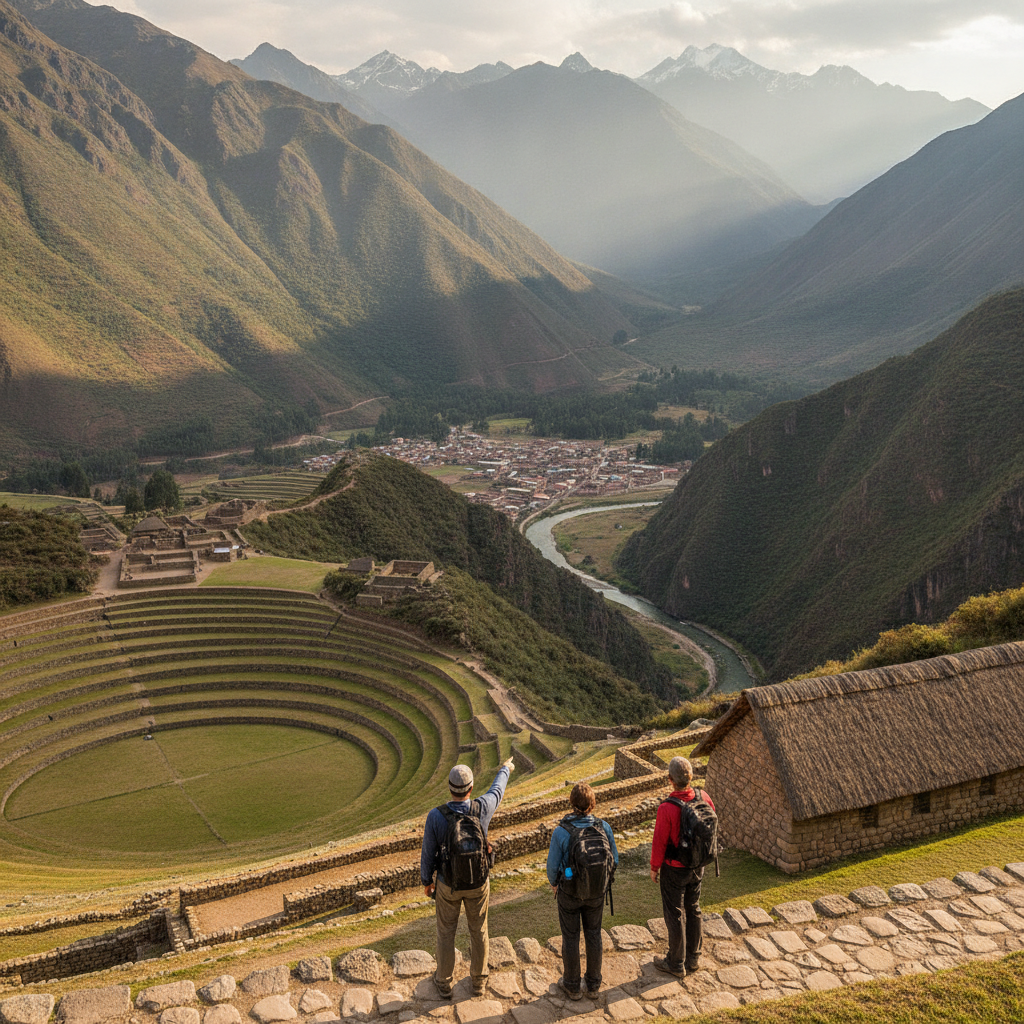
Two of the Sacred Valley's most visually striking sites — the circular agricultural terraces at Moray and the Maras salt evaporation ponds — are rarely given adequate time on organized tours, which tend to bundle them into half-day circuits that barely allow twenty minutes at each. Staying in the valley means visiting both sites at your own pace, ideally in the quieter morning hours before tour groups arrive. Moray, in particular, rewards slow exploration; the concentric terraces descend into the earth in a way that photographs genuinely fail to capture. Both sites are reachable by a combination of local transport and short walking routes, keeping costs minimal.
Cusco Works Better as a Reward Than a Starting Point
After three or four days acclimatizing in the Sacred Valley, Cusco becomes a genuinely enjoyable destination rather than an altitude gauntlet. The city's colonial architecture layered over Inca stonework, the San Pedro market, and the neighborhoods of San Blas and Hatunrumiyoc reveal themselves more clearly when the body is functioning well and the itinerary isn't under pressure from the opening days of the trip. Arriving in Cusco later in the journey also allows for better decisions about which paid sites and guided experiences are worth the time, since the foundation of Sacred Valley context makes the city's history considerably more legible.
Booking Guesthouses Through Local Platforms Reduces Costs Further
For accommodation, looking beyond the standard international booking platforms to Peru-specific guesthouses and hostales — smaller family-run properties that don't always appear on Booking.com or Expedia — consistently surfaces better value. Many properties in Pisac, Ollantaytambo, and Urubamba can be booked through direct email or WhatsApp contact after finding them via Google Maps reviews or the Peru-focused travel community on platforms like iOverlander. Rates negotiated directly with owners often undercut the commission-adjusted prices listed elsewhere, and the stays tend to come with genuine local knowledge about transport, timing, and which sites to prioritize based on current conditions.
As Peru's tourism infrastructure continues maturing, more travelers are quietly reshaping the standard Cusco-centric itinerary — not because Cusco isn't worth visiting, but because the Sacred Valley has earned recognition as a destination in its own right rather than a corridor between the airport and Machu Picchu. The shift toward slower, more regionally grounded itineraries tends to produce better outcomes across every measure that matters: health, budget, and the quality of what actually gets seen. A first Peru trip built around the valley instead of the city remains one of the most consistently rewarding structural decisions a traveler can make.