
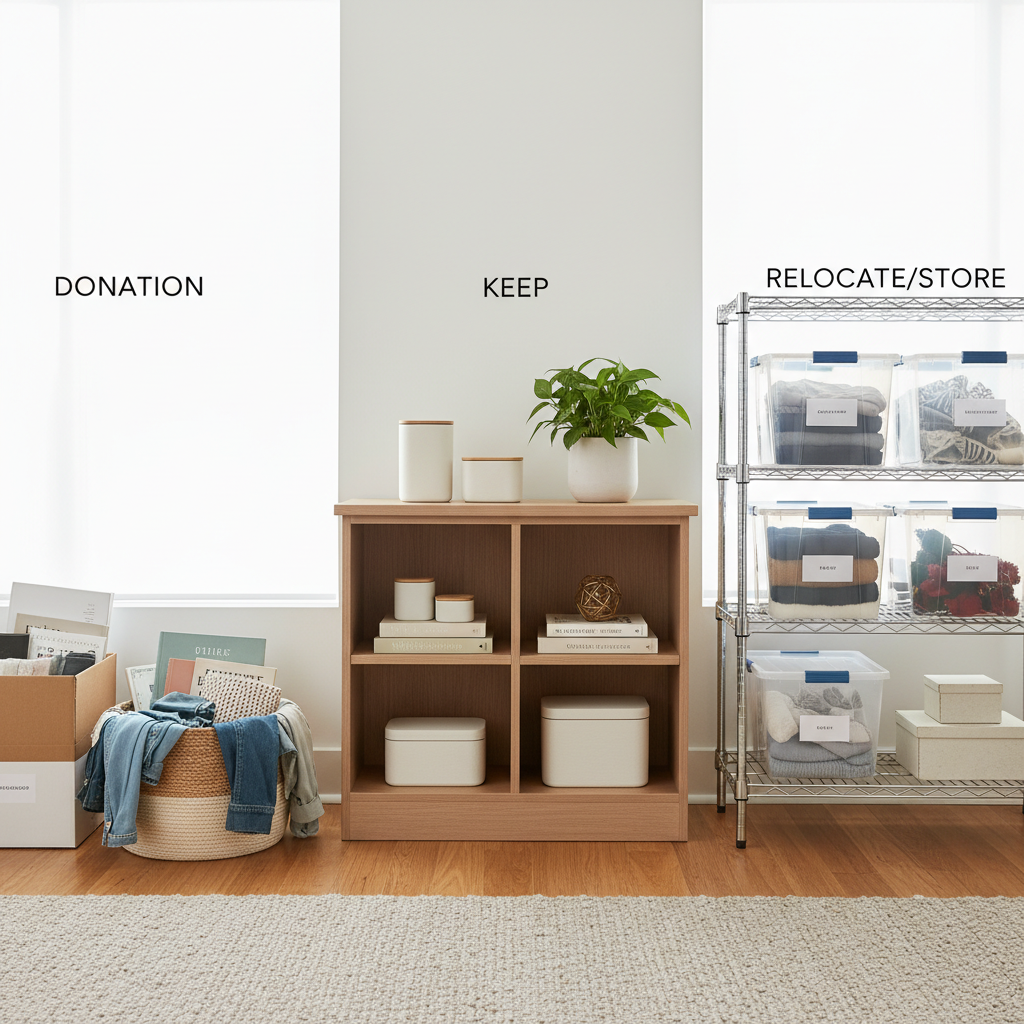
How the 3-Zone Decluttering System Makes Room-by-Room Organization Actually Sustainable
Most decluttering approaches fail because they demand too much decision-making in one session, leading to mental fatigue and abandoned projects halfway through. You've probably experienced this yourself: starting with enthusiasm to organize a space, only to find yourself surrounded by larger piles than when you began, feeling overwhelmed by the sheer volume of choices required.
The 3-Zone Decluttering System addresses this challenge by simplifying each decision into three clear categories, making the process manageable and sustainable over time. This method transforms organization from an exhausting marathon into a series of achievable sprints.
Set Up Three Distinct Physical Zones Before You Begin
Before touching a single item, designate three separate areas in your space: Keep, Donate, and Trash/Recycle. These zones should be physically distinct—use boxes, bags, or simply different corners of the room. The Container Store's clear storage bins work well for this purpose, as you can see progress accumulating. Having predetermined destinations eliminates decision paralysis and keeps momentum flowing. When you pick up an item, you immediately know where it needs to go based on your quick assessment, rather than holding it while debating multiple possibilities.
Start With the Easiest Decisions to Build Momentum
Begin each session by identifying obvious candidates for the trash and donation zones. Expired medications, broken electronics, and clothes with permanent stains require no emotional deliberation. These quick wins create visible progress and build confidence for harder decisions ahead. Target items that haven't been used in over a year or duplicates of things you already own. This approach follows the same principle used by professional organizers like Marie Kondo—starting with categories that generate less emotional attachment before moving to more meaningful possessions.
Apply the One-Year Rule for Borderline Items
When you encounter items that fall into the gray area between keeping and donating, ask yourself when you last used them. If the answer exceeds twelve months, they belong in the donation zone unless they serve a specific seasonal or emergency purpose. This rule eliminates the "just in case" mentality that keeps closets and storage areas cluttered with unused items. Kitchen gadgets, exercise equipment, and hobby supplies often fall into this category. Goodwill and Salvation Army centers report that these types of items are among their most needed donations, making your decluttering efforts beneficial to others.
Create a Maybe Box for Difficult Decisions
Some items will resist easy categorization despite your best efforts. Rather than stalling the entire process, create a fourth temporary zone: a "maybe" box with today's date written clearly on top. Store this box out of sight for six months. If you haven't opened it to retrieve anything during that period, donate the entire contents without looking inside. This strategy removes the pressure to make perfect decisions in the moment while still maintaining forward progress.
Work in Focused Twenty-Minute Sessions
Limit each decluttering session to twenty minutes maximum, setting a timer to maintain boundaries. This timeframe prevents decision fatigue while making the task feel manageable even on busy days. Professional productivity experts recommend this duration because it maintains mental sharpness without creating overwhelming commitment. You can always do multiple sessions in one day if energy permits, but the timer gives you permission to stop without guilt. Netflix's Marie Kondo series demonstrates how even professional organizers break large projects into smaller, focused segments.
Handle Each Item Only Once During Sorting
Once you pick up an item, make an immediate decision about its zone placement rather than setting it down to reconsider later. This principle, borrowed from workplace productivity systems, prevents the creation of additional piles that complicate the process. Trust your initial instinct about whether something serves a current purpose in your life. Second-guessing leads to items migrating between zones multiple times, which slows progress and increases frustration.
Schedule Regular Maintenance Sessions
Sustainability requires ongoing attention rather than sporadic intensive efforts. Block fifteen minutes weekly to run through the 3-zone system in high-traffic areas like entryways, kitchen counters, or bathroom surfaces. Regular maintenance prevents accumulation from reaching overwhelming levels again. Many people find Sunday evenings work well for this routine, preparing their space for the upcoming week. Target Corporation's organization experts recommend this frequency for maintaining clutter-free environments long-term.
Complete the Full Cycle by Removing Items Immediately
Finish each session by physically removing donation and trash items from your space rather than letting them sit in bags or boxes. Schedule donation drop-offs within forty-eight hours of your decluttering session. Many thrift stores offer pickup services for larger donations, making removal even more convenient. Leaving sorted items in your space undermines the psychological benefits of decluttering and creates visual reminders of unfinished tasks.
This systematic approach transforms overwhelming organization projects into manageable, repeatable processes that actually stick. As more people discover the mental health benefits of organized spaces, methods like the 3-zone system are becoming standard tools for maintaining long-term clarity in both physical and mental environments.