How Traveling the Balkans by Bus Instead of Plane Unlocks Hidden Towns and Cuts Regional Transport Costs in Half
Slow travel has a way of rewarding patience, and nowhere is that more true than the Balkans. The region stretches across a patchwork of countries — Slovenia, Croatia, Bosnia, Serbia, Montenegro, North Macedonia, Albania — each with its own rhythm, language, and character. Most visitors fly between capitals, check the highlights, and move on. But travelers who commit to the bus network discover something entirely different: a connected, affordable, and genuinely immersive experience that airfare simply can't replicate.
Start With a Realistic Look at What Flying Actually Costs
The advertised price of a budget flight between, say, Sarajevo and Dubrovnik rarely reflects what a traveler actually spends. Add baggage fees, airport transfers from terminals located well outside city centers, and the hours lost to check-in and security, and the "cheap" option starts looking expensive in both money and time. Bus tickets on the same corridors frequently cost a fraction of the fare, include luggage, and drop passengers directly into town centers. The true cost comparison rarely favors the plane once all variables are on the table.
Choose Your Entry Point Strategically
Most Balkan bus routes branch outward from a handful of well-connected hubs. Sarajevo, Split, and Belgrade each serve as natural starting points with reliable onward connections throughout the region. Travelers entering from Western Europe often find that flying into a major hub like Vienna or Ljubljana and continuing by bus southward is both cheaper and more logistically smooth than booking multiple regional flights. FlixBus has expanded its Balkans coverage considerably, and local operators like Centrotrans and Arriva cover routes that international carriers skip entirely.
Book Tickets at the Station, Not Just Online
Online booking works well for intercity routes between popular destinations, but plenty of smaller Balkan bus routes still operate primarily through physical ticket windows at the bus station. In cities like Mostar, Ohrid, and Prizren, the local bus station is often the most reliable source of accurate departure times, current fares, and route changes. Showing up an hour early, speaking slowly, and having a written destination name ready goes a long way. Many travelers miss genuinely worthwhile stops simply because they didn't know a bus existed — the station window fixes that.
Use Smaller Towns as Overnight Bases Instead of Tourist Centers
One of the clearest financial benefits of bus travel is the way it makes secondary towns accessible without a rental car. Staying in Berat rather than Tirana, or in Trebinje rather than Dubrovnik, can cut accommodation costs dramatically while placing travelers in places with actual local life. These towns are consistently reachable by regional bus, often with multiple daily departures, and the savings on nightly accommodation alone can offset several days of transport costs. The trade-off in convenience is minimal; the gain in atmosphere is significant.
Download the Right Apps Before You Arrive
A few tools make Balkan bus travel considerably less stressful. Rome2rio remains useful for getting a broad overview of routing options between cities, though it doesn't always capture local operators. Checking individual national bus company websites — particularly for Serbia, Croatia, and Bosnia — often reveals options that aggregator sites miss entirely. Google Maps has improved its regional transit coverage but still has gaps in rural areas. Having offline maps through Maps.me downloaded before crossing each border is a practical habit that saves considerable frustration in areas with limited mobile data.
Understand Border Crossings and Time Buffer Them
Land border crossings in the Balkans vary widely in efficiency. The Serbia-Kosovo crossing can take anywhere from twenty minutes to two hours depending on traffic and staffing. The Bosnia-Croatia border at Neum adds time to the coastal route. Travelers who build in generous buffers — arriving at stations early, not booking tight onward connections — find the experience largely uneventful. Those who plan right up to the edge of a departure time find it stressful. The region rewards flexible scheduling, and bus travel naturally accommodates that flexibility better than flight itineraries with fixed change fees.
Plan Around Scenic Routes That Reward the Journey Itself
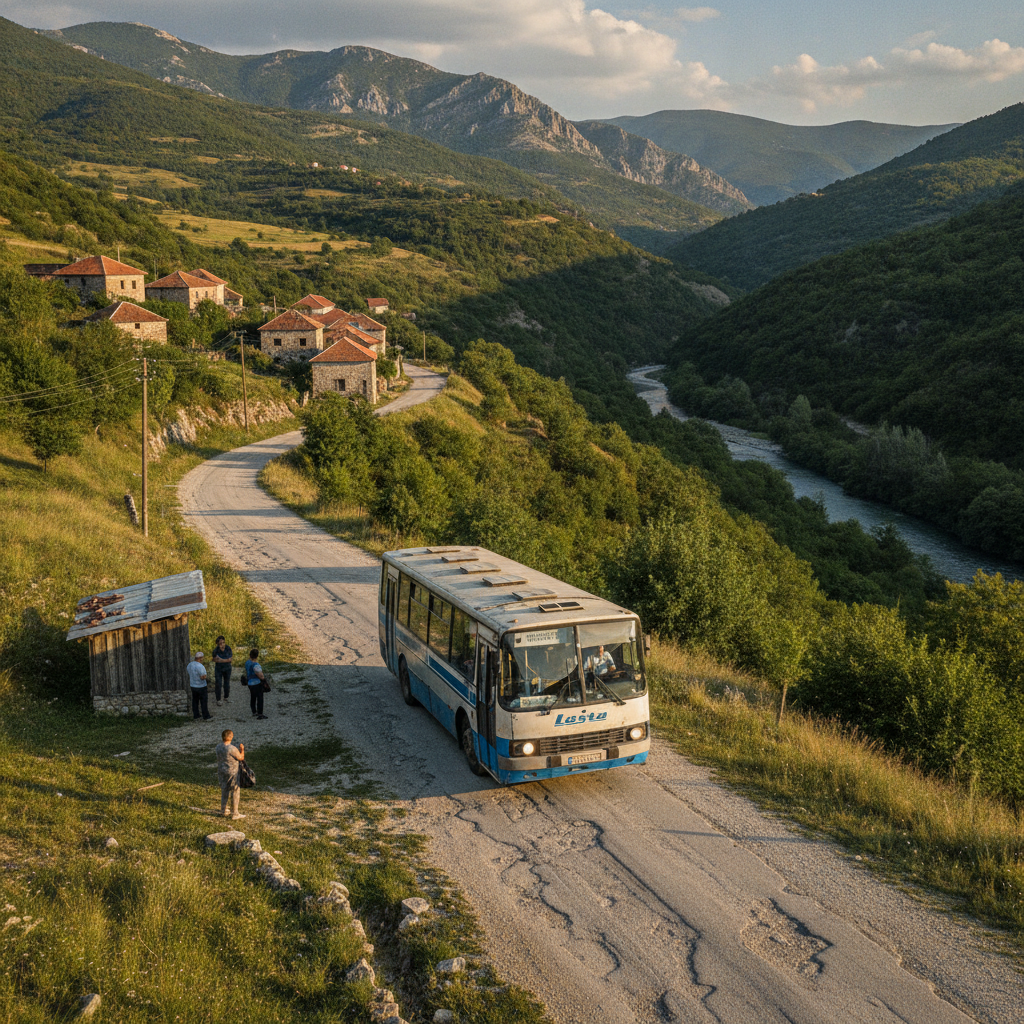
Some Balkan bus routes are worth taking for the scenery alone. The journey from Kotor in Montenegro through the mountains toward Podgorica offers views that no airport transit can match. The road between Mostar and Sarajevo follows river gorges through genuinely dramatic landscape. The route south from Shkodër into Albania traces the edge of Lake Shkodra with mountains rising on the opposite shore. These aren't inconvenient detours — they're the point of surface travel in a region where the terrain between destinations is as memorable as the destinations themselves.
Budget for Flexibility, Not Just Fixed Fares
One underrated advantage of bus travel is the ability to pause without financial penalty. Spotting an interesting town from the window and deciding to get off at the next stop costs nothing extra beyond a new ticket. Flights lock travelers into fixed itineraries; buses make spontaneity affordable. Keeping a loose daily budget for unexpected nights — a guesthouse in a town that wasn't on the original plan, a meal that turns into a three-hour conversation — is a smarter use of saved transport money than spending it on faster connections that skip the best parts.
Balkan bus travel is becoming a more polished experience each year, with newer coaches, improved booking infrastructure, and growing recognition among international travelers that the region's secondary towns are as compelling as its famous coastlines. The network has gaps, the schedules aren't always precise, and the journey takes longer than flying — but that's precisely where the value lies. The travelers who lean into the slower pace consistently report that the Balkans made more sense, felt more real, and cost considerably less than they expected.