How Booking Guesthouses in Secondary Thai Cities Like Chiang Rai and Pai Cuts Costs While Unlocking Authentic Local Culture
Thailand's most memorable travel experiences rarely happen in the lobbies of Bangkok chain hotels or along the crowded beachfronts of Ko Samui. They happen at breakfast tables in small Chiang Rai guesthouses where the owner recommends a market nobody else knows about, or in Pai's narrow streets where a hundred-baht bowl of noodles tastes better than anything served at a rooftop restaurant. Choosing smaller cities and independent guesthouses isn't just a budget move — it's a fundamentally different way of experiencing the country.
Choose Secondary Cities Over Tourist Hubs
Chiang Rai sits roughly three hours north of Chiang Mai, and that distance alone filters out a significant portion of tourist traffic. The city has real infrastructure — good transport links, reliable Wi-Fi, a walkable center — but none of the manufactured atmosphere that creeps into heavily visited places. Pai, a small mountain town in Mae Hong Son Province, operates at an even slower pace. Both destinations offer guesthouses at a fraction of what comparable comfort costs in Bangkok or Phuket, and the savings compound quickly over a multi-week trip.
Guesthouses Deliver Value That Hotels Can't Match
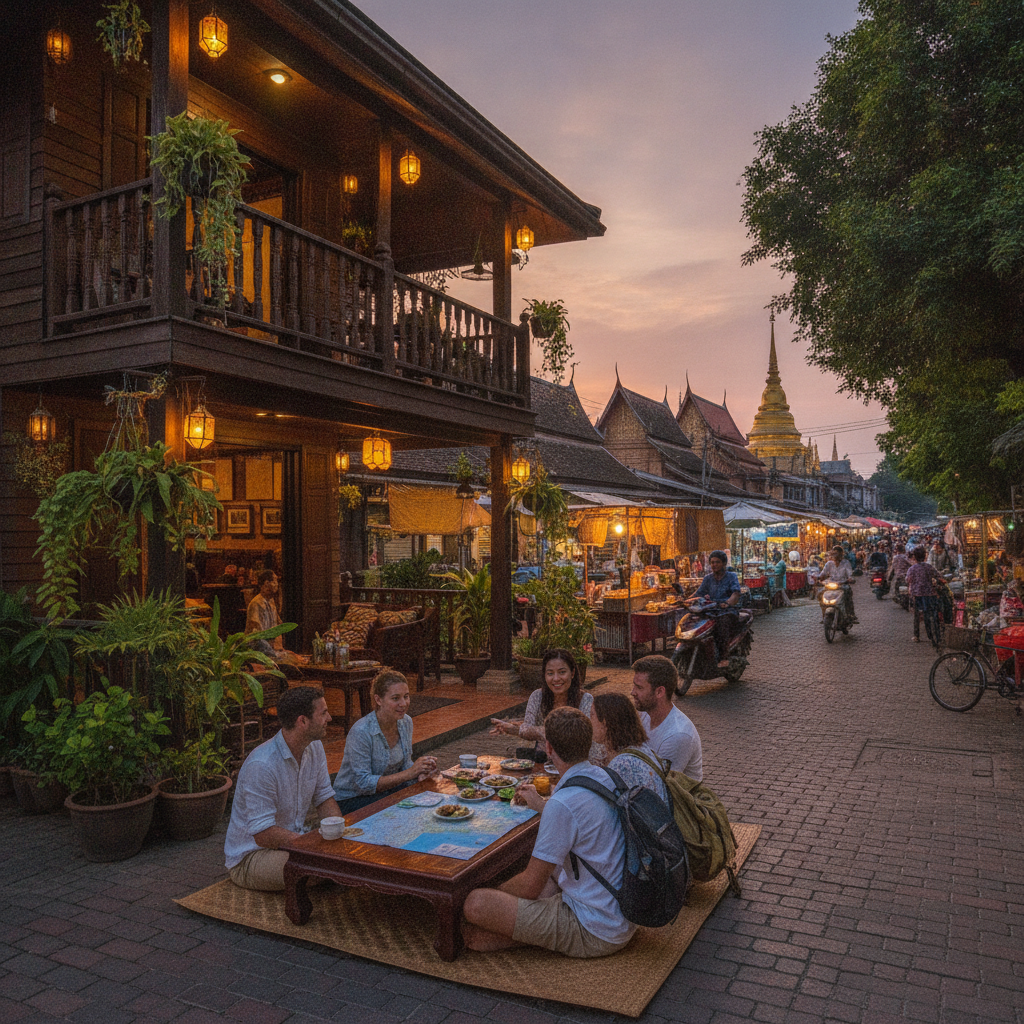
Independent guesthouses in places like Chiang Rai typically include amenities that larger hotels charge extra for — free bicycle rentals, homemade breakfasts, motorbike recommendations, and genuinely useful local advice. The owners often live on-site and have deep connections to the surrounding community. That kind of embedded knowledge is worth something real. A guesthouse owner in the Wiang district of Chiang Rai might casually mention that the Saturday Walking Street runs until midnight, saving a traveler from planning around incorrect online information.
Use Booking Platforms Strategically, Then Go Direct
Platforms like Agoda and Booking.com are useful for comparing options and reading recent reviews, but the best rates often come from contacting guesthouses directly once a stay of five or more nights is planned. Many small operations quietly offer discounts for longer bookings that never appear online. A quick message through Facebook — still widely used by Thai guesthouses for direct communication — can unlock a lower nightly rate, a room upgrade, or a complimentary airport pickup. This approach also starts the relationship before arrival, which tends to produce better experiences throughout the stay.
Time Visits Around Shoulder Season for Maximum Savings
Northern Thailand's cool season runs from roughly November through February, which is peak pricing and peak crowds. Traveling in late October or early March captures most of the pleasant weather while avoiding the highest rates. Pai in particular becomes noticeably quieter after the New Year holiday crowd thins out. Guesthouses that were fully booked in December often have vacant rooms available for walk-in negotiation by mid-March. The landscapes around both Chiang Rai and Pai remain genuinely beautiful outside the peak window, and the savings on accommodation alone can fund several extra days of travel.
Eat Where the Guesthouse Staff Eats
This is one of the most reliable cost-cutting strategies available, and it comes free with every good guesthouse stay. Staff members who live locally eat at places that don't appear on TripAdvisor and don't have English menus. In Chiang Rai, that might mean a morning khao tom stall near the bus terminal or an afternoon spot serving khao soi that costs a third of what tourist-facing restaurants charge. Consistent eating at local spots versus tourist restaurants can cut daily food expenses significantly over a two-week trip, while delivering a more honest picture of the regional cuisine.
Use Chiang Rai as a Base for Day Trips
One of the practical advantages of Chiang Rai's location is its proximity to destinations that each warrant a full day but not an overnight stay. The White Temple — Wat Rong Khun — sits less than 15 kilometers from the city center and is easily reached by songthaew or rented scooter. The Golden Triangle, where Thailand meets Laos and Myanmar at the Mekong River, is about an hour away. Basing at a single guesthouse and making these day trips eliminates the cost and friction of constantly moving accommodation, which tends to eat into both budget and experience quality.
Understand What Authentic Means in Practical Terms
The word gets overused in travel writing, but in the context of secondary Thai cities it has a concrete meaning. In Pai, the Sunday Night Market on Chaisongkhram Road operates primarily for local shoppers, not tourists, which means the prices and product mix reflect actual community life rather than a curated version of it. Walking through that market after two days at a local guesthouse, having already learned a few words of Thai and figured out how the town moves, produces a completely different experience than showing up from a Chiang Mai tour bus. Slower immersion is what makes secondary cities work.
Plan Logistics With Free Tools Before Arrival
Google Maps works reliably throughout northern Thailand, and downloading offline maps for Chiang Rai and Mae Hong Son Province before departure eliminates data concerns in patchy rural areas. The Grab app functions in Chiang Rai for those moments when a songthaew isn't available. For the Pai road — a winding mountain route with 762 curves that's genuinely demanding — renting a scooter in Chiang Mai and riding up independently saves money compared to tour packages while allowing stops at roadside waterfalls and viewpoints that buses skip entirely. Good pre-trip logistics turn potential friction into smooth movement.
Secondary Thai cities reward the kind of traveler willing to slow down, pay attention, and let a place reveal itself gradually. Chiang Rai and Pai are not undiscovered — they have healthy tourism economies and comfortable infrastructure — but they haven't been fully absorbed into the mass-market circuit. Guesthouses remain small, personal, and priced for real travelers rather than luxury itineraries. As northern Thailand's reputation continues to grow and more travelers look beyond the standard Bangkok-to-Phuket route, these towns are worth visiting while their character remains intact.