
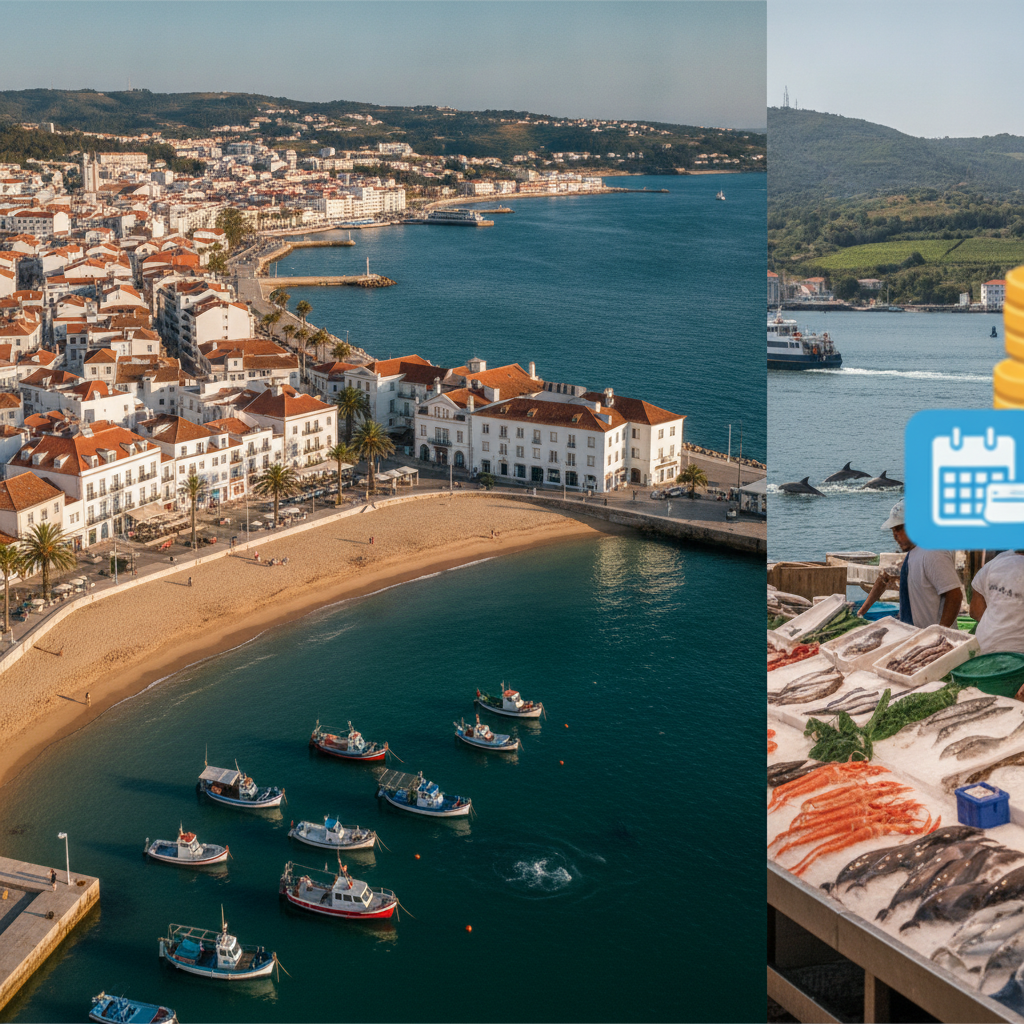
How Booking Coastal Portugal Towns Like Cascais and Setúbal Instead of Lisbon Cuts Accommodation Costs While Improving Daily Experiences
Lisbon has a well-earned reputation as one of Europe's most magnetic cities, but that magnetism comes with a price tag to match. Hotels in the Alfama and Chiado districts routinely command rates that strain even well-planned travel budgets, and the crowds that fill those neighborhoods can make the experience feel more like queuing than discovering. What many travelers overlook is that some of Portugal's most rewarding coastal towns sit within easy striking distance of the capital — and booking a base in one of them changes the financial math of the entire trip while quietly improving nearly every waking hour.
Understand Why Lisbon Prices Have Climbed So Steeply
Lisbon's accommodation market has tightened considerably over the past decade. Short-term rental platforms absorbed a significant share of the city's housing stock, long-stay platforms pushed demand further upward, and a steady wave of international visitors condensed spending into a handful of central neighborhoods. The result is a city where mid-range hotels carry premium prices simply because occupancy remains reliably high. Understanding this supply-demand dynamic matters because it reframes the decision to stay outside the city — it's not a compromise, it's a deliberate arbitrage move that redirects money from accommodation toward experiences.
Compare Real Nightly Rates Before You Dismiss the Commute
The instinct to stay close to major sights is understandable, but the numbers often tell a different story. Comparable room quality in Cascais or Setúbal frequently runs noticeably lower than equivalent options in central Lisbon, sometimes by a significant margin per night. A week-long trip can generate real savings that cover a day trip to Sintra, two or three memorable dinners, or a ferry crossing to the Arrábida coast. Before dismissing coastal alternatives as inconvenient, it's worth pulling up both options side by side on Booking.com or a similar platform and letting the rate difference speak for itself.
Use Cascais as a Relaxed Western Base With Easy Rail Access
Cascais sits at the western end of the Estoril line, a commuter rail route that connects directly to Cais do Sodré station in central Lisbon. The journey takes roughly 40 minutes and trains run frequently throughout the day. The town itself has a genuine local rhythm — a working harbor, a well-maintained pedestrian center, excellent seafood restaurants, and beaches that are genuinely swimmable. Staying in Cascais means waking up to ocean air rather than city noise, eating well without fighting for a table, and spending the day in Lisbon before retreating in the evening to somewhere noticeably quieter and more restorative.
Position Setúbal for Access to the Arrábida Natural Park
Setúbal sits south of the Tagus and operates on a different energy entirely. It's a working port city with a strong fishing identity, a compact historic center, and direct access to the Parque Natural da Arrábida — one of the most visually striking stretches of coastline in Western Europe. Accommodation here tends to be both less expensive and less crowded than Lisbon alternatives. The trade-off is that Lisbon requires a slightly longer transit connection, typically a bus or ferry combination, but for travelers whose primary interest is the natural landscape rather than urban sightseeing, Setúbal delivers a far richer daily environment.
Factor In the True Cost of Staying Central
Accommodation rates are only part of the Lisbon cost calculation. Central neighborhoods also carry higher prices for meals, coffee, tourist-adjacent shops, and guided experiences. The closer a restaurant sits to a major viewpoint or tram route, the more its menu prices tend to reflect that location rather than the actual quality of the food. Staying in a coastal town naturally shifts daily spending toward local establishments where prices are set for residents rather than visitors. That shift compounds across a week-long trip in ways that don't show up on the initial accommodation comparison but absolutely show up in the final credit card statement.
Build Itineraries That Work From a Coastal Home Base
A well-structured itinerary can treat Lisbon as a destination to visit rather than a place to sleep. One or two full days in the city covers the Museu Nacional do Azulejo, the Belém waterfront, and the essential viewpoints without requiring an overnight rate in the city center. On other days, the coastal base itself becomes the experience — walking the Cascais waterfront, hiring a local guide for a boat trip through the Arrábida marine reserve, or exploring Setúbal's fish market before it closes mid-morning. The trip becomes genuinely richer because the base location has its own identity rather than functioning purely as a room to store luggage.
Book Accommodations Early to Capture the Best Coastal Rates
Coastal Portugal isn't a secret in the way it once was, and summer availability in both Cascais and Setúbal tightens earlier each season. The best strategy combines early booking with flexible date searches — shoulder periods in spring and early autumn offer favorable rates and noticeably thinner crowds. For longer stays, apartment-style rentals often represent better value than hotels, particularly for travelers who want a kitchen to manage some meals independently. Platforms like Airbnb and direct booking through local property managers both produce usable options, and comparing both before committing tends to surface rates that the major aggregators don't always surface first.
Evaluate Transport Logistics Honestly Before Booking
The commuter rail connection from Cascais to Lisbon is genuinely convenient — frequent, affordable, and reliable by most standards. The Setúbal connection requires a bit more planning but remains manageable for travelers comfortable with mixed transit. Where the logistics matter most is in understanding which days benefit from early departures and which are better spent close to the base. Renting a car for one or two days opens up the Arrábida coastline completely, while the remaining days work smoothly on trains and ferries. Mapping the week's movement before arrival prevents the scramble of figuring it out on the ground.
Portugal's coastal towns have long absorbed overflow visitors during peak summer months, but the pattern is shifting. More travelers are choosing coastal bases as primary rather than secondary destinations, drawn by a combination of lower costs, genuine local character, and landscapes that rival anything the capital offers. As that awareness grows, the rate advantage may narrow over time — which is an argument for booking sooner rather than assuming the gap will persist indefinitely. For now, the combination of financial savings and daily quality remains one of the more reliable upgrades available to anyone planning a Portugal trip with an honest eye on the budget.