
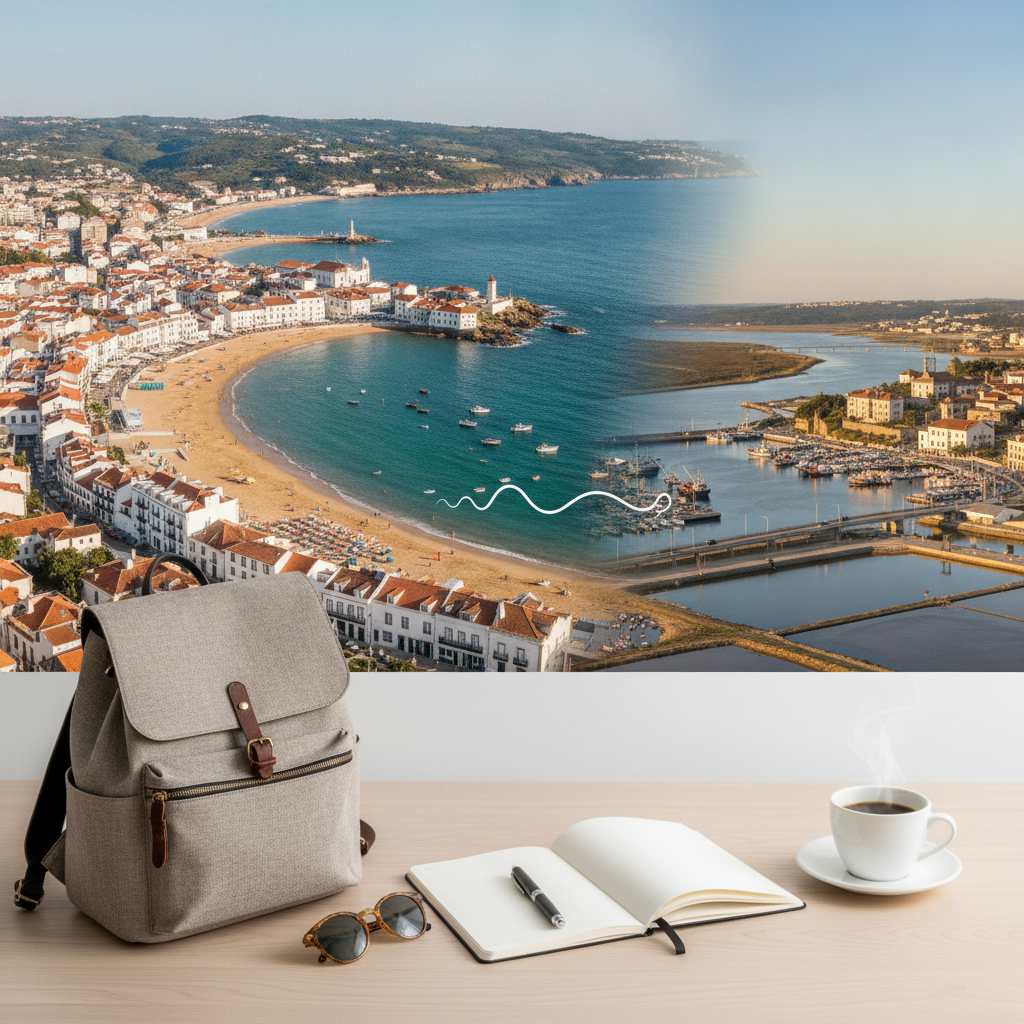
How Booking Coastal Portugal Towns Like Cascais and Setúbal Instead of Lisbon Cuts Accommodation Costs While Improving Daily Experiences
Lisbon has earned its reputation as one of Europe's most magnetic cities, but that magnetism comes with a price tag that has climbed steadily over recent years. Travelers who build their entire Portugal stay around a central Lisbon hotel often find themselves spending a disproportionate share of their budget on rooms that sit in noisy tourist corridors, leaving less money for the meals, day trips, and unhurried moments that actually define a great trip. The good news is that the coastline surrounding Lisbon offers a genuinely compelling alternative — one where lower accommodation costs happen to come bundled with better ocean views, quieter streets, and a more authentic rhythm of daily life.
Understand Why Lisbon Prices Have Climbed So Steeply
Lisbon's transformation into a global destination accelerated sharply through the 2010s and has held firm since. Short-term rental platforms absorbed enormous amounts of housing stock in neighborhoods like Alfama, Bairro Alto, and Príncipe Real, shrinking supply while demand from international visitors kept rising. Hotels followed market signals accordingly. The result is a city center where even modest three-star properties in central locations command rates that would cover a luxury apartment rental just twenty kilometers away. Understanding this dynamic helps travelers make a more deliberate choice rather than defaulting to Lisbon simply out of habit.
Book in Cascais for Immediate Cost Relief
Cascais sits roughly thirty minutes west of Lisbon by train, perched where the Tagus estuary meets the open Atlantic. Accommodation rates in Cascais run noticeably lower than comparable Lisbon properties, particularly outside the peak summer weeks of July and August. A well-appointed apartment in Cascais town center, within walking distance of the marina and beach, typically costs considerably less than a mid-range Lisbon hotel room with no water view at all. The Cascais-Estoril train line connects directly to Cais do Sodré station in central Lisbon, making city access straightforward when needed without requiring a car.
Use Setúbal as Your Southern Base for Peninsula Access
Setúbal occupies a different position entirely — a working port city facing the Arrábida Natural Park across the Sado estuary, about forty-five minutes south of Lisbon by road. Travelers who stay in Setúbal gain immediate access to some of the most dramatic coastal scenery in Western Europe, including the limestone cliffs and turquoise coves of Parque Natural da Arrábida. Accommodation here tends toward guesthouses, local apartments, and smaller hotels that cater more to Portuguese visitors than international tourists, which keeps prices anchored to local market realities rather than international demand curves. The trade-off is slightly more limited public transit, making a rental car more useful from this base.
Calculate the Real Cost Difference Before You Book
The savings from staying outside Lisbon only matter if they survive an honest accounting. Factor in the cost of train or bus travel into the city on days you plan to visit — the Cascais line costs only a few euros each way, and a Lisbon Viva card makes the system simple to use. If a rental car becomes necessary for Setúbal-area exploration, add that weekly cost to your base accommodation figure. Even after these adjustments, most travelers find that coastal alternatives leave meaningful room in the budget for better meals, a day tour to Sintra, or a boat trip along the Arrábida coastline. The math tends to favor the move.
Evaluate Daily Experience Beyond the Price Comparison
The financial case is real, but the experiential case is arguably stronger. Waking up in Cascais means walking to a bakery along a quiet street before most tourists have reached their Lisbon hotel breakfast buffet. Setúbal mornings carry the smell of salt water and fishing boats returning from overnight trips — a sensory backdrop that no amount of Alfama charm can replicate. Neither town requires aggressive tourist navigation. Restaurant menus in both places remain calibrated to local incomes, which means a proper lunch with wine costs a fraction of equivalent meals in Lisbon's most-visited neighborhoods. The slower pace compounds across a multi-day stay in ways that genuinely improve the overall trip quality.
Time Your Stay Around Local Rhythms
Both Cascais and Setúbal experience their own seasonality, and timing matters for cost optimization. Cascais in particular sees weekend crowds from Lisbon residents during summer, which pushes short-term rental prices upward on Fridays and Saturdays. Booking a full week rather than a weekend stay usually unlocks better rates. Setúbal draws fewer weekend visitors from the capital, making it more consistently priced across the week. Shoulder season — roughly mid-September through October and again in April through early June — offers the best combination of reasonable weather, manageable crowds, and the lowest accommodation rates of the calendar year for both towns.
Use Cascais as a Hub for the Sintra Day Trip
One underappreciated practical advantage of a Cascais base is how it repositions the mandatory Sintra visit. Most Lisbon-based travelers take the direct train from Rossio station, arriving alongside hundreds of other day-trippers on the same morning schedule. Cascais sits on the opposite end of the Sintra-Cascais natural park, and the scenic road connecting them runs through landscapes that reward an early-morning drive or taxi before the palace queues form. Returning to Cascais by mid-afternoon, rather than back to a Lisbon hotel, means arriving somewhere quiet, coastal, and uncrowded — which makes the Sintra experience feel less like a theme park endurance test and more like actual travel.
Match Your Accommodation Type to Each Town's Strengths
Cascais supports a range of accommodation styles that suit different travel preferences. The town center works well for those who want walkability, marina access, and evening restaurant options within easy reach. The neighborhoods just outside the historic core — toward Estoril and along the coastal road toward Boca do Inferno — offer apartments and small hotels with more direct ocean exposure at similar or lower prices. Setúbal rewards travelers who book apartments with kitchen access, since the local market scene and fresh seafood availability make self-catering genuinely worthwhile. Mercado do Livramento, Setúbal's covered market hall, sells some of the best fish in Portugal and becomes a destination in itself.
The broader pattern emerging across Portugal's coastal towns suggests that the era of Lisbon-as-default is gradually shifting among experienced travelers. As information about regional alternatives spreads and transportation links improve, more visitors are structuring trips around coastal bases and treating Lisbon as a day destination rather than a home base. For those planning a Portugal trip now, the calculation has rarely been more favorable — the cost advantage is real, the experiences are genuinely better in many respects, and the towns themselves are equipped to handle thoughtful visitors without the friction that comes with Lisbon's most saturated tourist zones.