How Booking a Guided Cycling Tour Through Vietnam's Mekong Delta Instead of a Cruise Delivers Deeper Village Access at Lower Daily Costs
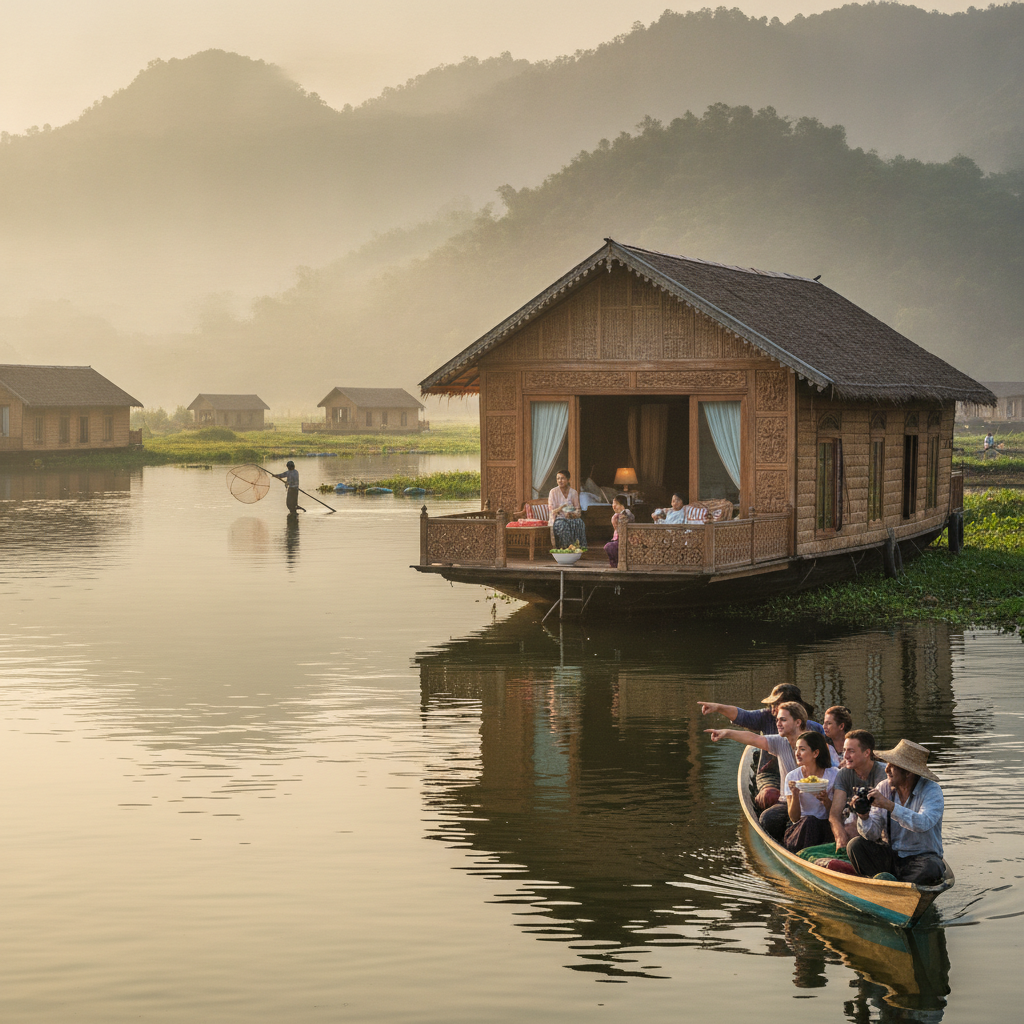
There is a version of the Mekong Delta that most travelers never see — not because it's hidden, but because the vessel carrying them moves too fast and sits too high above the water. River cruises through southern Vietnam have grown impressively popular, and they offer genuine comfort: air-conditioned cabins, guided commentary, meals served on deck as flat-bottomed boats glide past rice paddies and floating markets. But comfort and immersion are not always the same thing, and the distinction matters enormously when the destination is one of the world's most intricate river ecosystems.
What a Bicycle Reveals That a Boat Cannot
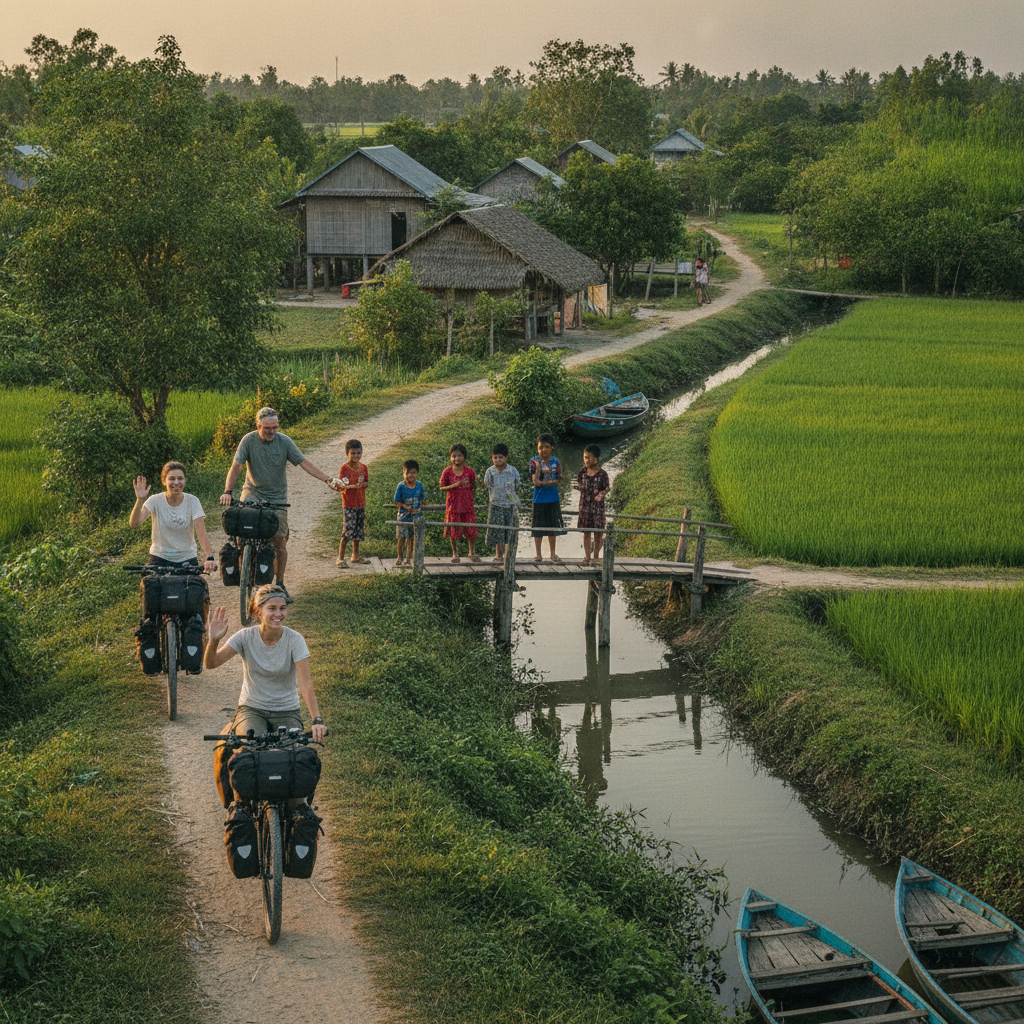
The Mekong Delta — known in Vietnamese as Đồng bằng sông Cửu Long, meaning "nine-dragon river delta" — is not a landscape best read from a distance. Its network of canals, raised dike paths, and narrow village lanes were built for foot traffic and bicycles long before tourist infrastructure arrived. A guided cycling tour places travelers directly inside that infrastructure rather than alongside it. On a bike, the pace slows to something a conversation can keep up with. A family drying rice on woven mats beside the path becomes a brief exchange rather than a photograph from the upper deck. The route between Cái Bè and Vĩnh Long, a popular cycling corridor, threads through fruit orchards, family-run workshops pressing coconut candy, and small pagodas where monks in saffron robes move quietly through morning routines. None of this is inaccessible by boat, but the bicycle makes the stopping effortless and the encounters unscripted.
The Economics of Pedaling Instead of Floating
River cruises through the Mekong Delta vary considerably in price, but even modestly marketed options tend to bundle accommodation, meals, and guided excursions into daily rates that climb quickly for multi-night itineraries. The premium reflects the logistics of operating vessels with crew, fuel, and maintenance on working waterways. Guided cycling tours operate on a fundamentally different cost structure. Operators like Mekong Rustic and Grasshopper Adventures — both well-regarded names in slow-travel cycling across Southeast Asia — build their packages around local guesthouses, family homestays, and village restaurants, which keeps overhead low and passes savings to the traveler. Daily costs for a fully guided cycling experience with accommodation and most meals included often run meaningfully lower than equivalent cruise-based programs, and the quality of food encountered along the way — bánh mì from roadside carts, fresh gỏi cuốn (fresh spring rolls) wrapped to order in family kitchens — tends to be considerably more interesting than cruise-ship buffets designed for broad palatability.
Village Access as the Real Currency
The phrase "village access" gets used loosely in travel marketing, but in the context of the Mekong Delta it carries specific meaning. The delta supports roughly 17 million people across a dense patchwork of settlements, many of which are connected only by narrow canal paths or elevated earthen tracks wide enough for a bicycle but not a vehicle. Cruise itineraries can stop at curated village demonstrations — a rice wine distillery here, a fish sauce factory there — but these stops are scheduled and, in many cases, oriented toward the group experience rather than genuine exchange. Cycling tours move through villages as participants rather than observers. When a tour group pauses in Trà Vinh province to watch a Khmer Buddhist ceremony unfolding at a local temple, the moment belongs to the community first and the travelers second. That inversion of priority is the difference between visiting a place and briefly inhabiting it.
Practical Considerations for Cyclists of All Levels
The Mekong Delta's terrain is notably forgiving. The region is almost entirely flat, with elevation changes measured in meters rather than hundreds of meters, which makes it genuinely accessible to casual cyclists who haven't trained for anything strenuous. Daily distances on guided tours typically range from 25 to 50 kilometers, broken into segments with rest stops built into the rhythm. Reputable operators provide hybrid bikes fitted with comfortable saddles and gearing suited to the roads, and support vehicles accompany most tours for anyone who needs a break mid-route. The best window for cycling the delta runs from November through April, when the dry season keeps roads clear and temperatures manageable, though the shoulder months of October and May offer quieter paths with only a modest increase in afternoon humidity. Booking through established operators also ensures local guide knowledge — an asset that cannot be overstated in a region where signage is inconsistent and the most rewarding detours are invisible on any standard map.
How the Two Experiences Actually Compare
Choosing between a cruise and a cycling tour through the Mekong Delta is ultimately a question of what kind of traveler one hopes to be in a given week. The cruise delivers ease, overview, and a comfortable frame through which to absorb the delta's scale. It suits travelers who want the river's panorama without physical engagement, and it delivers that reliably. The cycling tour asks for more — physical participation, tolerance for spontaneity, willingness to sit in a village home drinking lotus tea with a family that doesn't share a language — and returns more in proportion. The encounters accumulated over three or four days on a bicycle through Can Tho province tend to be the kind that surface in conversation years later, specific and vivid in ways that a curated floating itinerary rarely produces. The lower daily cost isn't incidental to this experience; it's structurally connected to it, because the same local economy that keeps prices reasonable is the one that keeps the experience human.
There is something clarifying about returning to the same delta by a different means and realizing that the waterway you were watching from a comfortable deck was, all along, a road. The people who live beside it have always known this. A bicycle, more than almost any other mode of travel, is the most honest way to admit you'd like to know it too.