Why Centering a Late-Spring Morocco Trip Around Fès Instead of Marrakech Delivers Deeper Medina Culture and Significantly Lower Daily Costs
Morocco has a way of pulling travelers toward the same destination. Marrakech dominates the Instagram feeds, the travel blogs, and the flight search results — and for understandable reasons. The Djemaa el-Fna is genuinely spectacular. But centering your late-spring Morocco trip around Fès instead opens up something richer, quieter, and considerably easier on your daily budget.
What Makes Late Spring the Right Window for Fès?
Late April through early June sits in a sweet spot for Morocco's imperial cities. Temperatures in Fès are warm and comfortable — typically in the low-to-mid twenties Celsius — without the punishing heat that settles over the country by July. Marrakech, by contrast, starts running hot earlier in the season, making long medina walks genuinely exhausting by midday. Fès sits at a higher elevation with more consistent breezes, so you can spend full mornings wandering Fès el-Bali, the ancient medina, without watching the clock.
The timing also matters for crowd patterns. Marrakech draws international tourists heavily from March onward, which pushes riad prices up and fills the most popular lanes with guided tour groups. Fès sees far fewer package tourists during this window, meaning the streets of the medina feel lived-in rather than performed.
How Does Daily Spending Actually Compare Between the Two Cities?
The gap is more significant than most first-time Morocco planners expect. Accommodation is where you feel it most immediately. A well-maintained riad in Fès el-Bali or the Andalusian quarter — the kind with a tiled courtyard, breakfast included, and genuinely helpful hosts — costs noticeably less per night than a comparable property in Marrakech's medina. Platforms like Booking.com and Airbnb both show this spread clearly when you compare dates side by side during the late-spring window.
Food costs follow the same pattern. Set menus at Fassie restaurants, which serve the city's renowned local cuisine, are priced for a local clientele rather than a tourist premium. A full lunch with harira, a bastilla, and mint tea at a family-run spot near Bab Guissa will run you a fraction of what a similar meal costs at a Marrakech restaurant catering to international visitors. Street snacks, fresh-squeezed juice, and market produce all lean cheaper across the board.
What Cultural Depth Does Fès el-Bali Offer That Marrakech's Medina Doesn't?
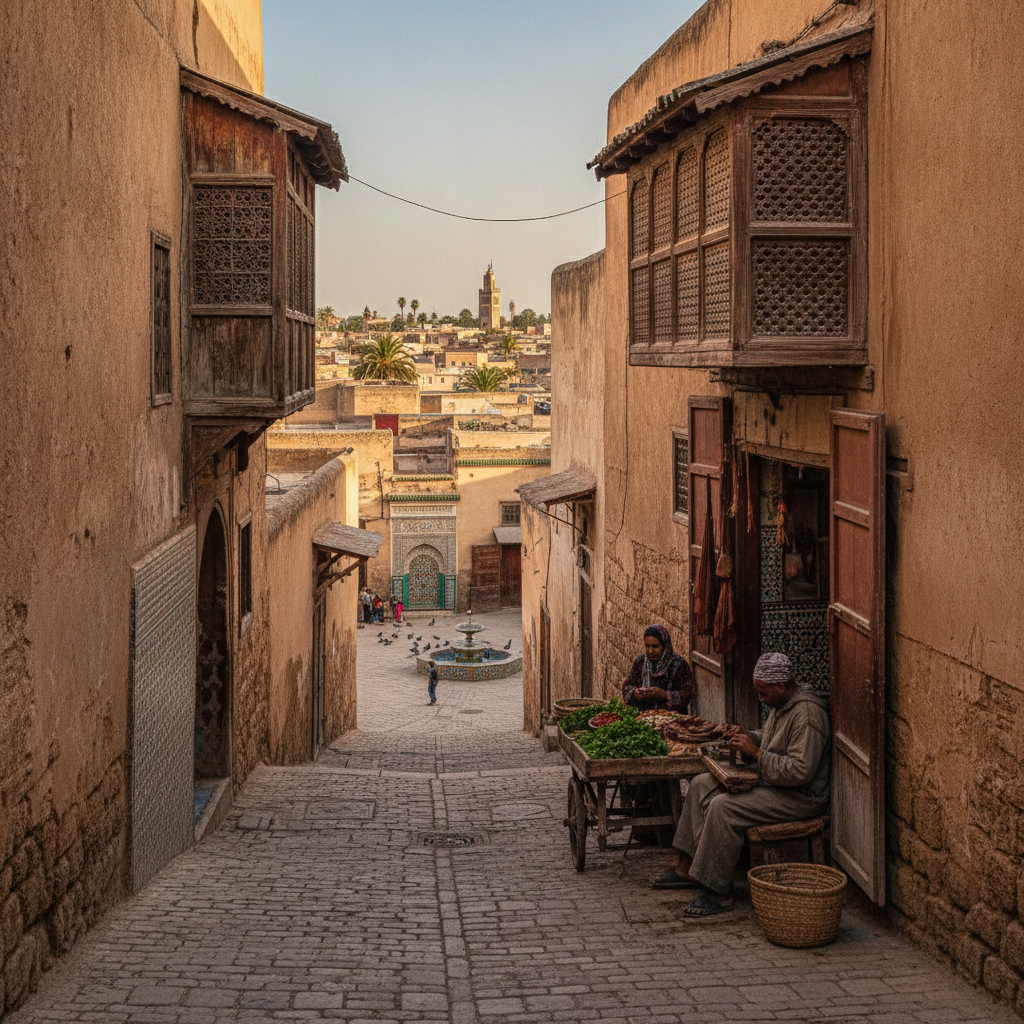
Fès el-Bali is the largest living medieval city in the world, and that description earns its weight. The medina here isn't a tourist-facing shell — it's a functional urban environment where tanneries, mosques, madrasas, and souks operate as they have for centuries. The Chouara Tannery is the obvious landmark, and yes, it draws visitors, but the neighborhoods surrounding it remain genuinely residential. You can spend hours walking deeper into the medina and encounter almost no other travelers.
Marrakech's medina is extraordinary, but it has been shaped over decades by its role as Morocco's primary tourist destination. The souks near Djemaa el-Fna run on a tourist economy, which changes the texture of the place. In Fès, the economic center of gravity still tilts toward locals — craftsmen making goods for Moroccan buyers, food stalls serving Fassie families, and schools operating on rhythms that have nothing to do with check-in times.
How Should You Structure Your Days in Fès?
Building a loose structure around the city's natural rhythms makes your time feel expansive rather than rushed. Mornings are best spent in the medina before the midday heat arrives — the light is good, the craftsmen are at work, and the narrow alleys of Fès el-Bali feel genuinely atmospheric. Use Google Maps offline downloads before you go, because the medina's layout will defeat any real-time navigation. The app works well for reference once you've downloaded the relevant sections.
Afternoons lend themselves to the Ville Nouvelle for coffee and slower exploration, or to the hillside ruins of the Marinid Tombs for a perspective on the medina from above. Evenings in Fès open up for longer dinners — the city's culinary tradition, centered on slow-cooked dishes like rfissa and pastilla, rewards anyone willing to sit with it. Booking a cooking class through Airbnb Experiences gives you access to home kitchens and family recipes that no restaurant replicates.
What Practical Logistics Should You Sort Before Arriving?
Fès's medina has no vehicle access, which means arrival logistics require some thought. Most riads will send someone to meet you at one of the main gates with a trolley for luggage — confirm this when you book. The train from Casablanca Mohammed V Airport to Fès runs reliably and takes around three and a half hours, making it a comfortable arrival option that avoids the expense and unpredictability of private transfers.
For currency, bring dirhams from a Fès ATM rather than exchanging at the airport, where rates are consistently worse. Wise is useful for managing your travel money before departure and monitoring exchange rates in the weeks leading up to your trip. Most medina merchants operate on cash, so carrying enough for daily spending is essential — card acceptance inside the old city remains limited.
Why Does This Choice Align with Smarter Travel Budgeting?
Choosing Fès over Marrakech isn't about settling for less — it's about understanding where your money actually buys more. The savings on accommodation and food are real and cumulative across a five-to-seven day trip. Those savings create flexibility: an extra day, a nicer riad, a cooking class, or a day trip to Volubilis, the remarkably preserved Roman ruins about an hour's drive away.
Travel budgeting works best when you stop treating destination choice as fixed and start treating it as your biggest variable. The instinct to follow the most-photographed itinerary is understandable, but it often leads to paying peak prices for a filtered version of a place. Fès in late spring offers something closer to the real thing — and charges you considerably less for the privilege.
If you haven't looked at Fès seriously before, it's worth pulling up Booking.com and comparing a week of late-spring dates against equivalent Marrakech options. The numbers alone tend to shift the conversation, and the culture makes the case the rest of the way.