How River Cruise Itineraries Offer a Slower, More Immersive Alternative to Traditional European Tour Packages
There is a particular kind of fatigue that comes from seeing Europe too quickly — a blur of bus windows, timed entries, and hotel lobbies that could belong to any city on the continent. The traditional coach tour has long been the default for travelers seeking efficiency, and it delivers on that promise admirably: a dozen cities in ten days, each one ticked from a list. But efficiency and experience are not always the same thing, and a growing number of travelers have begun to notice the difference. River cruising has emerged as a quietly compelling answer to the question of how to slow down without giving up structure, offering a fundamentally different relationship with place, pace, and the act of travel itself.
The Architecture of Slowness
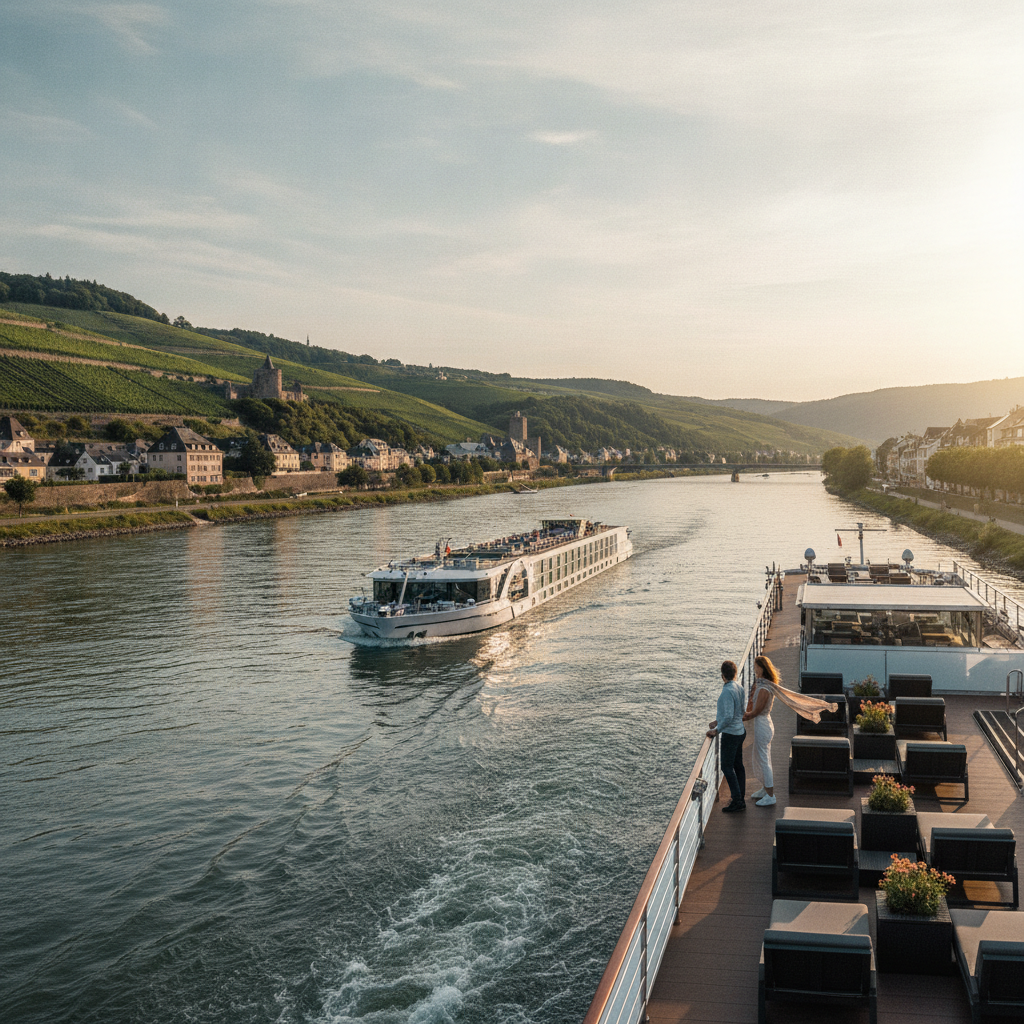
A river cruise operates on geography in a way that a coach tour simply cannot. The vessel moves at the pace of water, passing through vineyards, medieval villages, and flood plains that road infrastructure often bypasses entirely. On the Rhine or the Danube — two of Europe's most traveled inland waterways — the view from the sundeck changes gradually, like a slowly turned page rather than a chapter skipped. This physical continuity matters more than it might seem at first. When a traveler watches a city approach from the water, enters it on foot, and then watches it recede as the ship departs that evening, the experience has a natural beginning, middle, and end. The city becomes a place rather than a stop.
Most river cruise itineraries are structured around one or two port calls per day, with the ship often docking in town centers rather than industrial peripheries. This is a meaningful logistical advantage: guests step off the gangway directly into Rüdesheim, Passau, or Bratislava, rather than boarding a transfer coach that adds forty minutes in each direction. The compactness of a river vessel — typically carrying between 100 and 190 passengers, compared to the thousands aboard ocean liners — also shapes the atmosphere onboard. Companies like Viking River Cruises and Avalon Waterways have built their reputations partly on this intimacy, creating environments where fellow travelers remember each other's names by the second evening.
What Traditional Tour Packages Provide and Where They Fall Short
To assess what river cruising offers, it's worth being honest about what conventional European tour packages do well. They are often genuinely affordable, efficiently organized, and surprisingly comprehensive in their geographical ambition. A well-designed coach tour can move a group from Paris to Prague with minimal friction, handling visas, luggage logistics, and restaurant reservations in ways that reduce the cognitive load of independent travel. For first-time visitors to Europe who want breadth over depth, these packages serve a real purpose. The friction emerges when travelers return home with photographs of famous landmarks but few memories of having truly inhabited any of the places they visited.
The structural reality of most coach itineraries is a relentless forward motion through geography, with each destination allocated a fixed window — often three to four hours — before departure. Spontaneity is largely designed out of the experience. There is little room to linger in a market in Nuremberg, to accept an unexpected invitation for coffee from a local shop owner in Arles, or to simply sit by a river and watch a city go about its afternoon. River cruising doesn't eliminate scheduling, but it distributes time differently, building in longer shore excursions and, crucially, the option to remain on the ship when a destination doesn't call to a particular traveler.
Ports of Call and the Art of Unhurried Exploration
The ports visited on a typical Central European river cruise — Regensburg, Vienna, Cologne, Amsterdam — are not obscure destinations, but river access changes how they're experienced. Arriving in Vienna by water, for instance, positions travelers along the Danube Canal rather than at a highway interchange, and the walk from ship to Stephansdom takes fifteen minutes through residential streets rather than tourist corridors. This entry point matters. The flâneur tradition — the French concept of purposeful wandering through urban space, observing street life without agenda — is far more achievable when a traveler has four to six hours in port rather than ninety minutes between coach stops.
Many river cruise lines now offer what they call slow travel shore excursions alongside their standard guided options: a morning cycling route along the towpath, a cooking class with a local family, a visit to a winery that doesn't appear in mainstream guidebooks. Scenic Luxury Cruises, operating primarily on the Danube and Rhine, has built a category of excursions explicitly designed for travelers who want texture over checklist. These offerings acknowledge that the most memorable travel experiences tend to be proportional in scale — a single afternoon in a single neighborhood, done with attention, often outweighs a full day of rushing between icons.
Comparing the Rhythm of Each Experience
Perhaps the clearest way to understand the difference between river cruising and coach touring is to think about where a traveler spends their mental energy. On a bus tour, a significant portion of attention goes to logistics: finding the meeting point, counting minutes before departure, tracking luggage, and absorbing briefings about the next destination before the current one has fully registered. The traveler is always slightly ahead of themselves, perpetually preparing for the next thing. River cruising redistributes that energy. The ship is always home base, always in view, always the same. Once that psychological anchor is established, attention can flow outward toward the place rather than inward toward the itinerary.
This shift has a cumulative effect over a ten-day sailing. Travelers often report feeling genuinely rested despite having covered comparable geographical distance to a coach tour — a counterintuitive outcome that makes sense when the underlying structure is examined. Rest, in travel, doesn't come only from sleep; it comes from not constantly reorienting to a new environment. The consistency of the ship — its dining room, its familiar crew, its particular view of whichever river it's crossing — provides a kind of domestic continuity that traditional touring deliberately strips away in the name of variety.
Choosing the Right Itinerary for the Right Traveler
River cruising is not a universal improvement on all forms of European travel. It suits certain temperaments and travel goals more than others, and understanding those alignments matters before booking. Travelers who thrive on spontaneity and prefer to build their own days from scratch may find even the gentle structure of a river cruise schedule mildly constraining. Those who measure a trip's success by the number of countries visited will find river itineraries geographically modest — a Rhine sailing might cover Germany, France, and the Netherlands, while a comparable coach tour could touch six or seven nations. Budget considerations also apply: river cruises carry a higher upfront cost than many package tours, though the all-inclusive pricing structure — covering meals, excursions, and often drinks — can compress that gap when calculated honestly.
For travelers who have already done the grand circuit of European capitals and want to go back differently, or for those approaching a first major trip with an instinct toward depth, a river itinerary offers something genuinely distinct. The Moselle Valley, the Douro in Portugal, and the lesser-traveled waterways of France's Burgundy and Provence regions provide settings where the landscape itself is the destination, not merely the background between cities. When you find yourself standing on the sundeck as the ship passes through a lock — those écluses of the French canal system, where water levels adjust by slow mechanical increments — the metaphor for a different kind of travel is impossible to miss. Some journeys are worth taking at exactly this pace.
The blur of bus windows and compressed itineraries that characterizes so much European tourism reflects a reasonable instinct — to see as much as possible in the time available. But travel, at its best, is less about the accumulation of places than about the quality of attention brought to each one. A river cruise doesn't promise more destinations; it promises more of each destination, and more of the traveler's own presence within it. That is a different kind of abundance, and for those who've spent one too many evenings in a hotel lobby trying to remember which city they're in, it may be exactly the recalibration that travel is supposed to offer.