How Structuring a Long Weekend Around Savannah's Historic District on Foot Instead of Organized Tours Delivers Richer Experiences at a Fraction of the Cost
Organized tours have a way of making you feel like you've seen a place without actually experiencing it. You're shuffled from stop to stop, given exactly four minutes at each landmark, and handed a microphone-narrated version of history that was written for the median tourist. Savannah, Georgia is one of those cities that genuinely rewards the people who slow down, wander without a rigid agenda, and let the streets do the talking. The good news is that doing it yourself isn't just more satisfying — it's dramatically cheaper.
Anchor Yourself in the Right Neighborhood First
Where you stay matters more than people realize in Savannah. The Historic District itself is compact enough to cover almost entirely on foot, but lodging even a few blocks outside it changes your entire experience. Aim to book accommodations on or near Jones Street or Monterey Square — two of the district's most walkable and atmospheric corridors. Staying centrally means you're not burning time or rideshare money getting to the good stuff. Smaller inns and B&Bs in this area often run significantly cheaper than the branded hotels clustered near the riverfront, and the character they offer is part of the experience itself.
Build Your Itinerary Around the Squares, Not the Attractions
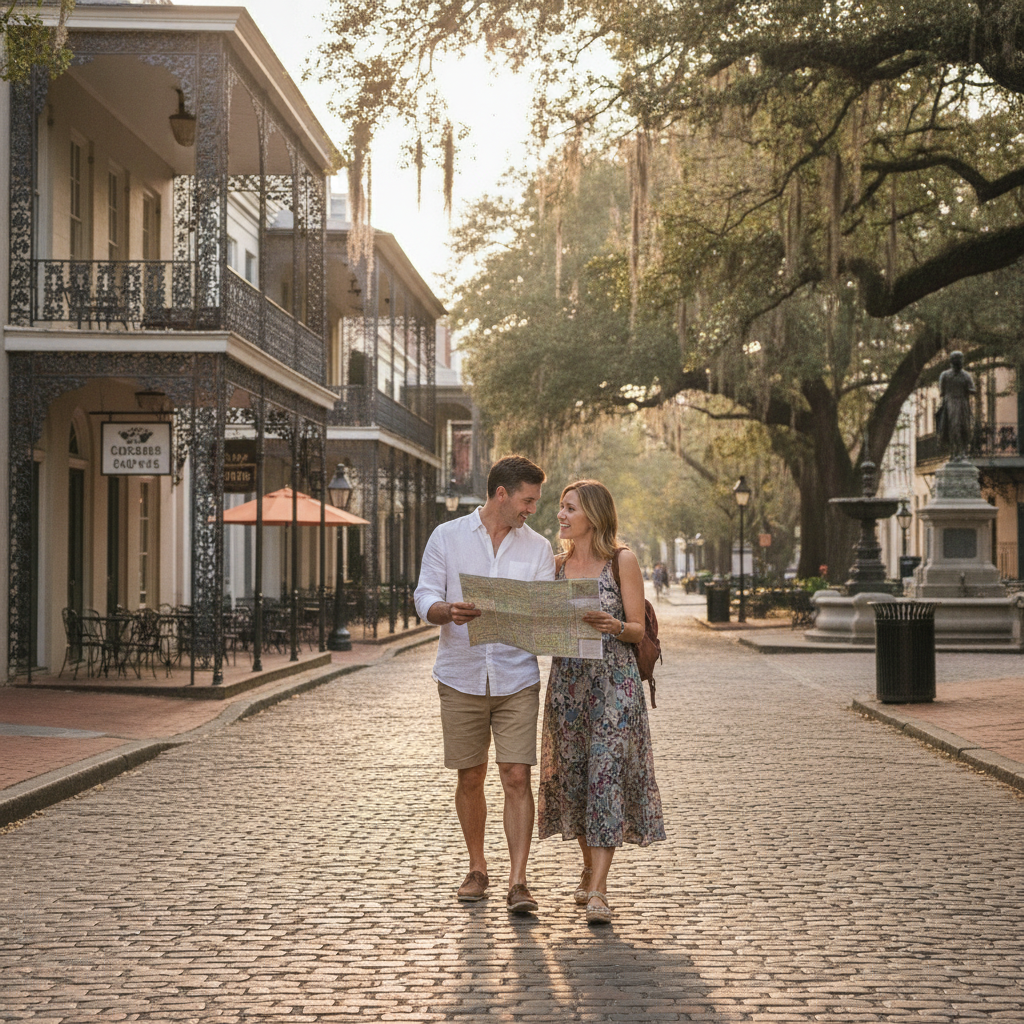
Savannah has 22 public squares, and each one has its own personality. Most organized tours hit Chippewa Square and Forsyth Park, then call it done. But wandering from Madison Square to Lafayette Square to Troup Square on your own schedule lets you absorb the city at a human pace. Sit on a bench. Watch the Spanish moss move. Notice the architecture shifting subtly between blocks. The squares are free, they're everywhere, and they're genuinely one of the most underrated urban experiences in the American South. Letting them anchor your route rather than rushing between ticketed stops completely reframes how you understand the city.
Download Free Resources Before You Leave Home
You don't need to pay for a guided tour to get solid historical context. The Savannah Area Chamber of Commerce publishes free walking tour maps, and the Visit Savannah website offers downloadable neighborhood guides that are genuinely detailed. The free version of Google Maps offline works well once you've cached the Historic District area. Spend thirty minutes before your trip reading about the history of the Oglethorpe Plan — the grid system that gives Savannah its distinctive layout — and suddenly everything you see makes more sense. A little pre-trip reading replaces most of what a paid tour narrates.
Eat Where Locals Actually Go Instead of Where Tours End Up
Organized tours have a predictable gravitational pull toward a handful of high-traffic restaurants near River Street. That's not where the best food is. Brighter Day Natural Foods on Bull Street has been a neighborhood staple for decades and makes a great low-cost breakfast stop. The Collins Quarter on Bull Street draws a loyal local crowd and prices its menu reasonably for the quality it delivers. Wandering into the Thomas Square neighborhood — just south of the Historic District — opens up another layer of non-touristy options. Your food budget stretches considerably further when you're not being steered toward the same four stops on every tour company's approved list.
Use Forsyth Park as Your Daily Reset Point
Forsyth Park is a 30-acre green space that sits at the southern end of the Historic District, and treating it as your daily anchor point rather than a checkbox on a sightseeing list changes how you experience the whole trip. Morning coffee on a bench near the fountain, a midday break under the live oaks, an evening walk along the perimeter path — these moments cost nothing and restore energy that a packed tour schedule would eliminate entirely. The park also connects naturally to the Victorian District, which most organized tours skip entirely despite its stunning residential architecture. Give yourself permission to just be there.
Learn the Mercer Williams House Story Before You Visit, Not During
The Mercer Williams House on Monterey Square is one of Savannah's most famous landmarks, partly because of its connection to the book and film "Midnight in the Garden of Good and Evil." Paid tours through the house are available, and they're actually worthwhile if the history genuinely interests you — but you can absorb the majority of the story for free by reading about it beforehand and walking the exterior on your own. The neighborhood context around Monterey Square tells its own story. Self-guided visitors who arrive informed get more out of the experience than those relying entirely on a docent to frame everything in real time.
Budget for One Splurge and Cut Everything Else
The frugal travel mindset doesn't mean eliminating every paid experience — it means being strategic about where money actually adds value. In Savannah, one meaningful splurge might be a sunset ghost tour through a company like Sixth Sense Savannah, which operates smaller group sizes and focuses on genuinely documented history rather than theatrical gimmicks. Or it might be a long dinner at The Grey on Martin Luther King Jr. Boulevard, housed in a restored 1938 Greyhound terminal. Pick one thing that feels worth the cost, and let the rest of your weekend run on free squares, public parks, and self-paced exploration. That balance produces a better trip than spending on everything out of habit.
Walk the Savannah River Walk on Your Own Schedule
River Street draws enormous crowds during peak weekend hours, and most organized tours plant you there during the absolute busiest window. Going on your own lets you arrive early morning when the light on the water is genuinely beautiful and the souvenir shops haven't opened yet. The cobblestone stretch along the waterfront tells a complicated commercial history that's worth understanding — this was the working center of the antebellum cotton trade. Walking it slowly, reading the historical markers at your own pace, and lingering at the points that actually interest you produces a more honest encounter with Savannah's past than a narrated group shuffle ever could.
Protect One Morning With Zero Agenda
This is the tip most people skip because it feels unproductive, but an unstructured morning in Savannah — just walking wherever looks interesting, ducking into a coffee shop, sitting on a stoop — is often what people remember most. The Historic District rewards wandering. Side streets between the squares reveal small details: ironwork gates, hidden gardens, architectural flourishes on buildings that don't appear in any guidebook. Keeping one morning completely free signals to yourself that you came to experience a place, not to complete a checklist. That shift in mindset is what separates a genuinely restorative trip from one that just exchanges the stress of home for the stress of sightseeing.
Savannah is one of those rare cities that actually improves the less you try to control it. Structure enough of the trip to stay grounded, identify two or three things worth paying for, and leave the rest open. You'll come home with something most organized tour participants don't — a real sense of the place, and money still in your pocket.