
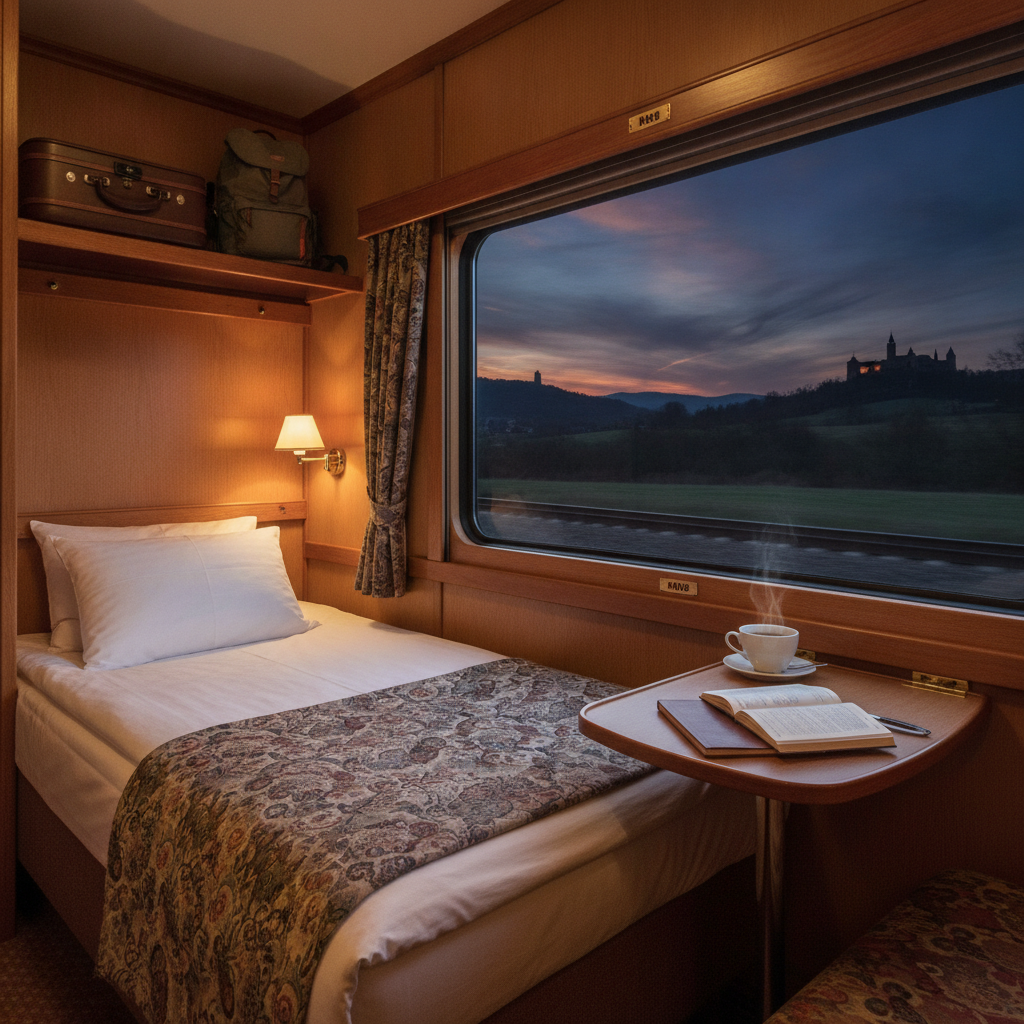
How Booking a Sleeper Train Between Budapest and Bucharest Replaces a Hotel Night While Covering 900 Miles of Eastern Europe
Smart travelers have long known that the best journeys happen while you sleep. Booking an overnight sleeper train between Budapest and Bucharest isn't just a transport decision — it's a financial strategy that eliminates a hotel night, folds a full day of sightseeing into your itinerary, and delivers you across roughly 900 miles of Eastern Europe by morning. If you've been piecing together flights and hostels for a multi-country trip, this single booking might be the most efficient move on your entire itinerary.
Book the CFR Calatori Route Early for Best Cabin Options
The Budapest–Bucharest overnight service operates under CFR Călători, Romania's national rail company, and runs on a schedule that departs Budapest Keleti station in the evening and arrives at Bucharest Nord the following morning. Cabin classes range from basic couchettes to private sleeping compartments, and the better options sell out weeks in advance during summer and holiday periods. Booking through the CFR Călători website or a European rail aggregator like Raileurope gives you the clearest picture of what's available. The private sleeper cabins are the sweet spot — they cost more than a couchette but still undercut what you'd pay for a mid-range hotel in either city.
Calculate the True Cost Against One Hotel Night
The math here works in the traveler's favor in a straightforward way. A private sleeper cabin on this route typically runs somewhere between what you'd pay for a budget hotel and a mid-tier one in Budapest or Bucharest. Add the cost of a separate daytime train or bus ticket between the two cities, and the overnight option almost always comes out ahead financially. More importantly, you're not losing a travel day — you board after dinner and arrive ready to explore, with no airport transit time, no early check-out stress, and no afternoon spent watching countryside scroll past from a seat you can't sleep in.
Pack a Sleeper Kit to Make the Night Comfortable
The quality of your rest depends heavily on what you bring. Train bedding is provided on most CFR services, but a lightweight sleep mask and a pair of foam earplugs make a measurable difference. The rhythmic motion of overnight rail travel actually helps many people sleep more deeply than they expect, but the occasional station stop or corridor noise can disrupt lighter sleepers. A small padlock for your cabin door latch is worth adding to your bag — not because cabins are unsafe, but because the peace of mind it provides makes it easier to settle in. Keep your passport and valuables close but accessible, since border crossings between Hungary and Romania involve document checks during the night.
Understand the Border Crossing Process
This route crosses two international borders: Hungary into Romania, and depending on your exact cabin assignment, you may encounter checks at both the Hungarian and Romanian sides. Border officers board the train at crossing points and move through compartments to inspect documents. The process is generally efficient and happens without requiring you to leave your berth, though it can pull you out of a deep sleep. Having your passport in your hand luggage rather than buried in a checked bag saves time and frustration. EU and Schengen travel documentation has streamlined this considerably in recent years, but non-EU passport holders should verify current entry requirements well before departure.
Use the Journey to Rest Between Intense Itinerary Segments
Eastern European city travel tends to be physically demanding — cobblestone streets, hills, long museum hours, and the sheer energy of places like Budapest's ruin bars or Bucharest's Floreasca district at night. An overnight train naturally inserts a recovery window into your trip without forcing you to sacrifice a full day. Think of it as a reset that repositions you geographically and physically. Travelers who use this route as a mid-trip pivot point often find their energy levels noticeably higher on arrival compared to grinding through an early morning flight from Listák Ferihegy Airport with a 4 a.m. alarm.
Store Luggage Smartly for a Comfortable Overnight
Sleeper compartments on this route have under-berth storage for larger bags and overhead racks for smaller items. The key is packing a small overnight bag you can pull out easily — essentials like toiletries, a change of clothes, your sleep kit, and anything you'll need at the border. Checking a large rolling suitcase into under-berth storage before settling in means you won't be climbing over your cabin mate at midnight to retrieve a charger. Keeping your travel day bag accessible also means you can freshen up before arrival, which matters when you're stepping directly onto the streets of Bucharest without a hotel room to decompress in first.
Arrive at Bucharest Nord Ready to Explore
Bucharest Nord station sits close to the city center, with metro connections to most major neighborhoods. Unlike an airport arrival, which often adds an hour of transit before you reach anything worth seeing, stepping off the train at Nord puts you genuinely close to hotels, breakfast spots, and the city's historic core. The Calea Victoriei boulevard and the Old Town district are accessible within a short metro ride. Arriving in the morning also means you can check into accommodation early if you've arranged it, or store luggage at the station and begin exploring immediately — a flexibility that flight arrivals rarely provide.
Build the Route Into a Broader Eastern European Strategy
The Budapest–Bucharest overnight train works best when it's one segment of a larger regional plan. Pair it with a few nights in the Hungarian capital exploring the Széchenyi Baths and the Chain Bridge area, then use Bucharest as a base for day trips to Sinaia or Brașov in Transylvania. The sleeper train becomes the connective tissue between two very different urban experiences, each worth several days of unhurried exploration. Travelers who build itineraries this way — using overnight rail to bridge city stays — tend to see more, spend less on accommodation, and arrive at each destination without the accumulated fatigue that budget airline hopping creates over time.
Overnight rail across Eastern Europe is quietly becoming one of the most practical tools in the budget-conscious traveler's toolkit. As rail networks across the region continue updating rolling stock and expanding booking infrastructure, routes like Budapest to Bucharest are likely to become even more accessible and comfortable. Watching for seasonal promotions from CFR Călători and Raileurope in the months ahead could unlock this kind of trip at an even better value — making the case for sleeping your way across the continent stronger than ever.