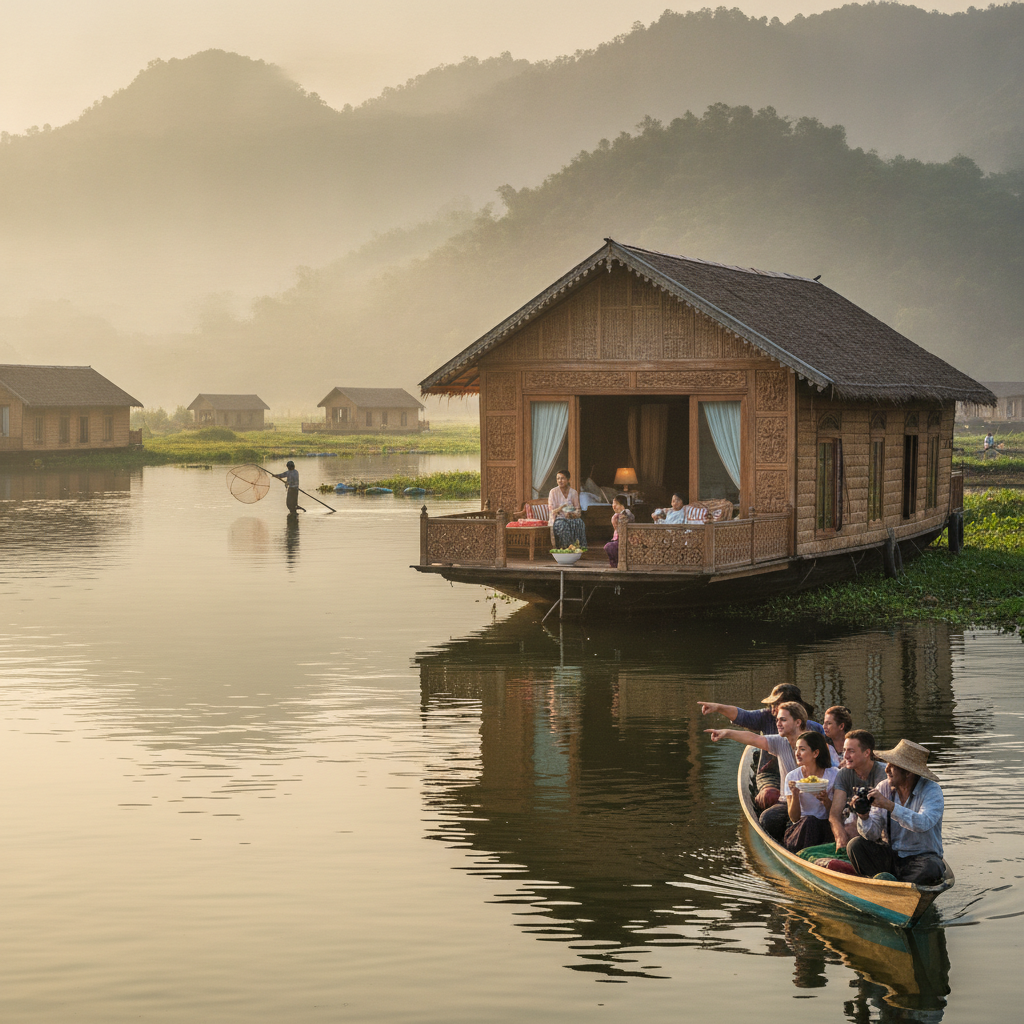

How Slow Travel Booking Strategies Using 21-Day Minimum Stays Unlock Local Discounts and Deeper Cultural Immersion
There is a particular kind of traveler who arrives somewhere and immediately starts counting down the days until departure — mapping museums, stacking reservations, optimizing every hour as though the destination itself might disappear. And then there is another kind entirely: the one who finds an apartment in a quiet neighborhood in Lisbon's Mouraria district or a rented room above a family kitchen in Chiang Mai's Nimman area, and simply stays. The difference between those two experiences is not merely philosophical. It is financial, cultural, and deeply human — and it begins with a commitment to time.
The Economics Behind Extended Stay Pricing
The short-term rental market operates on a logic that rewards loyalty with remarkable efficiency. Platforms like Airbnb and Vrbo structure their pricing algorithms to recognize a threshold around the three-week mark, where hosts shift their rate calculations from nightly profit maximization to occupancy-based stability. A listing that commands a premium nightly rate for weekend visitors often drops substantially per night when a guest commits to 21 days or more. This happens because hosts avoid the administrative friction of constant turnover — cleaning fees amortize across more nights, vacancy gaps disappear, and the psychological comfort of a reliable tenant produces genuine financial flexibility. The traveler who understands this dynamic enters negotiations from a position of real value.
Neighborhood Belonging as a Cultural Practice
In Italian, the concept of campanilismo describes an attachment so deep it extends to the sound of one's own church bell — a loyalty to the immediate, the hyper-local, the known. Short-term visitors rarely encounter this layer of civic life because it requires a kind of presence that tourist itineraries cannot accommodate. The traveler who stays for three weeks in a single neighborhood begins to develop something approaching campanilismo by circumstance: they recognize the bread vendor's schedule, they know which café opens earliest, they understand that the weekly market on Thursday is entirely different from the tourist market on Saturday. These are not trivial observations — they are the texture of a place, revealed only through accumulated daily contact.
Practical Platforms and Negotiation Approaches
Beyond Airbnb and Vrbo, platforms like Spotahome and Furnished Finder cater specifically to medium-term guests and often list properties that never appear in short-term rental searches. Property managers on these platforms expect negotiation as a matter of course. A direct message explaining a firm 21-day minimum, flexible check-in dates, and willingness to pay a month in advance frequently unlocks rates that advertised pricing would never suggest. Timing matters considerably as well — booking 6 to 10 weeks in advance for peak periods, or reaching out to hosts during their obvious vacancy gaps, creates natural leverage. The extended stay traveler is not asking for charity; they are offering something genuinely scarce in a volatile market: certainty.
Budgeting for Immersion Rather Than Itinerary
The financial architecture of a 21-day minimum stay differs fundamentally from the per-night calculus of conventional travel. When accommodation costs collapse into a manageable weekly rate, the savings do not simply accumulate — they redirect. Grocery shopping at local markets in Oaxaca or Porto becomes not only practical but economical compared to daily restaurant meals, and the cooking itself becomes a form of cultural research. Transportation expenses flatten because exploration becomes hyperlocal rather than destination-hopping. The traveler begins to spend money the way residents do: deliberately, contextually, with an understanding of where value actually lives in that particular place. This is not austerity — it is reallocation toward what matters.
The Language of Staying Longer
Language acquisition accelerates sharply under conditions of daily necessity. The traveler staying three weeks is not practicing phrases from an app; they are ordering coffee, apologizing to neighbors, asking about the Wi-Fi, and navigating the particular social grammar of a specific place. Even partial competency in the local language — what linguists call survival fluency — transforms the social experience entirely. Shopkeepers respond differently, invitations extend more naturally, and the invisible wall that separates tourist from guest begins to thin. In neighborhoods like Tbilisi's Marjanishvili or Mexico City's Roma Norte, this linguistic presence is recognized and quietly appreciated by residents who are accustomed to visitors who pass through without ever quite arriving.
Seasonal Timing and Destination Selection
The 21-day minimum stay strategy compounds its advantages when aligned with shoulder season timing — those transitional weeks in spring or autumn when a destination has fully awakened from or not yet entered its tourist peak. Hosts in shoulder season carry more vacancy anxiety and negotiate more readily; neighborhoods feel more authentically inhabited; cultural calendars fill with events designed for residents rather than visitors. The Algarve in late March, Kyoto's Arashiyama district in early November, or the Dalmatian Coast in late September each offer conditions where the extended stay traveler encounters a version of the place that packaged tourism rarely reaches. The convergence of timing, duration, and neighborhood selection produces an experience that is categorically different from its surface-level components.
Arriving as a Temporary Resident
When you commit to 21 days in one place, something subtle shifts in how you move through it — and how it receives you. You begin to have opinions about the neighborhood: which streets feel alive at dusk, which local institution deserves your regular presence, which rhythm of the week carries the most energy. The locals who see you return, day after day, begin to treat you accordingly. The traveler who understands this is not chasing authenticity as a tourist commodity but accepting it as a natural consequence of genuine commitment. That apartment in Mouraria or that room above the kitchen in Nimman becomes, for three weeks, simply where you live — and the city, in response, becomes something more than a destination. It becomes briefly, beautifully, yours.