How Reading Vacuum Cleaner Filtration Specifications Against Your Actual Home Environment Prevents Overspending on Features You Will Never Use
Vacuum cleaner marketing is extraordinarily good at convincing you that more filtration equals better results — and that paying a premium for hospital-grade specifications is simply the responsible choice. The reality is far more nuanced. Filtration technology is engineered for specific environments, and matching those specs to your actual home conditions is one of the smartest, most underrated shopping decisions you can make. Overspending on filtration you don't need is genuinely common, and it's entirely avoidable once you understand what the numbers actually mean.
Know What Filtration Labels Actually Mean
The term HEPA gets used constantly in vacuum marketing, but it describes a specific technical standard — not a general quality tier. A true HEPA filter captures 99.97% of particles at 0.3 microns. That's meaningful for certain households but overkill for others. Some vacuums advertise "HEPA-style" or "HEPA-like" filtration, which sounds equivalent but performs significantly below the actual standard. Before comparing prices, confirm whether a filter meets certified HEPA requirements or is simply borrowing the branding. Dyson, Miele, and Shark each use different filtration architectures, and the distinctions matter more than the marketing language suggests.
Map Your Household Before Comparing Models
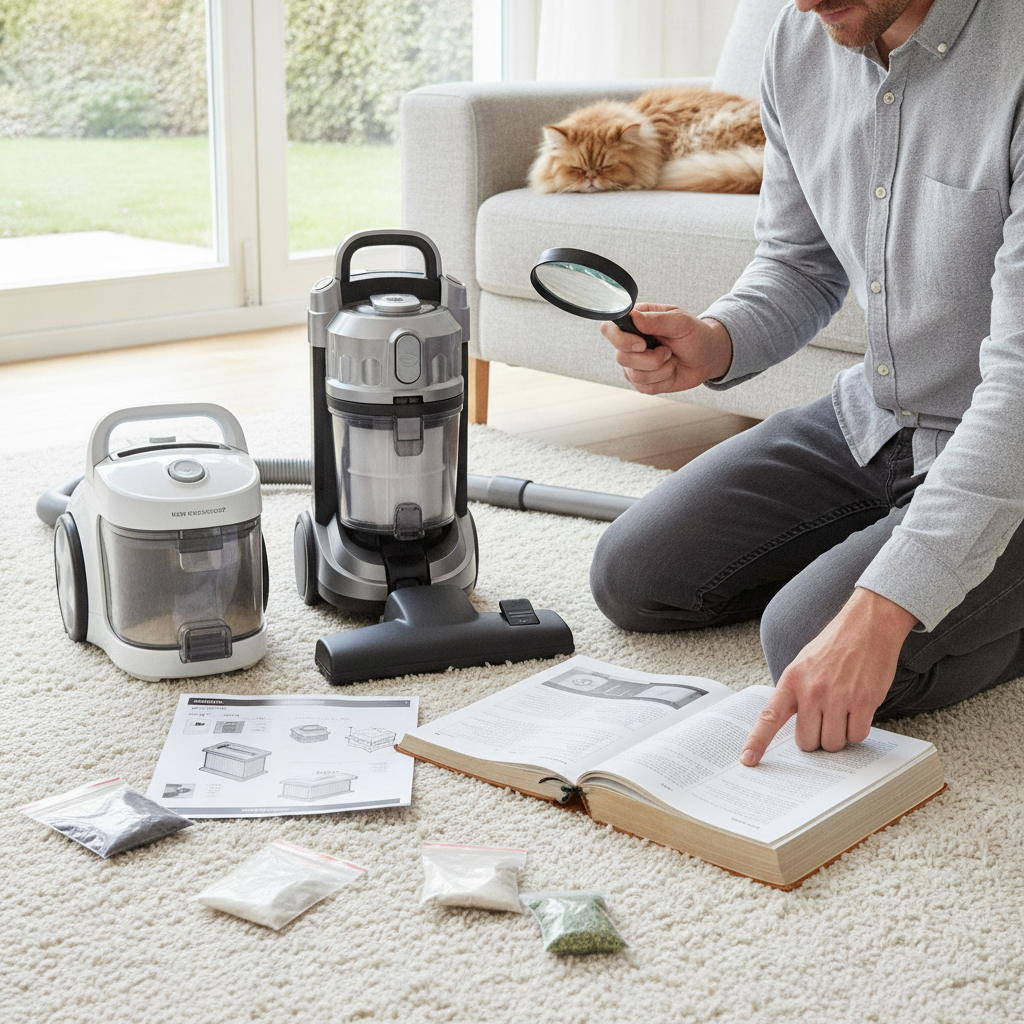
The single most useful step before shopping is taking an honest inventory of your home. How many people live there? Are there pets, and if so, what kind? Does anyone have diagnosed allergies or asthma? What flooring types make up the majority of your space — hardwood, low-pile carpet, or thick area rugs? A childless household with hardwood floors and no pets has fundamentally different filtration needs than a home with two shedding dogs and a family member managing seasonal allergies. Writing this down before browsing prevents spec sheets from making decisions for you.
Match Filtration Tier to Allergy and Asthma Status
True HEPA filtration genuinely earns its cost in homes where someone manages respiratory conditions, asthma, or significant seasonal allergies. Fine particulates — dust mite debris, mold spores, pet dander — are the primary triggers, and a certified HEPA system captures them at a level that standard multi-layer filters cannot match. If no one in your household has these conditions, though, a vacuum with multi-layer filtration or an advanced cyclonic system will handle typical household dust without the premium price tag. The Miele Classic C1 series, for example, sits in a mid-tier filtration range that handles most average homes comfortably without the cost jump to their HEPA-certified models.
Factor in Pet Ownership Honestly
Pet hair and pet dander are different problems requiring different solutions. Hair volume is a mechanical issue — it's about suction power, brush roll design, and canister capacity. Dander is a filtration issue, because the particles are microscopic and become airborne during vacuuming. If you have pets but no one in the home reacts to them, you likely need stronger suction and a tangle-resistant brush roll more than a certified HEPA filter. If pet dander triggers symptoms in anyone regularly, that changes the calculation entirely. Buying a high-filtration machine for a single indoor cat in a large, well-ventilated home is a classic example of paying for a problem you don't have.
Understand Sealed System vs. Filter Rating Alone
A common spec-sheet trap is focusing on filter rating while ignoring whether the vacuum uses a sealed system. A sealed system means all air drawn into the machine passes through the filter before being exhausted — nothing leaks around the edges. A non-sealed system, even one with a high-rated filter, can release fine particles back into the air through gaps in the housing. Shark's Navigator line, for instance, offers models with HEPA filters but varies on whether those models use sealed systems. If filtration matters for your household, both the filter rating and sealed system designation need to be confirmed together — one without the other doesn't deliver the protection you're paying for.
Consider Flooring Type Before Paying for Filtration Upgrades
Hard floors actually make filtration less critical than carpet environments do. Carpet traps fine particles deep in the fibers, and vacuuming agitates and releases them into the air — which is precisely when filtration earns its value. On hardwood and tile, particles sit on the surface and get picked up mechanically without the same level of agitation. A household that's 80% hardwood with occasional area rugs gets much less benefit from high-end filtration than a home carpeted wall-to-wall. Redirecting the budget toward a model with better suction consistency and floor-switching capability often delivers a better real-world result than spending the same amount chasing filtration specs.
Check Filter Replacement Costs Before Committing
The purchase price of a vacuum is only part of the actual cost. Replacement filters for high-end certified HEPA vacuums can be surprisingly expensive, and how frequently they need changing varies significantly by model and usage intensity. Some Dyson sealed filter assemblies run considerably more than generic alternatives, and certain models require proprietary replacements that can't be substituted with third-party options. Before finalizing a purchase, look up the specific filter replacement cost and recommended interval for any model you're seriously considering. A vacuum with modest filtration but affordable, widely available filters may serve your household better over three years than a premium model with expensive proprietary consumables.
Use Return Policies as a Testing Window
Most major retailers — including Costco, Bed Bath & Beyond's successor platforms, and direct-to-consumer vacuum brands — offer return windows of 30 to 90 days. This is genuinely useful for filtration testing. Run the vacuum in your actual home environment, note whether air quality feels different after use, and pay attention to whether allergy symptoms improve or stay the same. If you bought up to a certified HEPA sealed system and notice no real-world difference from your previous vacuum, that's meaningful information. Real-home performance matters more than laboratory spec comparisons, and a return policy lets you verify the match before the decision becomes permanent.
Matching vacuum filtration specifications to your actual home environment is a straightforward exercise that most people skip — and that skipping is exactly how appliance marketing converts unnecessary features into routine purchases. By taking twenty minutes to map your household conditions, understand what certifications actually mean, and calculate the total ownership cost including filter replacements, you can buy the vacuum that genuinely suits your home rather than the one with the most impressive spec sheet. Spending less without settling for less is always the goal, and filtration is one of the clearest places where that principle pays off.