
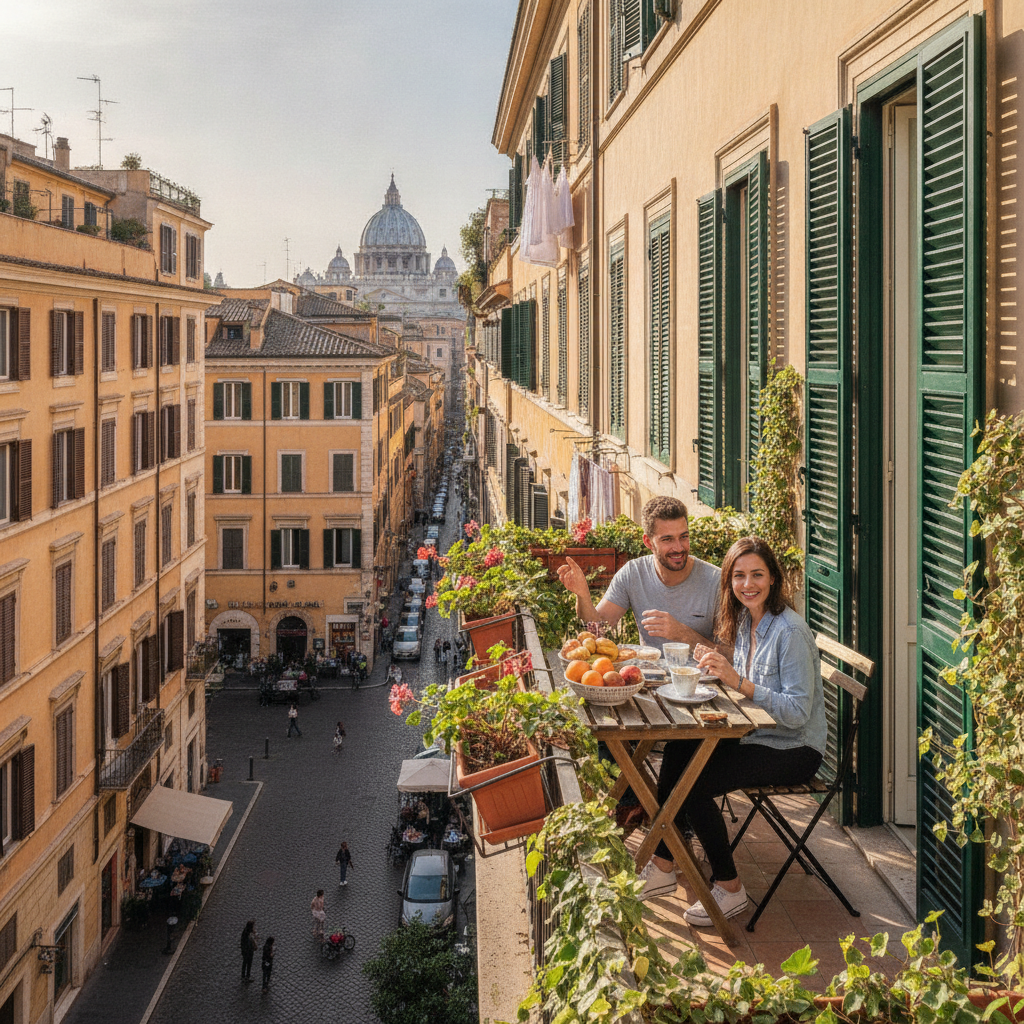
How Booking Apartment Rentals in Residential Neighborhoods Instead of Hotel Districts Transforms Your Experience in Major Italian Cities
There is a version of Italy that most travelers never quite reach — not because it's hidden, exactly, but because the infrastructure of conventional tourism quietly steers them away from it. The hotel districts of Rome, Florence, and Milan are efficient, convenient, and deeply familiar in the way that all tourist zones eventually become: a loop of the same restaurants, the same souvenir stalls, the same exhausted staff managing an endless rotation of suitcases through revolving doors. For those willing to step outside that loop, however, a different Italy opens up — one measured not in landmarks visited but in mornings spent at a neighborhood bar where the barista already knows to pull a ristretto without being asked.
What Residential Neighborhoods Actually Offer
The distinction between a hotel district and a residential neighborhood in an Italian city is not merely geographical — it's experiential in a way that compounds over days. In Rome, staying in Prati or Ostiense rather than the area surrounding the Trevi Fountain means waking up to the rhythms of a working district: the vegetable vendors setting up in the morning, the school-run energy of parents and children on narrow sidewalks, the particular quiet of a street where nobody is performing for tourists. Florence's Oltrarno neighborhood — the area south of the Arno River, sometimes called il di là d'Arno by locals — functions similarly, offering craft workshops, family-run trattorias, and a pace that feels genuinely lived-in rather than staged. Milan's Navigli district, anchored by its historic canal system, blends working-class heritage with creative culture in ways that the fashion-district hotels simply cannot replicate.
Apartment rentals in these neighborhoods, booked through platforms like Airbnb or Booking.com or through specialist services like Vrbo, tend to cost meaningfully less than central hotel rooms of comparable size — and they offer something hotels structurally cannot: a kitchen, a dining table, a grocery run at the local mercato. That single feature — cooking two or three meals per week rather than eating out for every one — changes the financial mathematics of a longer Italian stay dramatically, without requiring any sacrifice in the quality of the experience. It also shifts the traveler's relationship to the city from consumer to temporary resident, which is a different thing entirely.
The Cultural Grammar of Neighborhood Life
Italian residential neighborhoods operate according to a set of social rhythms that visitors staying in hotel districts rarely encounter. The concept of campanilismo — a deep, almost visceral attachment to one's immediate neighborhood, etymologically rooted in the image of hearing one's own church bell tower — shapes how locals relate to their surroundings in ways that are invisible from a hotel room but immediately legible from an apartment on a residential street. Neighbors greet each other. The same people appear at the same bar at the same hour each morning. The alimentari — the neighborhood grocery — stocks things chosen for people who actually cook, not for people grabbing a bottle of water between museums.
For travelers based in these areas, this grammar becomes something to read and respond to rather than simply observe. It creates a quality of attention that is genuinely restorative, particularly for those accustomed to the cognitive load of always being in a strange and optimized tourist environment. The passeggiata — the traditional evening walk taken as a social ritual rather than exercise — makes more sense when you're doing it from your own temporary street, nodding at the same faces you saw that morning, rather than threading through crowds near the Duomo.
Practical Considerations Worth Understanding
Choosing an apartment in a residential neighborhood does require a modest shift in planning habits. Italian cities are walkable but not uniformly so, and the relationship between a neighborhood's character and its transit connections matters more when the apartment is a home base rather than a crash pad. Rome's metro is limited but its bus network is extensive; staying in Pigneto or Prati is workable without a car, while some outer neighborhoods require more planning. Florence is compact enough that Oltrarno is a short walk from the Uffizi, but the hills of Fiesole — charming as they are — demand either a bus schedule or comfortable shoes. Milan's metro system is among Europe's most efficient, making neighborhoods like Isola or Porta Romana genuinely convenient despite sitting well outside the central tourist corridor.
Beyond transit, it's worth understanding that Italian apartment rentals often reflect authentic local standards rather than hotel-normalized ones. Spaces may be smaller, older, and furnished with a casual eclecticism that is the opposite of curated. Noise levels in residential areas follow a different pattern than in tourist zones — quieter at midday during the traditional riposo, livelier in the early evening when locals return home. These are not inconveniences so much as features, ones that reward travelers who've made peace with the idea that a good trip is not the same thing as a frictionless one.
When the City Starts to Feel Like Home
Something shifts, usually around the third or fourth day of a residential apartment stay, that doesn't happen in even the best hotel. You begin to know your street. The woman who sells fruit near the corner recognizes you. You stop checking Google Maps to find the bar you liked yesterday. This shift — from tourist to temporary inhabitant — is difficult to manufacture and impossible to rush, but staying in a residential neighborhood creates the conditions for it to happen organically. The Italian word forestiero means stranger or outsider, and there is a particular pleasure in feeling that designation slowly, informally lift.
For those whose travel philosophy extends beyond checking monuments off a list, the apartment-in-a-neighborhood approach offers something genuinely aligned with a more intentional way of moving through the world. It costs less, produces less waste, creates more human connection, and leaves a more accurate memory of a place than any hotel stay can provide. The Italy that most visitors glimpse from tour buses and hotel terraces is beautiful, certainly — but the Italy that exists in the morning light of a Pigneto courtyard, or in the sound of a Navigli canal at dusk, is the one worth crossing an ocean to find.