How Booking Ryokans Outside Kyoto's Central Districts Cuts Costs by Half While Improving Authentic Cultural Immersion
Kyoto has a reputation problem — not because it isn't extraordinary, but because everyone knows it is. The city draws millions of visitors annually, and the accommodation market reflects that demand with prices that can make even seasoned travelers wince. Yet a short train or bus ride beyond the central districts of Gion and Higashiyama reveals a quieter, more genuine version of Japan's ancient capital, where ryokans charge a fraction of the price and the experience feels far less like a performance for tourists and far more like daily Japanese life.
Why Central Kyoto Ryokans Are Overpriced Relative to Value
The ryokans clustered around Gion, Nishiki Market, and the base of Fushimi Inari operate on prime real estate in one of the world's most visited cities. Their pricing reflects location more than experience. Guests pay a premium simply to walk out the front door onto a famous street. The tatami rooms, kaiseki meals, and onsen facilities at a centrally located ryokan are rarely superior to those found twenty minutes away — they're just closer to the postcard shots. Understanding this gap between location cost and actual cultural value is the first step toward smarter booking.
The Neighborhoods Worth Exploring Beyond the Tourist Core
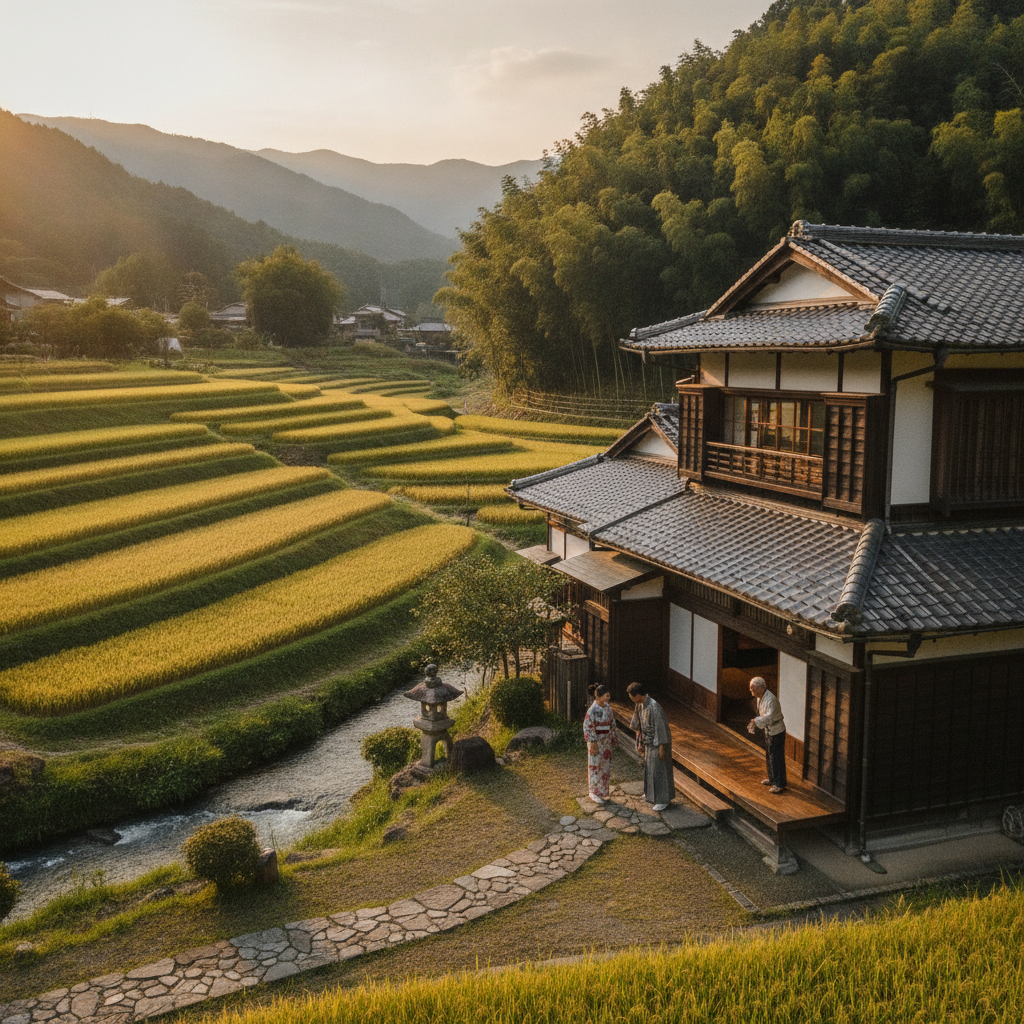
Several outer areas offer genuine ryokan experiences at dramatically lower nightly rates. Fushimi, south of central Kyoto, is home to sake breweries and quieter temple complexes far removed from peak tourist crowds. Ohara, a mountain village northeast of the city, hosts small family-run inns where multi-course dinners use locally foraged ingredients. Arashiyama, though increasingly popular itself, still contains ryokans tucked into residential lanes above the bamboo grove tourist flow. Each of these areas maintains excellent access to Kyoto's center via the Kintetsu, Eizan, or JR lines.
How Transportation Math Actually Favors Outer Ryokans
A common hesitation is the added transit time. In practice, Kyoto's rail and bus network makes outer districts highly accessible. A ryokan in Fushimi is roughly twenty minutes from Kyoto Station by the Kintetsu Kyoto Line. Ohara is served by Kyoto Bus Route 17 from Sanjo Station, a journey of under an hour. When the nightly savings cover two or three days of transit costs with money left over, the calculus becomes straightforward. Many outer ryokans also provide guests with IC card guidance or day-pass recommendations that reduce transit friction further.
What Authentic Ryokan Culture Actually Looks Like Away From Tourist Routes
In central Kyoto, ryokan staff are practiced at hosting international guests — which is helpful but can also feel rehearsed. In outer neighborhoods, the experience tends to be more genuine and less scripted. Hosts in places like Kurama or Kibune may communicate through gestures, printed cards, or a family member's limited English, creating a warmer and more memorable exchange. The meals often reflect what local families eat rather than a curated showcase, and the onsen baths are shared with Japanese guests who live nearby rather than exclusively with fellow tourists.
Booking Windows and Platforms That Unlock Better Outer Rates
Jalan and Rakuten Travel — Japan's two dominant domestic booking platforms — list far more outer-district ryokans than international platforms like Booking.com. Many small family inns don't bother listing internationally because their local and domestic business is sufficient. Creating an account on either platform, which works in English with some navigation patience, opens access to properties that simply don't appear in standard searches. Booking sixty to ninety days ahead for high seasons like autumn foliage or cherry blossom periods remains essential, even for outer properties that attract fewer tourists.
Seasonal Timing Makes Outer Districts Even More Rewarding
Kyoto's central districts become genuinely overwhelming during peak seasons — autumn color in November and sakura season in late March and early April bring crowds that can make even iconic sites feel unpleasant. Outer ryokans in Ohara or along the Kibune River corridor see far lighter traffic during these same periods. The foliage and blossoms are equally spectacular, often framed by fewer visitors and more natural surroundings. Staying in an outer inn during peak season provides access to Kyoto's beauty on day trips while retreating each evening to calm, uncrowded surroundings.
What to Prioritize When Comparing Outer Ryokan Listings
Not all outer ryokans offer the same depth of experience. When reviewing listings, prioritize properties that include dinner and breakfast in the nightly rate — this is traditional ryokan practice and typically signals a more genuine operation. Look for inns with a working onsen fed by natural spring water rather than a simple tub. Guest reviews that mention interactions with the innkeeping family, locally sourced kaiseki courses, or yukata robes provided for evening walks are strong indicators of authenticity. Properties with fewer than fifteen rooms tend to offer more personal attention than larger establishments.
Managing Expectations Around Language and Logistics
Booking a ryokan outside tourist-heavy districts means accepting a slightly higher degree of self-reliance. Menus may be in Japanese only, arrival instructions might require translation, and train schedules need checking in advance. Google Translate's camera function handles most menu and signage challenges effectively. Downloading the Navitime app before arriving in Japan provides offline-capable transit routing across Kyoto's complex rail and bus network. These minor friction points are genuinely minor — and for most guests who try it, they become part of what makes the experience feel less like a package tour and more like actual travel.
The outer ryokan approach to Kyoto is likely to grow in popularity as more travelers recognize that the city's most memorable moments rarely happen on its most photographed streets. As sustainable tourism conversations gain traction globally, there's increasing interest in spreading visitor impact across neighborhoods that benefit economically from guesthouse stays. For anyone planning a trip to Kyoto, the combination of lower costs, lighter crowds, and more genuine cultural exchange makes the case for looking beyond Gion and Higashiyama — not as a compromise, but as a genuinely better way to experience one of the world's most remarkable cities.