Why Late-Autumn Road Trips Through the American Southwest Offer Crowds Half the Size at a Fraction of Peak Season Costs
The American Southwest is one of those rare places that rewards patience — and the travelers who show up in late autumn discover a version of it that summer crowds rarely see. Between early November and mid-December, the region undergoes a quiet transformation. The brutal heat that makes June and July visits physically exhausting gives way to crisp, clear days ideal for hiking and long drives. The tour buses thin out. The parking lots at trailheads empty. And the prices — for lodging, fuel stops, and local experiences — drop in ways that make the same trip genuinely more affordable without sacrificing a single meaningful moment.
Plan the Route Before You Book Anything
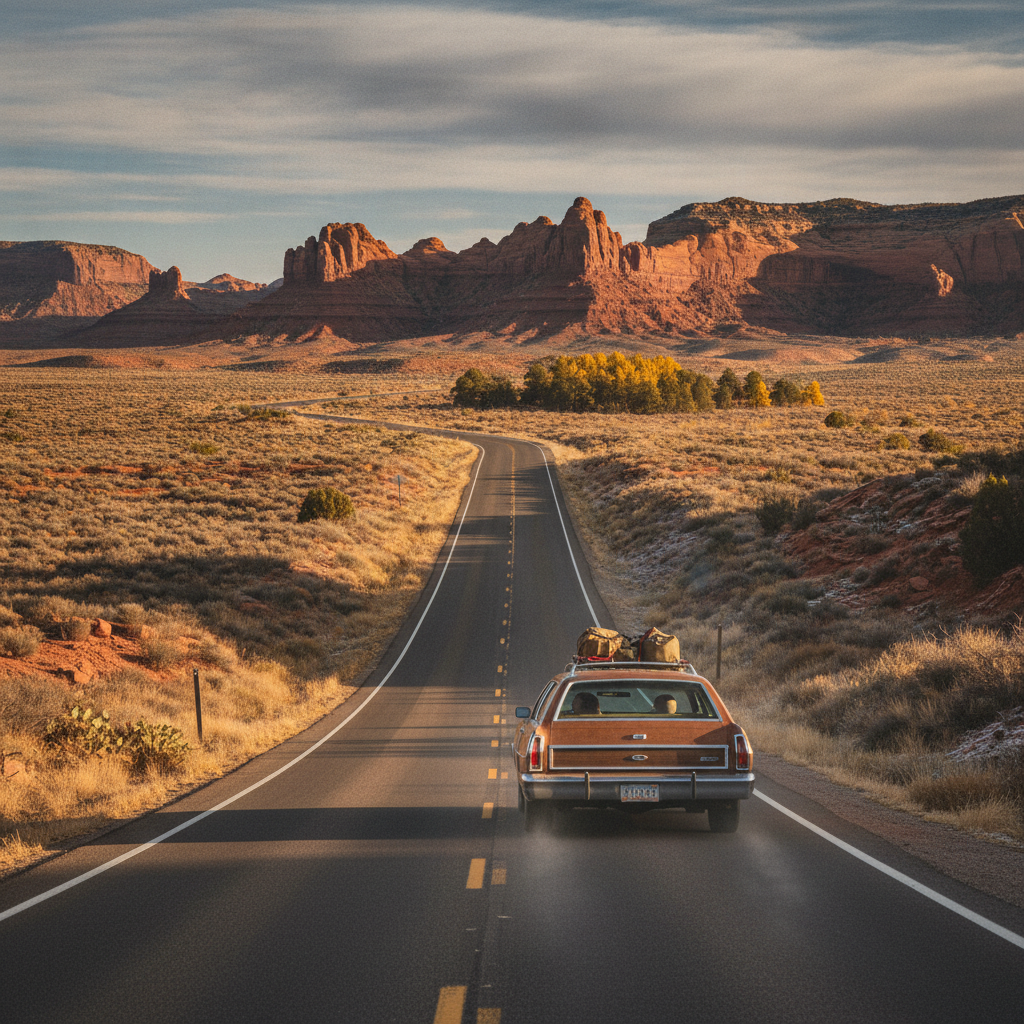
The most effective late-autumn Southwest road trips follow a loose arc rather than a rigid itinerary, because the region rewards spontaneity in a way that urban travel rarely allows. A natural starting point is Las Vegas, not for the Strip itself but for its airport accessibility and its position as a gateway to Zion National Park, which sits roughly two and a half hours northeast. From Zion, the route flows naturally toward Bryce Canyon, then south toward the Grand Canyon's North Rim — though travelers should confirm seasonal closure dates, as the North Rim typically closes in mid-November. The South Rim stays open year-round and draws noticeably smaller crowds once Thanksgiving passes. From there, Monument Valley and Sedona offer two entirely different visual registers: the former stark and monumental, the latter layered in red rock warmth that catches the low November light in ways that summer photographs simply don't capture.
Before committing to specific stops, spending time with the app Roadtrippers is worth the effort. It surfaces campground options, roadside attractions, fuel price data, and lodging clusters along any custom route, and its layered mapping helps visualize drive-time realities that a basic map won't communicate. Late autumn driving in the Southwest involves shorter daylight windows — sunset arrives well before six in most of the region by November — so realistic daily mileage estimates matter more than they would during July's extended light.
Where the Savings Actually Come From
The cost difference between a late-autumn Southwest road trip and a peak summer one isn't marginal — it's structural. Hotels and motels in gateway towns like Springdale, Utah, or Williams, Arizona, routinely cut their rates by a third to half once October ends. Campsite availability at places like Watchman Campground in Zion opens up dramatically, eliminating the months-long advance booking that summer requires. Restaurants in tourist-heavy towns shift toward locals, meaning menus become less performative and prices reflect that shift. Rental car rates, which spike aggressively during summer school breaks, ease considerably in November and early December.
For travelers who prefer booking accommodations with flexibility, using Hopper to track lodging and rental car pricing across a two-to-three week window before departure can reveal the specific nights and properties where late-autumn discounts are most pronounced. The app's price prediction feature is particularly useful for this type of regional road trip because pricing isn't uniform — a Friday night in Sedona may still command a premium even in November, while the Monday through Thursday window in the same town might come in at roughly half that rate. Booking those midweek stays strategically can shave meaningful amounts from the overall trip budget without compromising the itinerary.
Fuel costs also behave differently on a late-autumn Southwest trip. The route between national parks passes through smaller towns where gas prices vary widely, and using GasBuddy to check prices at upcoming stops before committing to a fill-up becomes a simple habit that adds up over a week-long drive. The savings feel modest per stop, but across four hundred or five hundred miles of high-desert driving, the difference becomes real.
What the Experience Actually Delivers
Beyond the financial logic, late autumn in the Southwest offers something that no discount code can replicate: space. Standing at the rim of Bryce Canyon in November and seeing the hoodoos dusted with early snow, with perhaps a dozen other people in sight rather than several hundred, changes the quality of the experience entirely. The silence is different. The photographs are different. The sense of actually inhabiting a landscape rather than passing through it with a crowd becomes accessible in a way that peak season simply doesn't allow.
The light in November and December favors photographers and anyone who simply enjoys watching a landscape shift across the day. The sun stays lower in the sky throughout, casting long golden shadows across red rock formations from mid-morning onward and creating the kind of warm, textured light that professional landscape photographers specifically chase during this period. Sedona's Cathedral Rock and the formations around Monument Valley become genuinely extraordinary subjects in this seasonal light. Trails that feel rushed and transactional in summer become contemplative, and trailhead parking — a genuine source of stress in peak months — often has open spaces well past mid-morning.
The cooler temperatures also make physically demanding hikes far more accessible. The Angel's Landing trail in Zion, which becomes a sweaty, crowded gauntlet in July, transforms in November into a steady, clear-aired climb where the effort feels matched to the reward. Layering up in the morning and shedding layers by noon becomes the comfortable rhythm of the day rather than a heat-management exercise.
Time the Trip to Land in the Right Window
The ideal window for a late-autumn Southwest road trip runs from the first week of November through roughly the second week of December. Earlier than that, and the shoulder season crowds from October haven't fully dispersed. Later, and the North Rim closures and occasional snow at higher elevations around the Grand Canyon begin narrowing options. Thanksgiving week itself is worth avoiding if flexibility exists — it creates a brief surge of domestic travelers that temporarily reverses the crowd advantage. The weeks immediately before and after Thanksgiving are consistently the region's quietest and most affordable.
Planning a seven-to-ten-day loop gives enough time to absorb each stop without rushing — two nights near Zion, one night transitioning toward Bryce, two nights near the Grand Canyon's South Rim, and two nights in Sedona on the return arc covers the most visually dramatic stops without compressing them into single-day checkboxes. That pacing leaves room for the kind of unplanned detour — a pull-off at a canyon overlook, an afternoon in a small Navajo Nation market town — that makes road trips memorable in ways that rigid itineraries can't manufacture.
The American Southwest asks very little of visitors who arrive outside its crowded seasons. It offers its landscapes with the same generosity, its trails with greater quiet, and its gateway towns with something closer to authentic hospitality when the summer rush has passed. Travelers who time their arrival to coincide with late autumn's emptied parking lots and adjusted room rates discover that the version of the Southwest they find there is often the one they were hoping to find all along — and that experiencing it costs considerably less than the peak-season version ever could.