
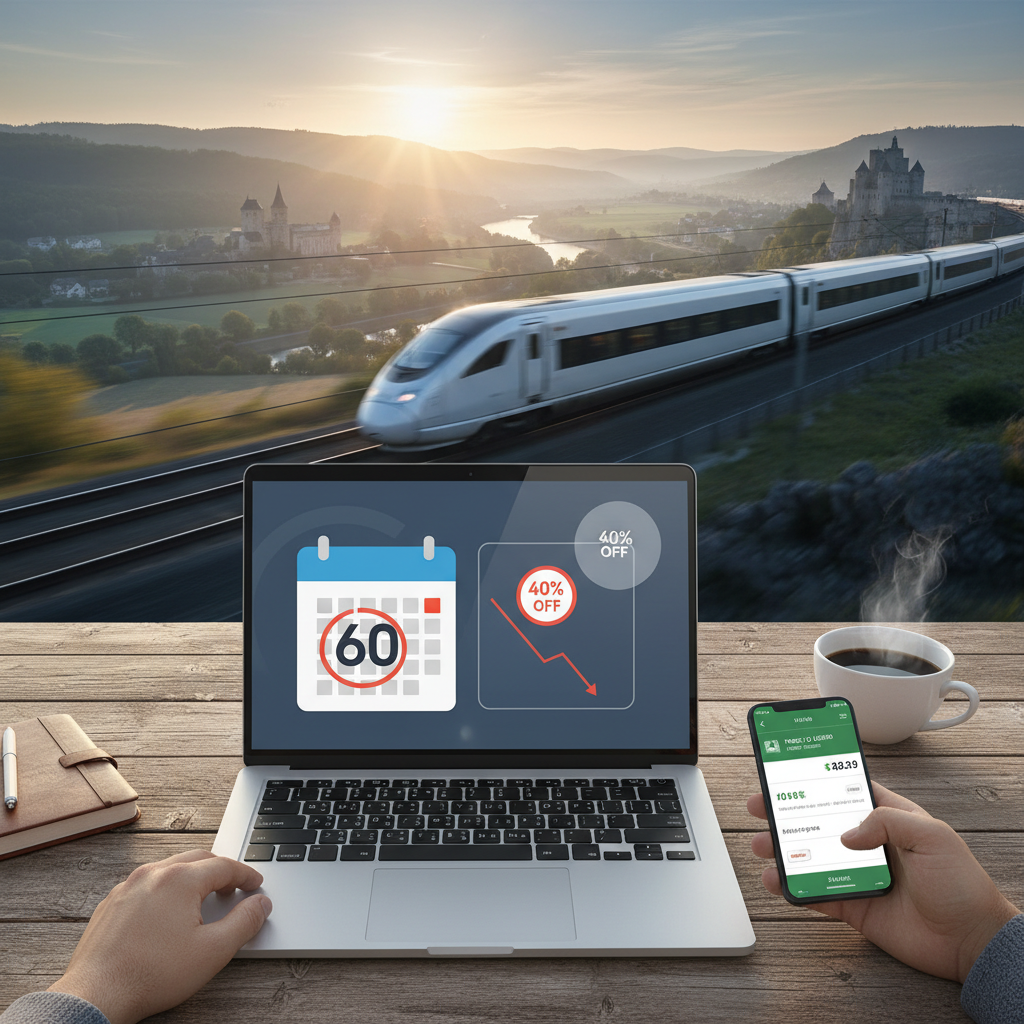
How Off-Peak Train Booking Windows 60 Days in Advance Save Up to 40% on Popular European Routes
European rail operators release their deepest discounts precisely 60 days before departure dates, creating a predictable window where savvy travelers can secure remarkable savings on popular intercity routes. The pricing algorithms used by major carriers like Deutsche Bahn, SNCF, and Trenitalia follow consistent patterns that reward early planners who understand when and how to book during these optimal periods.
The mathematics behind rail pricing creates distinct advantages for travelers willing to commit to specific departure times during off-peak hours. While peak-hour tickets between major cities like Paris and Barcelona can exceed €150, the same route during mid-morning or early evening windows often costs €90 or less when booked at the 60-day mark. These savings compound significantly for multi-city itineraries, where strategic timing can reduce overall transportation costs by hundreds of euros.
Set Calendar Alerts for Exactly 60 Days Before Travel
Rail booking systems refresh their inventory and pricing at midnight Central European Time, precisely 60 days before each departure date. Setting phone alerts or calendar reminders for this exact moment ensures access to the lowest-tier pricing before other travelers discover available seats. The window typically lasts between 24 to 72 hours, depending on route popularity and seasonal demand. Popular routes like Amsterdam to Paris or Rome to Florence see their cheapest fares disappear within the first week of availability.
Target Mid-Morning and Early Evening Departure Times
The 9:30 AM and 6:30 PM departure slots consistently offer the steepest discounts across most European routes, as they fall outside traditional business travel patterns. These times avoid both the early morning commuter rush and the convenient mid-day departures that leisure travelers typically prefer. Routes between major business centers like Frankfurt and Brussels show particularly dramatic price differences during these off-peak windows. Booking these specific time slots often yields savings of 30-40% compared to premium departure times.
Compare Regional Operators Against National Rail Services
Regional carriers like Ouigo in France and Avlo in Spain operate parallel routes to national services but maintain separate pricing structures that often remain lower longer. These budget subsidiaries of major rail operators use different booking algorithms and inventory management systems. Their 60-day advance booking discounts frequently beat the flagship services by additional 15-20%, especially for routes connecting secondary cities. The trade-off involves fewer amenities and potentially less central station locations, but the savings justify these minor inconveniences for cost-conscious travelers.
Book Connecting Journeys as Separate Tickets
Split-ticketing strategies work particularly well for longer European routes that cross multiple countries or regions. Booking Paris to Munich as separate Paris-Strasbourg and Strasbourg-Munich segments often costs significantly less than a single through ticket. This approach requires careful attention to connection timing and platform changes, but the savings can reach 25-35% on complex itineraries. Apps like Trainline and Omio help identify natural breaking points where separate bookings create advantages without risking missed connections.
Monitor Tuesday and Wednesday Departures for Maximum Savings
Mid-week travel dates consistently generate the lowest pricing across all European rail networks, as both business and leisure demand drops significantly. Tuesday departures particularly benefit from this pattern, as they avoid Monday business travel and weekend leisure trips. The 60-day booking window amplifies these savings further, creating compound discounts for travelers with flexible schedules. Popular tourist routes like London to Edinburgh or Venice to Florence show their steepest price reductions for Wednesday mid-morning departures booked exactly 60 days in advance.
Use Multiple Booking Platforms to Compare Final Prices
Different booking platforms apply varying fees and exchange rates, even when selling identical train tickets from the same operators. Direct booking through national rail websites like SNCF Connect or DB Navigator eliminates third-party fees but may not accept all international payment methods. Comparison sites like GoEuro and Trainline add convenience fees but often provide better currency conversion rates for non-European credit cards. Checking 3-4 platforms during the 60-day booking window helps identify the true lowest total price including all fees.
Consider First-Class Upgrades During Off-Peak Booking Windows
The price differential between standard and first-class seats narrows significantly during off-peak booking periods, sometimes reaching parity on less popular routes. First-class carriages offer guaranteed seating, complimentary refreshments, and quieter environments that enhance longer journeys. Routes longer than four hours particularly benefit from this upgrade strategy, as the comfort improvements justify minimal additional cost. Booking first-class off-peak tickets often costs less than standard peak-hour fares for the same route.
Plan Return Journeys with Different Departure Cities
Open-jaw itineraries that arrive and depart from different cities often cost less than round-trip tickets when booked during optimal windows. Flying into Rome and departing from Milan eliminates backtracking while potentially reducing both rail and airfare costs. This strategy works particularly well for multi-country trips where overland travel connects naturally with different international airports. The 60-day advance booking window provides enough time to coordinate these complex itineraries while securing the best possible rail pricing between destinations.
European rail pricing continues evolving toward more dynamic, airline-style models that reward advance planning and flexible scheduling. Understanding these patterns and booking strategically during optimal windows transforms rail travel from an expensive necessity into an affordable way to explore multiple destinations efficiently.